Shehbaz Urges Stronger SCO Action on Peace and Security
Prime Minister Shehbaz Sharif called for an SCO that delivers practical results on security, technology, water, disaster response and regional cooperation.
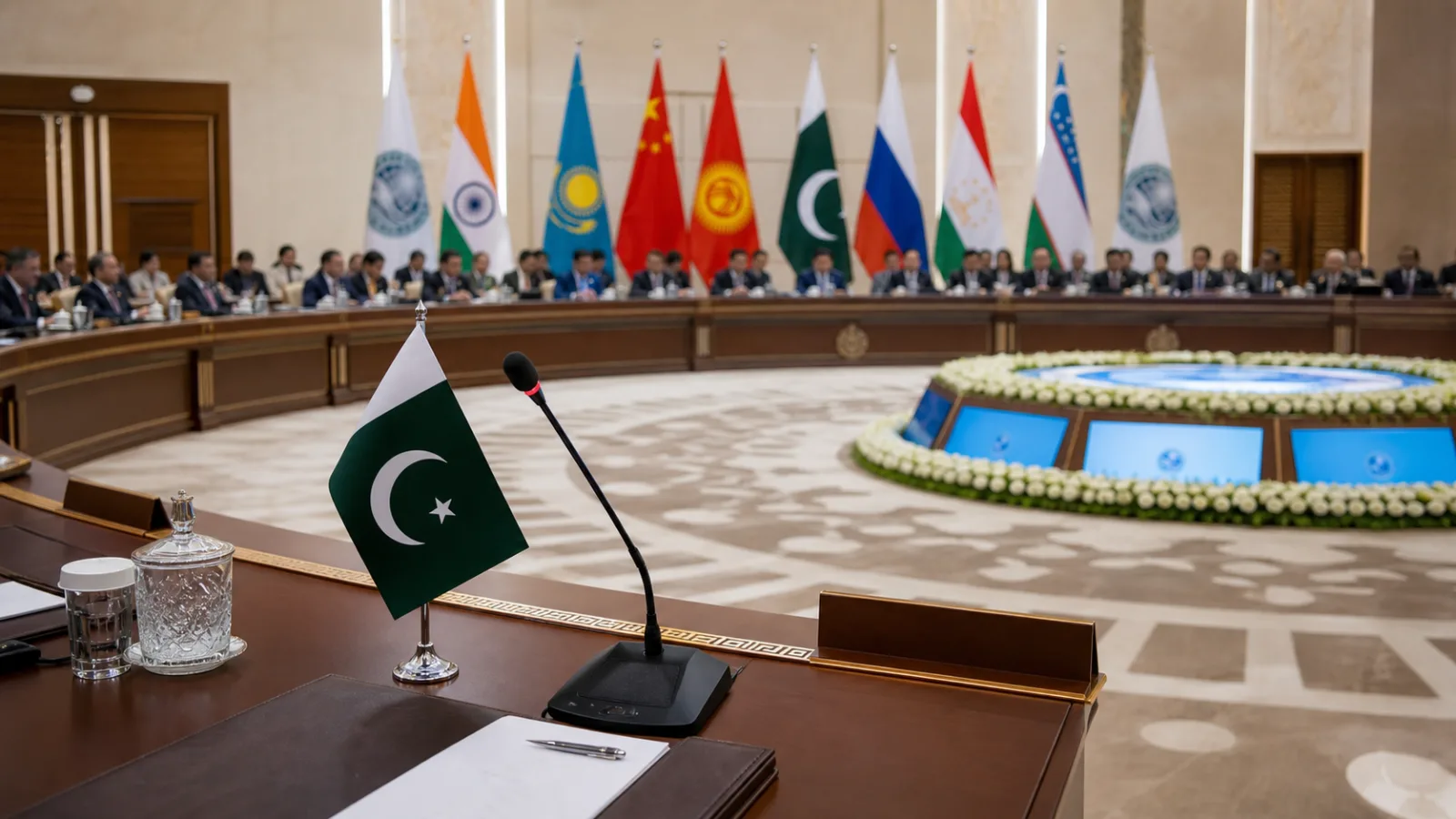
Image credit: AI-generated editorial image by Novexa News
Prime Minister Shehbaz Sharif has called on the Shanghai Cooperation Organisation to deliver practical results on regional security, technology, water, disaster management and economic cooperation as Pakistan begins its 2026-27 chairmanship.
Addressing the SCO Plus meeting in Bishkek on Tuesday, Sharif said the organisation should translate political commitments into benefits for the more than three billion people living across its member states. His speech set out a broad policy agenda rather than announcing a single new initiative.
The prime minister described the summit as an important point in the SCO's 25-year development and thanked Kyrgyz President Sadyr Japarov for hosting the gathering. Pakistan formally took over the Council of Heads of State chairmanship at the end of Kyrgyzstan's term.
Security and counterterrorism
Sharif said Pakistan remained committed to the SCO Regional Anti-Terrorist Structure and its work against terrorism, separatism and extremism. He argued that terrorism in all forms should be condemned clearly and that armed groups using Afghan territory to attack Pakistan and other neighbouring states should be stopped.
Pakistan's position reflects its longstanding effort to make cross-border militancy a regional issue. Cooperation through the SCO can support information exchange and coordination, but each member retains control over its own security policy and law-enforcement decisions.
The prime minister also presented dialogue and peaceful dispute settlement as necessary tools for regional stability. The SCO includes states with different alliances and several unresolved bilateral tensions, making consensus difficult but also increasing the value of regular communication.
Water should not become political pressure
Water security was a prominent part of Sharif's address. He called water the lifeblood of the region and said it must not be weaponised or used as political coercion. He added that treaties governing shared rivers are binding commitments that should be honoured in letter and spirit.
The remarks came as Pakistan welcomed a new Court of Arbitration decision concerning the Indus Waters Treaty with India. Although Sharif did not turn the SCO speech into a detailed legal argument, the timing connected Pakistan's regional diplomacy with its concern over predictable management of shared water resources.
Across the SCO region, rivers cross borders and support agriculture, power generation and urban water supplies. Climate pressures and changing demand make cooperation more important, while unilateral action can deepen mistrust.
Technology, health and disaster response
Sharif urged members to prioritise information technology and artificial intelligence alongside energy, development, poverty reduction, health, culture and sport. These fields offer room for collaboration even when governments disagree on security questions.
Pakistan can use its chairmanship to propose expert meetings, training programmes and joint research. Digital connectivity and AI cooperation could support public services and trade, but members will need to address data governance, cybersecurity and unequal access to technology.
Disaster management is another practical area for cooperation. Floods, earthquakes, heatwaves and wildfires regularly affect SCO states. Shared early-warning practices, emergency training and faster coordination could produce visible benefits without requiring members to align their wider foreign policies.
Regional conflicts and humanitarian concerns
The prime minister reiterated Pakistan's concern over the humanitarian conditions facing Palestinians in Gaza and the West Bank. Pakistan has consistently supported Palestinian self-determination and called for international law to guide responses to the conflict.
Sharif also referred to Pakistan's diplomatic role in recent regional de-escalation efforts, including the Islamabad memorandum connected to Iran-US talks. The government describes its role as facilitation, while recognising that lasting agreements ultimately depend on the parties themselves.
Pakistan's year at the helm
Pakistan will host the next SCO Council of Heads of State summit and SCO Plus meeting in Islamabad in 2027. Sharif used the Bishkek address to invite participants to the gathering.
The chairmanship creates an opportunity to develop a focused work programme before that summit. Pakistan's challenge will be to prevent a wide list of priorities from becoming too diffuse. Selecting a limited number of deliverable projects could make the year more credible.
Progress might be measured through agreements on transport, disaster preparedness, digital cooperation or security coordination. The broader test will be whether Pakistan can maintain constructive contact among members despite their competing interests.
Frequently asked questions
What priorities did Shehbaz Sharif identify for the SCO?
He highlighted counterterrorism, technology, AI, energy, poverty reduction, disaster management, health, culture, sport and respect for shared-water treaties.
What did he say about water security?
Sharif said water should never be weaponised and that binding agreements governing shared rivers must be honoured.
When will Pakistan host the next SCO summit?
Pakistan is expected to host the next Council of Heads of State and SCO Plus meetings in Islamabad in 2027.
Source links
Comments
No approved comments yet.