France Extends Local Curfews After Weekend Unrest
France extends targeted overnight curfews in parts of Paris and Lyon while preparing a major security operation for new protests.
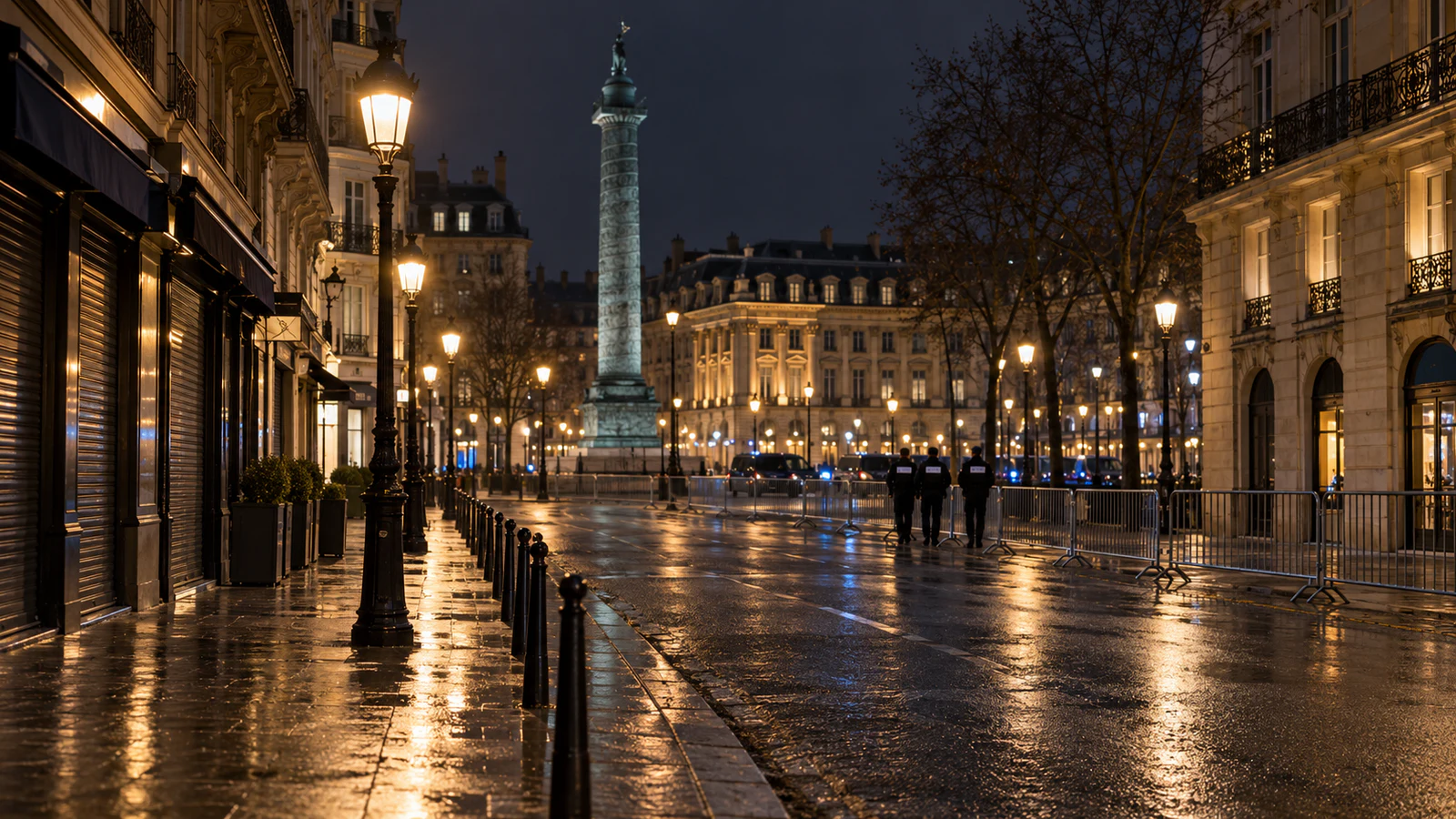
Image credit: AI-generated editorial illustration by OpenAI
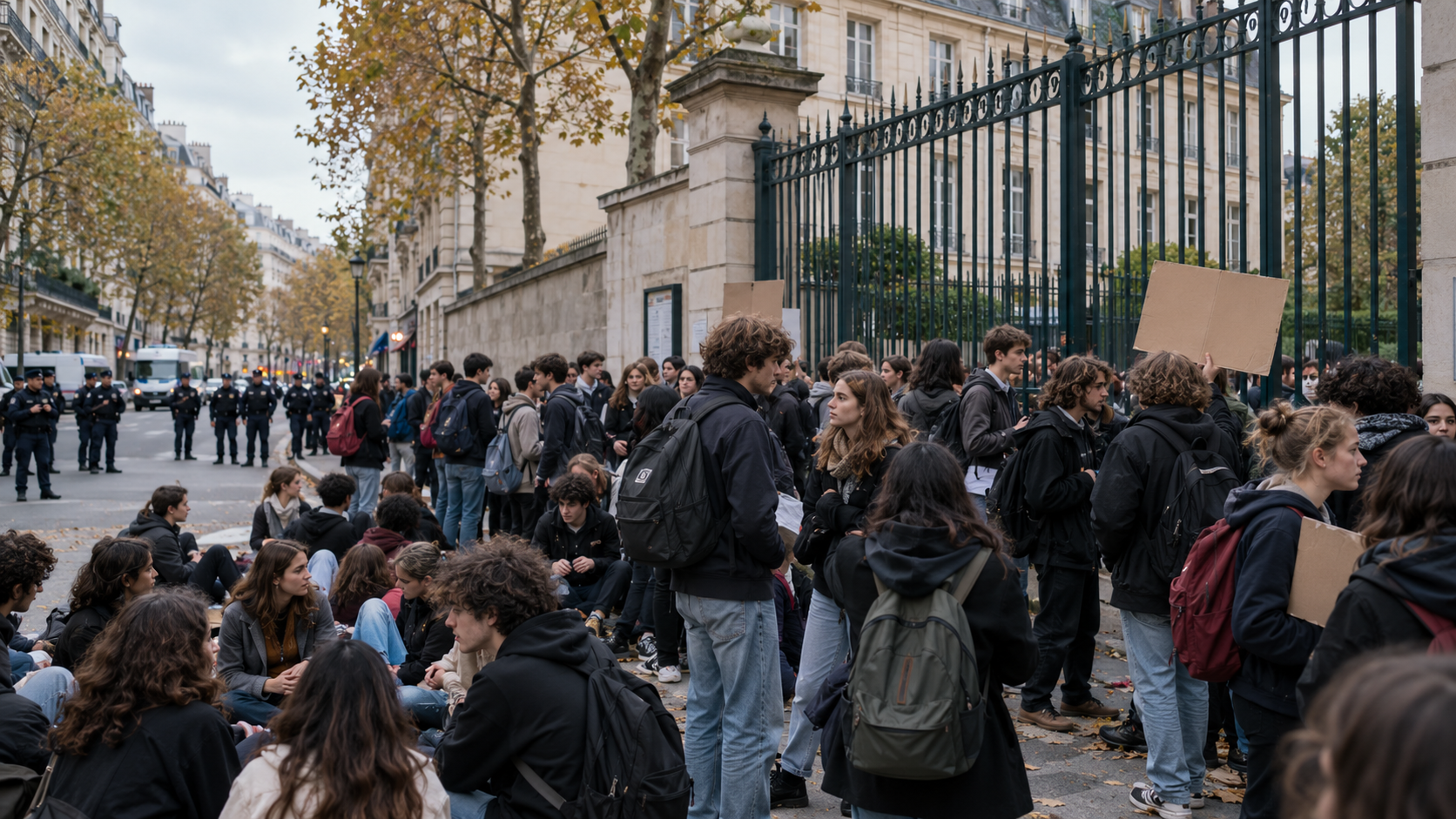
French authorities extended targeted overnight curfews in parts of Paris and Lyon on Tuesday as the government sought to prevent renewed violence following a weekend of nationwide protests and rioting.
The measures remain local rather than national. In Paris, restrictions cover designated zones around Place de la Republique and the Les Halles shopping district, while Lyon renewed a city-centre curfew from 9 p.m. to 6 a.m. The Associated Press reported that officials said the first night of the restrictions had passed without major disturbances.
Prime Minister Sebastien Lecornu said the government would use curfews where they were needed and for as long as necessary. He also announced preparations for a large security operation ahead of new demonstrations planned for Saturday.
The approach signals an effort to contain disorder without invoking a nationwide state of emergency. It also leaves local authorities with room to tailor restrictions to districts that experienced looting, arson or attacks on public buildings.
Paris restrictions focus on two zones
Paris police first announced an overnight curfew for Place de la Republique and Les Halles after violence during Saturday's demonstrations. The order bars people from entering or remaining in the specified areas during the restricted hours and is accompanied by limits on gatherings and demonstrations.
The zones do not cover every location affected by the weekend unrest. Other incidents were reported around the Champs-Elysees, Saint-Lazare station and parts of central Paris. Authorities have so far preferred focused restrictions over a blanket curfew across the capital.
In northern France, some municipalities also introduced temporary curfews for people under 18. AP reported on Monday that the measures included several cities around Lille, where minors faced overnight movement restrictions.
Officials said the localized orders were intended to protect residents and property while minimizing disruption in areas that had remained calm. Their continuation will depend on security assessments and the risk of further disorder.
Thousands detained after weekend violence
The protests began around concerns that included rising living costs, pressure on public services and conditions in schools. Large numbers of people demonstrated peacefully, but groups in several cities clashed with police, looted businesses, burned vehicles and damaged government buildings.
Justice Minister Gerald Darmanin said 2,513 people had been arrested and 67 jailed as the authorities pursued cases arising from the violence. El Pais reported that nearly 1,000 members of the security forces were injured during the unrest.
One of the most visible incidents was the fire at Limoges city hall, where flames caused severe damage to the historic building. Shops and other public properties were also attacked in several cities.
Business groups are still assessing the economic cost. Medef president Patrick Martin said at least 3,000 businesses had been affected, according to the reporting provided for this article. Economy Minister Roland Lescure said the government would support businesses and local authorities facing reconstruction and recovery costs.
Government balances security and political pressure
The government's response is being judged on two fronts: whether it can prevent another wave of violence and whether it addresses the concerns raised by peaceful demonstrators.
National Assembly President Yael Braun-Pivet has urged officials not to ignore the grievances expressed by people who protested without taking part in disorder. That distinction is politically important because the demonstrations drew participants concerned about household costs, education and the quality of public services, while the rioting involved a smaller portion of those on the streets.
Lecornu has resisted calls for a nationwide state of emergency, arguing that targeted measures remain sufficient. Le Monde reported that the prime minister was left to manage the immediate crisis after consultations at the highest level of government.
That strategy avoids imposing broad restrictions on cities and neighbourhoods that saw no violence. It also creates a practical challenge: police must enforce tightly defined zones while maintaining transport access and allowing ordinary activity to continue nearby.
Saturday demonstrations will be the next test
A group coordinating the protest movement has called for another national mobilisation on Saturday, October 24. The government says it is preparing a substantial police operation, although the exact scale and locations of planned deployments have not been fully detailed.
The coming demonstrations will test whether the curfews and arrests have reduced the risk of further rioting. They will also show whether organisers can separate peaceful protest activity from groups seeking confrontation or looting.
Residents and visitors in central Paris and Lyon should check official local guidance before travelling at night because the boundaries and duration of the restrictions may change. Public transport, road access and business hours could also be adjusted at short notice in affected districts.
The first quiet night offered the government some relief, but it did not resolve the wider political dispute. France now faces the more difficult task of maintaining public order while responding to the economic and social pressures that brought large numbers of peaceful demonstrators onto the streets.
Source links
Comments
No approved comments yet.