KP Governor Warns of Legal Action Against Attempts to Disrupt Public Order
KP Governor Faisal Karim Kundi warns of legal action against rioting and provocation while urging peaceful opposition to emergency rule.
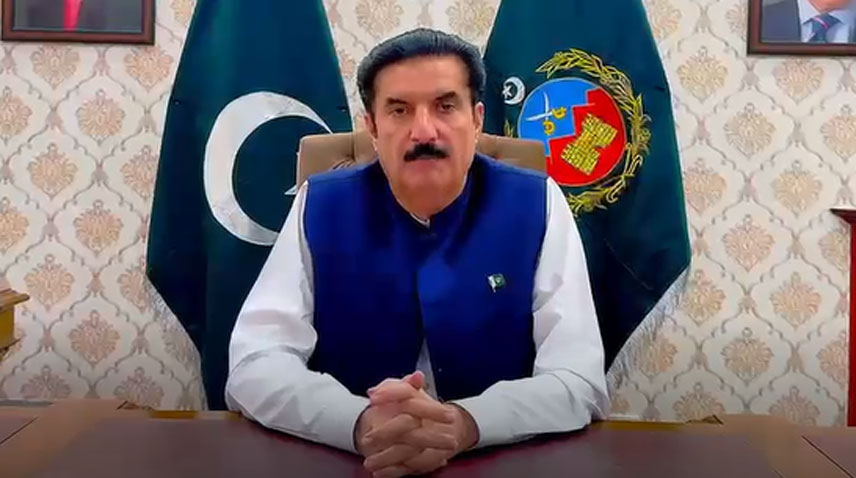
Image credit: Radio Pakistan
**PESHAWAR:** Khyber Pakhtunkhwa Governor Faisal Karim Kundi has warned that anyone involved in rioting, provocation or attempts to take the law into their own hands will face legal action, urging residents to remain peaceful after the imposition of emergency and governor's rule in the province.
In a public message carried by Radio Pakistan, Kundi called on citizens to avoid lawlessness and activities that could threaten public safety. He said political and other disagreements should be pursued through lawful means.
The warning came as the federal government's decision to impose emergency provisions under Articles 232 and 234 of the Constitution triggered opposition from the PTI and raised the prospect of protests and legal challenges.
Governor urges calm after proclamation
Kundi said the people of Khyber Pakhtunkhwa wanted peace, stability, development and prosperity. He claimed that residents had welcomed the presidential proclamation and were prepared to support security institutions in the fight against terrorism.
Those statements represented the governor's assessment of public sentiment. The PTI, which led the elected provincial government before the emergency measures, has strongly rejected the decision and says it will oppose it through courts, assemblies and public forums.
Kundi urged residents not to allow political tension to develop into violence or disruption. He said strict action would be taken under the law against people who threatened public peace, incited unrest or bypassed legal procedures.
The governor also appealed for cooperation with the police and other state institutions. He argued that lasting peace required collective responsibility as well as effective enforcement.
Terrorism and public safety
Kundi said the province's people no longer wanted to support groups the state describes as Fitna al-Khawarij, a term used by Pakistani authorities for the banned Tehreek-i-Taliban Pakistan and associated militants. He said residents would stand with security forces against terrorism.
The province has experienced rising militant violence, particularly in southern and former tribal districts. Police, soldiers, public officials and civilians have been killed in attacks, while disagreements between the federal and former provincial governments deepened over counterterrorism strategy and relations with Afghanistan.
The federal government cited deteriorating law and order and an alleged lack of provincial cooperation as grounds for the emergency. PTI leaders reject those allegations and say the province was excluded from important security decisions.
Kundi said the new administration would strengthen the police and Counter Terrorism Department through additional resources, training, technology and intelligence support. He also called for action against militant financing, recruitment, illegal arms and narcotics networks.
Political opposition and legal process
The PTI has described governor's rule as an attack on the public mandate and provincial autonomy. Party Chairman Gohar Ali Khan said terrorism required national unity and a joint strategy, not measures that weakened the elected provincial government.
The party's parliamentary group has said it will challenge the emergency as unconstitutional. Opposition alliances have also criticised the role of the federal government and President Asif Ali Zardari in approving the move.
The federal government maintains that the measures are constitutional. Law Minister Azam Nazeer Tarar said the president acted on the prime minister's advice under Articles 232 and 234 and that Parliament would be summoned to consider the proclamations.
Under Article 234, a proclamation concerning failure of constitutional machinery in a province must be presented to a joint sitting and expires after two months unless approved. It can be extended within constitutional limits but cannot continue indefinitely.
That process means the political and legal dispute will move beyond public statements. Courts and Parliament may be asked to assess the government's reasoning, the scope of the governor's authority and compliance with constitutional requirements.
Cooperation with other provinces
Kundi also called for stronger relations between KP, the other provinces and the federal government. He said shared experience and cooperation could help improve governance, development and economic opportunity.
The governor described the people of KP as peace-loving and said they wanted democratic values, public services and development to reach communities at the grassroots level. He urged residents to protect daily life from violence and confrontation.
His warning places responsibility on both citizens and authorities. Protesters retain the right to peaceful political and legal action, while police and the administration are responsible for enforcing the law proportionately and protecting public safety.
The immediate test will be whether political opposition to governor's rule remains peaceful and whether the administration distinguishes lawful dissent from violence. Kundi's message sets a firm enforcement position, but the legitimacy of that approach will depend on due process and respect for constitutional rights.
Source links
Comments
No approved comments yet.
Related Articles
 Faisal Kundi Chairs First KP Advisory Council Meeting With Security as Top Priority
 Ishaq Dar Condemns Riyadh Airport Attack as Six Pakistanis Are Injured
 Reported KP Emergency Framework Includes District Development Council and Advisory Body
 British Council Marks a Decade of Library Services in Karachi and Lahore