Pakistan's Security in 2026: Between Regional Wars and an Expanding Terror Threat
Pakistan faces a crowded 2026 security agenda, from the Afghanistan border and TTP violence to Middle East instability and new defence ties.
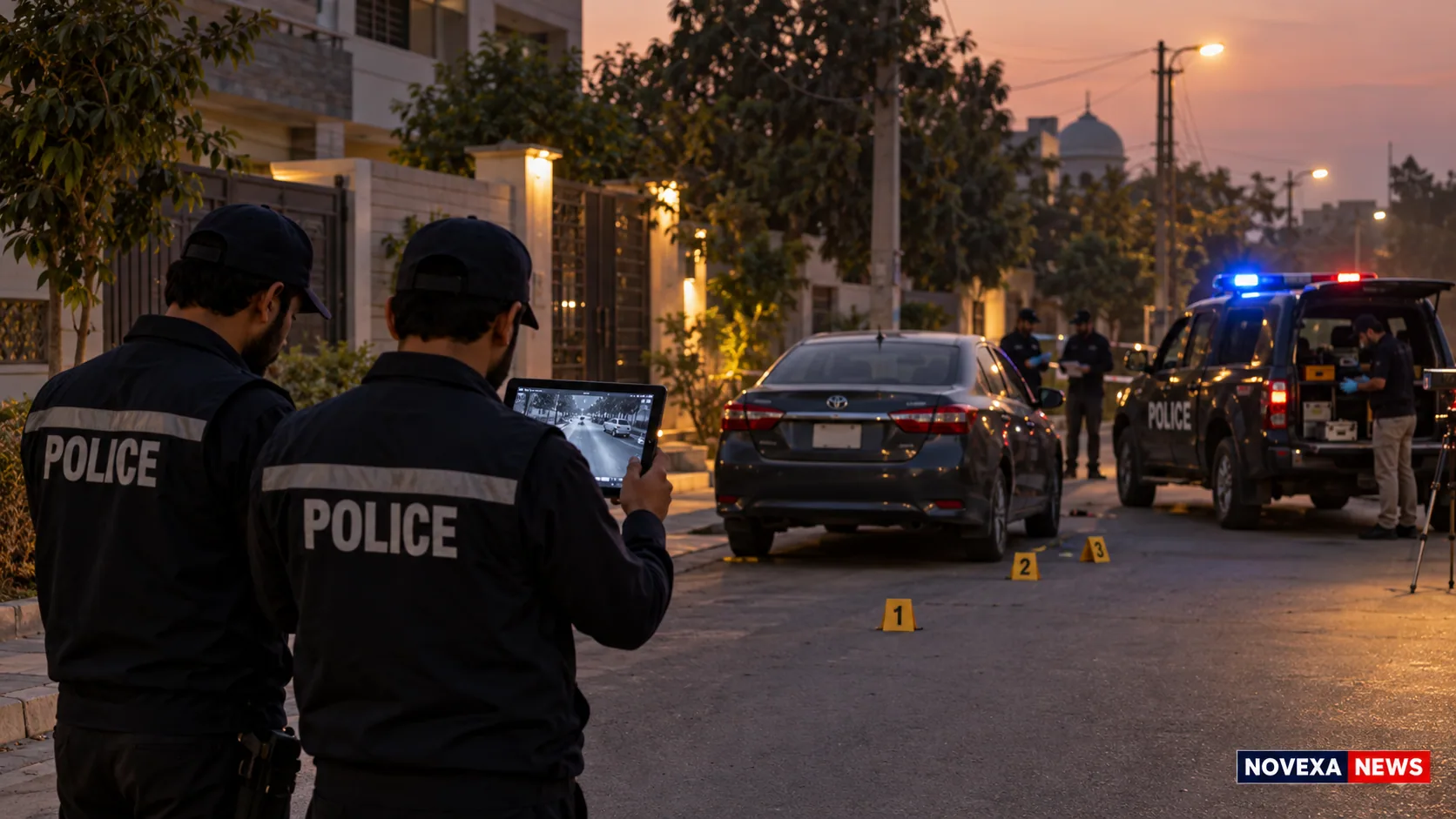
Image credit: Original Novexa News graphic
Pakistan has entered 2026 in a security environment far more complicated than the traditional India-Pakistan rivalry. Islamabad is now dealing with pressure from its western border, militancy inside the country and instability across the wider Middle East, all while trying to protect fragile economic and diplomatic interests.
The most immediate pressure point remains Afghanistan. Relations between Pakistan and the Taliban-led government in Kabul have worsened after years of disagreement over cross-border militancy. Islamabad has repeatedly accused militant groups, especially the Tehreek-e-Taliban Pakistan, of using Afghan territory to plan or support attacks inside Pakistan. Kabul has denied those allegations and argues that Pakistan's internal security issues cannot simply be blamed on Afghanistan.
The dispute has moved beyond rhetoric. Border tensions and armed clashes have affected civilians and hardened public attitudes on both sides. For Pakistan, the western border is no longer a secondary security theatre. It is a daily challenge involving border management, refugee pressure, trade disruptions, militant sanctuaries and the risk of sudden escalation.
United Nations assessments and Pakistan's own statements have kept the TTP issue at the centre of the debate. Islamabad has warned that militant activity from Afghan soil poses a direct threat to Pakistan's security. The concern is not only the number of attacks, but the possibility that militant groups may gain operational space if border coordination remains weak and Kabul refuses deeper cooperation.
That creates a difficult policy problem. A purely military response may disrupt attacks, but it cannot by itself produce a stable western border. Pakistan needs stronger intelligence coordination, better policing in vulnerable districts, improved border controls and a diplomatic track that keeps channels with Kabul open even during periods of anger.
The second major challenge comes from the Middle East. The extended United States-Iran crisis has placed Pakistan in a delicate position. Islamabad has important ties with Washington, a long border and historical relationship with Iran, and deep political and economic links with Gulf states. Any widening conflict would force Pakistan to manage competing expectations from partners that do not always share the same goals.
Pakistan has tried to present itself as a supporter of diplomacy rather than a participant in confrontation. Norway's Foreign Minister Espen Barth Eide publicly recognised Pakistan's role in facilitating dialogue between Washington and Tehran earlier in 2026, while Pakistan's Foreign Office has also described its role as that of a facilitator seeking de-escalation. That diplomatic space gives Islamabad relevance, but it also brings responsibility.
Diplomacy, however, cannot remove the economic risks. A prolonged Middle East conflict could push up energy prices, disrupt shipping routes, increase pressure on Pakistan's foreign exchange reserves and create uncertainty for millions of Pakistanis working in Gulf countries. For Islamabad, regional stability is not an abstract foreign-policy goal; it is tied directly to remittances, fuel costs, trade and domestic inflation.
The Makkah Joint Defence Agreement with Saudi Arabia and Turkiye adds another layer to this changing security landscape. The pact gives Pakistan a stronger platform for defence cooperation with two important partners, including joint exercises, strategic coordination and possible defence-technology collaboration. It also signals that regional states are trying to shape their own security arrangements in a more multipolar world.
At the same time, Pakistan has to avoid being pulled into conflicts that do not serve its core national interest. A closer defence relationship with Riyadh and Ankara may strengthen deterrence and diplomacy, but Islamabad will have to balance that with its relationship with Iran and its need to avoid a wider sectarian or regional confrontation.
Inside Pakistan, Balochistan remains one of the most serious long-term security concerns. The province has seen repeated militant attacks against security personnel, infrastructure and state-linked targets. The issue is complicated by separatist violence, geography, cross-border movement and the province's strategic importance as a resource-rich region connected to the Arabian Sea and major development projects.
Militancy in Balochistan is not only a law-and-order problem. It affects investor confidence, local livelihoods, infrastructure security and public trust in the state. A sustainable response needs more than force. It requires credible policing, intelligence work, political engagement, development that local communities can feel and a serious effort to reduce the grievances that militant groups exploit.
The TTP threat creates another layer of pressure, particularly in areas near the Afghan border. Attacks linked to militant networks challenge Pakistan's ability to maintain internal security while also avoiding a complete breakdown in relations with Kabul. If Pakistan closes borders too often, trade and civilians suffer. If it does too little, militant groups may interpret restraint as weakness.
The central lesson of 2026 is that Pakistan's security threat is no longer concentrated on one border or one familiar adversary. The country faces terrorism at home, instability on the western frontier and regional wars that can affect energy, diplomacy and overseas workers. That requires strategic restraint as much as military strength.
Pakistan's best option is a layered policy: firm counterterrorism at home, sustained diplomacy with Afghanistan, careful mediation where it has credibility, and defence partnerships that remain defensive rather than provocative. Islamabad's challenge is to use its strategic location as leverage without becoming trapped by the conflicts around it.
This is not only a story of threats. It is also a test of Pakistan's ability to manage multiple crises at once, protect national interests and promote regional stability through calculated engagement. The country cannot choose its geography, but it can choose whether its response is reactive and confrontational or disciplined, diplomatic and security-focused.
Source links
Comments
No approved comments yet.