Pakistan Reaffirms Kashmir's Disputed Status
Pakistan has rejected India's latest position on the status and depiction of Jammu and Kashmir, saying that unilateral claims and maps cannot change what Islamabad describes as the territory's internationally recognised…
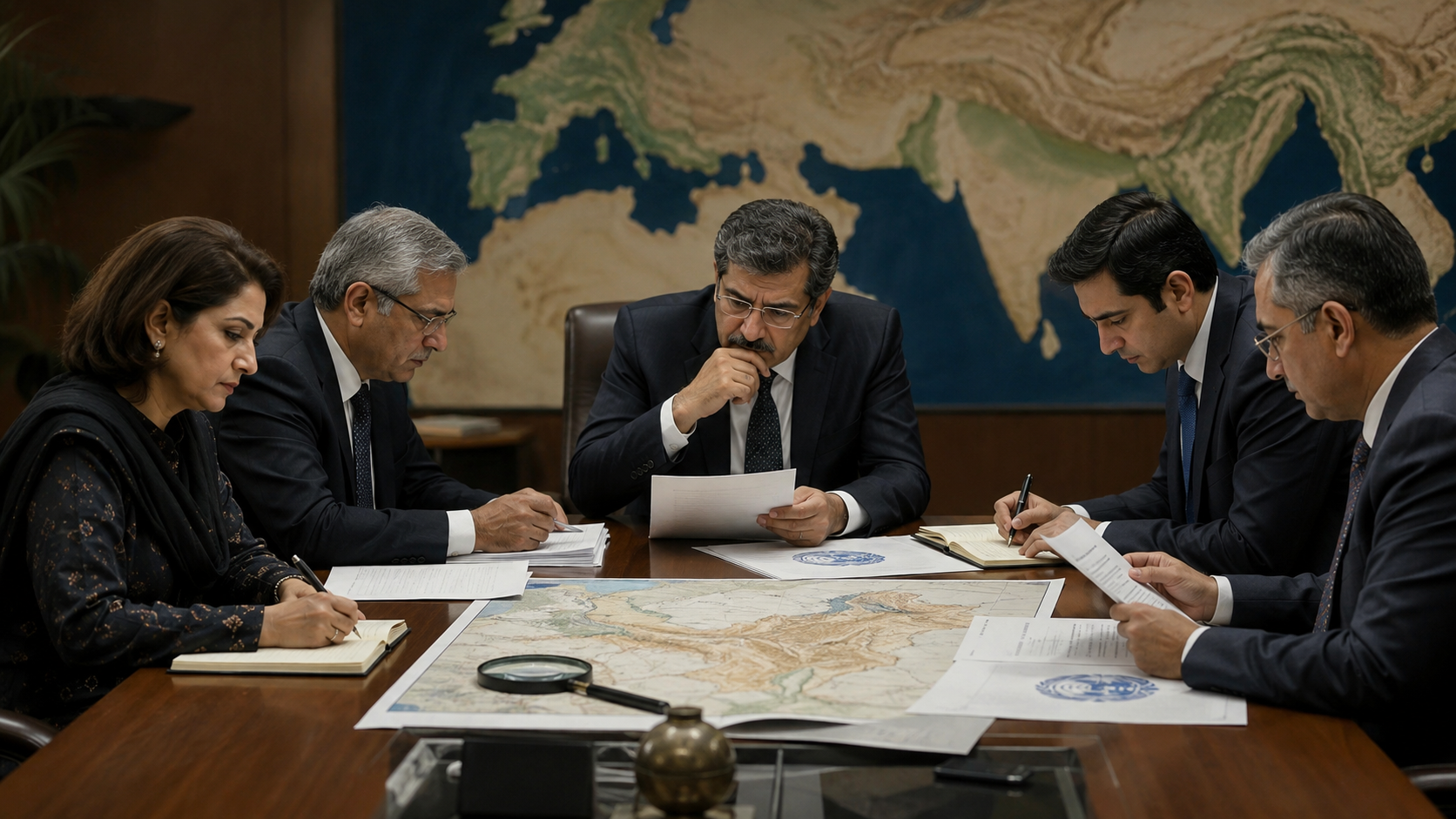
Image credit: AI-generated editorial illustration
Pakistan has rejected India's latest position on the status and depiction of Jammu and Kashmir, saying that unilateral claims and maps cannot change what Islamabad describes as the territory's internationally recognised disputed character.
What prompted the response
The Foreign Office statement came after India's Ministry of External Affairs commented on how Jammu and Kashmir and Ladakh should be shown on maps. The dispute surfaced around a wider United Nations discussion on map representation, but Pakistan's response focused on the long-standing legal and diplomatic status of Jammu and Kashmir.
Foreign Office spokesperson Sajjad Haider Khan said Pakistan categorically rejected India's assertions, calling them contrary to internationally recognised facts. Islamabad's central argument is that India cannot settle the dispute by issuing official claims, administrative orders or cartographic positions.
Pakistan's stated position
Pakistan says Jammu and Kashmir remains one of the oldest unresolved disputes on the agenda of the United Nations Security Council. The Foreign Office repeated that the region's final status must be determined according to relevant Security Council resolutions and the will of the Kashmiri people.
The statement also referred to a free and impartial plebiscite under UN auspices. That wording reflects Pakistan's long-standing position that the dispute should be resolved through a process that directly records the wishes of the people of Jammu and Kashmir rather than through unilateral actions by either side.
The map question
The immediate exchange involved maps, but the issue is larger than cartography. Islamabad said official United Nations maps, which depict Jammu and Kashmir as a disputed territory, remain the proper representation of its current legal status. Pakistan rejected India's official maps and sovereignty claims as having no bearing on the dispute.
Maps are powerful political objects because they make claims look settled. That is why this dispute often returns to cartographic language. Pakistan's message was that a map issued by one party cannot replace international legal processes or Security Council resolutions.
Why the wording matters
The phrase "internationally recognised disputed status" is central to Pakistan's diplomacy on Kashmir. It allows Islamabad to argue that the issue is not merely a bilateral disagreement or an internal matter for India, but a question tied to UN resolutions and international commitments.
India rejects Pakistan's framing and maintains its own position on Jammu and Kashmir. That disagreement is why even apparently technical questions, such as map projection or official depiction, can become diplomatic flashpoints between the two neighbours.
Human rights concerns
Pakistan also used the statement to call attention to conditions in Indian-administered Kashmir. The Foreign Office urged the international community to press India to stop alleged human rights violations and to support the right to self-determination of the Kashmiri people.
These allegations are part of a broader diplomatic pattern. Islamabad regularly raises restrictions on political activity, civil liberties and security measures in the region, while New Delhi rejects outside criticism of its administration there. The latest statement keeps that argument active at a time when both countries remain sensitive to international language on Kashmir.
Regional implications
The exchange does not by itself change the ground situation, but it shows how quickly the Kashmir issue can re-enter public diplomacy. Pakistan and India have fought wars and endured repeated crises over the region. Even when official channels are quiet, statements from either side can revive the dispute in global forums.
For Pakistan, the priority is to keep the issue visible internationally. For India, the priority is to reinforce its official position and resist third-party framing. The gap between those two approaches remains wide.
The latest response is therefore less a new policy than a reaffirmation. Pakistan is signalling that it will continue to challenge any move it sees as normalising Indian sovereignty claims over Jammu and Kashmir without a negotiated or UN-backed settlement.
Source links
Comments
No approved comments yet.