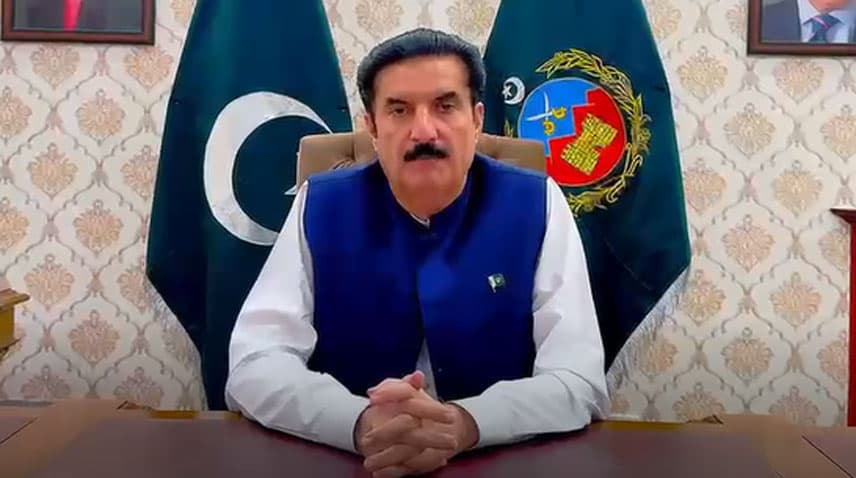
JI Long March Sets Out From Bab-i-Khyber Against Petroleum Levy
Jamaat-i-Islami's Khyber Pakhtunkhwa long march sets out from Bab-i-Khyber toward Islamabad in protest against the petroleum levy.

Image credit: AI-generated editorial illustration by OpenAI
Jamaat-i-Islami workers have begun a long march toward Islamabad from the historic Bab-i-Khyber in Jamrud, opening a new stage of the party's campaign for the withdrawal of Pakistan's petroleum levy and relief from rising fuel-related costs.
The Khyber Pakhtunkhwa procession set out following a call from JI Emir Hafiz Naeemur Rehman. Provincial party leader Abdul Wasay led the opening gathering alongside former lawmakers, district officials and youth organisers, according to The News.
Participants assembled near the Khyber gateway before beginning the journey through the province. Organisers said the group would travel through Bara and Peshawar as it moved toward the federal capital, joining the party's wider nationwide mobilisation.
This article updates Novexa's earlier report that JI expected its Islamabad march to arrive on September 23 and 24. The latest development confirms that the Khyber Pakhtunkhwa segment is now under way rather than remaining only a planned action.
A nationwide campaign
JI has combined road processions with a separate rail-based mobilisation from Karachi. Hafiz Naeemur Rehman launched what the party calls a "super train march" from Karachi toward Islamabad, with scheduled stops and public addresses along the route.
Geo News reported that the Karachi caravan was due to travel through Rohri and Multan as part of the same pressure campaign. The different routes are intended to bring supporters from several provinces into a shared protest focused on fuel taxation and household costs.
The party says the petroleum levy adds an excessive burden for consumers already managing high transport, electricity and food expenses. Because fuel costs feed into freight and public transport fares, JI argues that the effect extends beyond motorists to households and businesses across the economy.
The federal government has pointed to fiscal constraints and commitments associated with Pakistan's International Monetary Fund programme. Petroleum levies provide substantial revenue, making a complete withdrawal difficult without spending cuts, alternative taxation or changes agreed with lenders.
Talks have not produced an agreement
Government and JI representatives have held several rounds of talks, but they have not reached a final settlement. Officials asked the party to postpone the march because of the security environment, while JI said the mobilisation would continue unless the government presented a formal and credible relief proposal.
The party has previously organised sit-ins, demonstrations and limited strikes over the levy. Those actions established the issue as a continuing political campaign rather than a single-day protest. The march from Bab-i-Khyber marks the point at which supporters in Khyber Pakhtunkhwa have begun moving toward Islamabad.
JI leaders say the procession will remain peaceful and will avoid unnecessary disruption. Authorities, however, are preparing for several protest calls during the same week, including a Pakistan Tehreek-e-Insaf demonstration and a farmers' march.
Security measures around Islamabad
The overlap has prompted extensive preparations in Islamabad and Rawalpindi. Dawn reported that more than 22,000 security personnel were expected to be deployed in the capital as officials prepared to restrict dozens of entry points in the twin cities.
Containers and barriers have been positioned on major routes. Authorities say the measures are intended to protect public buildings and prevent roads from being occupied, while businesses and transport operators are concerned about traffic disruption and the cost of prolonged restrictions.
The government has also cited court directions concerning the public's right to move freely and the use of state resources in political mobilisation. Opposition parties argue that peaceful assembly is a constitutional right and that preventive closures can punish residents before any violation occurs.
That tension will shape the next phase of the march. A procession that remains peaceful and uses agreed routes would strengthen JI's argument that its economic demands can be raised without paralysing the capital. Any clash or broad closure would shift public attention from the petroleum levy to law and order.
The immediate question is whether renewed talks can produce a proposal before the march reaches Islamabad. JI wants the levy withdrawn, while the government must account for revenue and external financing commitments. Without movement on either side, the convergence of caravans from Khyber Pakhtunkhwa and Karachi is likely to increase political pressure and the strain on the capital's transport network.
Source links
Comments
No approved comments yet.