Balochistan Train Services Suspended for Repairs
Balochistan train services face a temporary suspension and schedule changes as railway authorities carry out track repair work.
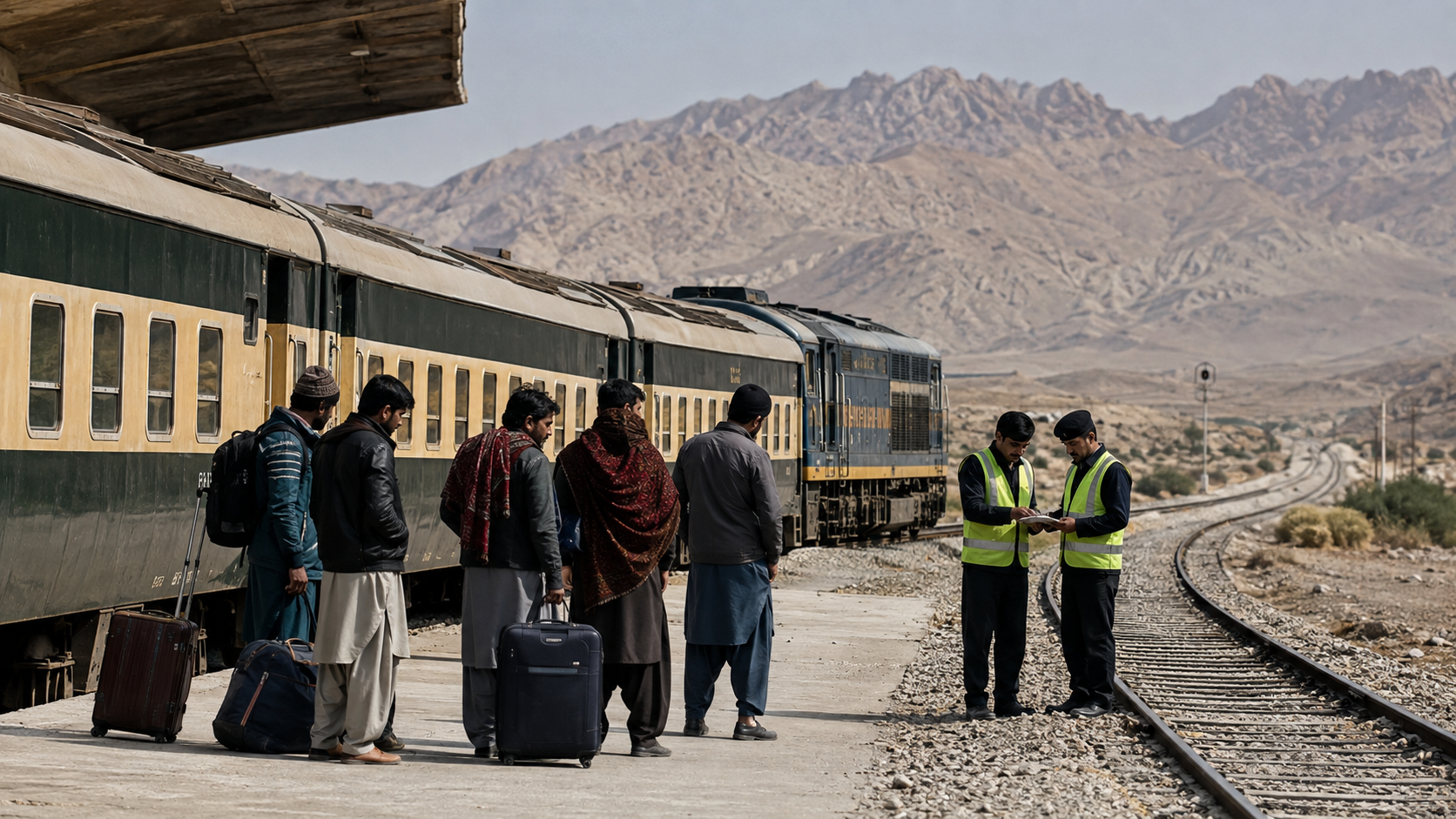
Image credit: AI-generated image / Novexa News
Pakistan Railways has announced a brief suspension and schedule adjustment affecting passenger train connectivity between Balochistan and the rest of the country, with officials citing track repairs and maintenance work on the route.
According to the railway notice described in the draft and recent regional reporting, the Jaffar Express service from Quetta to Peshawar has been cancelled for two days, while the Peshawar-Quetta service is being curtailed short of Quetta during the disruption. The changes are expected to affect passengers travelling between Quetta, Jacobabad, Peshawar and other connecting cities.
What has changed for passengers
The immediate impact is on passengers who planned to use the Jaffar Express between Quetta and Peshawar. Travellers from Quetta toward Peshawar during the suspension period will need to delay travel or use alternative transport until the service resumes.
The train running in the opposite direction is also affected. Instead of reaching Quetta as scheduled, the Peshawar-Quetta service is expected to terminate at Jacobabad during the temporary adjustment. That leaves passengers bound for Quetta needing onward arrangements by road or later rail services.
Why the route was paused
Railway officials have linked the pause to track repair and maintenance needs. In Balochistan, even short disruptions can have a wide effect because rail options are already limited and many passengers rely on train travel for affordable long-distance movement.
Routine maintenance is still necessary. Worn tracks, damaged bridges and unstable sections can create serious safety risks if services are pushed through without repairs. The challenge is to finish the work quickly while giving passengers clear schedule information.
Balochistan has faced repeated rail disruption
The latest pause comes after months of uncertainty for Balochistan's rail network. Dawn reported in August that train services from Quetta had been suspended after the destruction of a railway bridge, disrupting travel on a key section.
The Express Tribune also reported that passenger services from Quetta were halted after a railway bridge was destroyed in a blast. Those incidents added pressure to a network that already faces difficult terrain, long distances and security concerns.
Jaffar Express remains central
The Jaffar Express is one of the most important passenger links for Balochistan because it connects Quetta with cities in Punjab and Khyber Pakhtunkhwa. When the service is cancelled or shortened, passengers do not always have a simple rail substitute.
For students, workers, families and traders, a two-day shutdown can mean higher road fares, longer journeys and uncertainty around onward travel. That is why short railway notices often create larger public inconvenience than their duration suggests.
Other services remain under strain
The draft also notes that other Balochistan-linked services, including Bolan Mail and Chaman Passenger, have faced extended disruption. Those services matter because they connect communities to Karachi, border towns and wider national routes.
When multiple services are unavailable at the same time, the effect is cumulative. Passengers lose flexibility, road transport absorbs extra demand, and smaller communities become more dependent on expensive or less predictable travel options.
What needs to happen next
The practical need now is clear communication from railway authorities. Passengers need confirmed resumption times, station-level updates and guidance on whether tickets will be adjusted, refunded or shifted to later departures.
Station staff also need to communicate any onward road or rail options for passengers stopping at Jacobabad. Without that guidance, a schedule change can leave families and workers stranded midway through a journey.
In the longer term, the repeated disruption shows why Balochistan's railway infrastructure needs sustained investment. Track repairs and bridge restoration cannot remain only emergency responses. The province needs a network that can handle maintenance, security challenges and passenger demand without repeated long interruptions.
For now, the suspension is being presented as a short operational pause for repairs. Travellers will be watching whether the Jaffar Express returns on schedule, because in Balochistan even a temporary rail disruption can quickly become a larger test of connectivity, affordability and public trust in the transport system.
Source links
Comments
No approved comments yet.