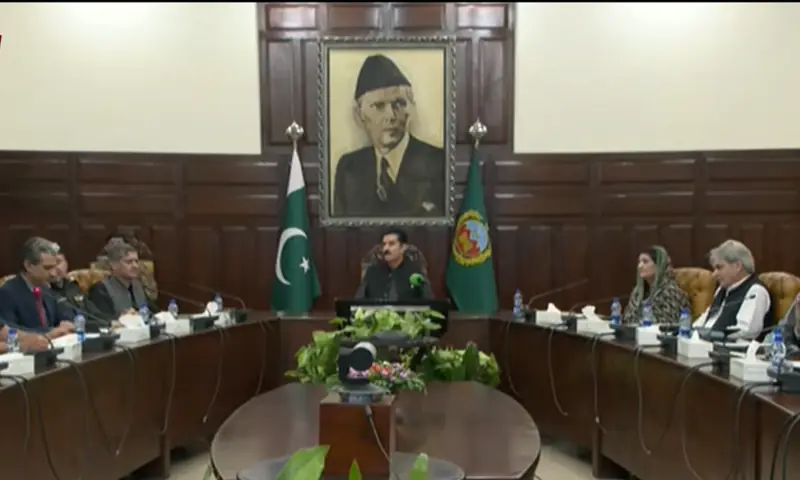
Asim Munir Reviews POF Modernisation and Export Potential
Field Marshal Asim Munir reviewed production, export potential and modernisation at Pakistan Ordnance Factories in Wah, including two planned industrial plants.
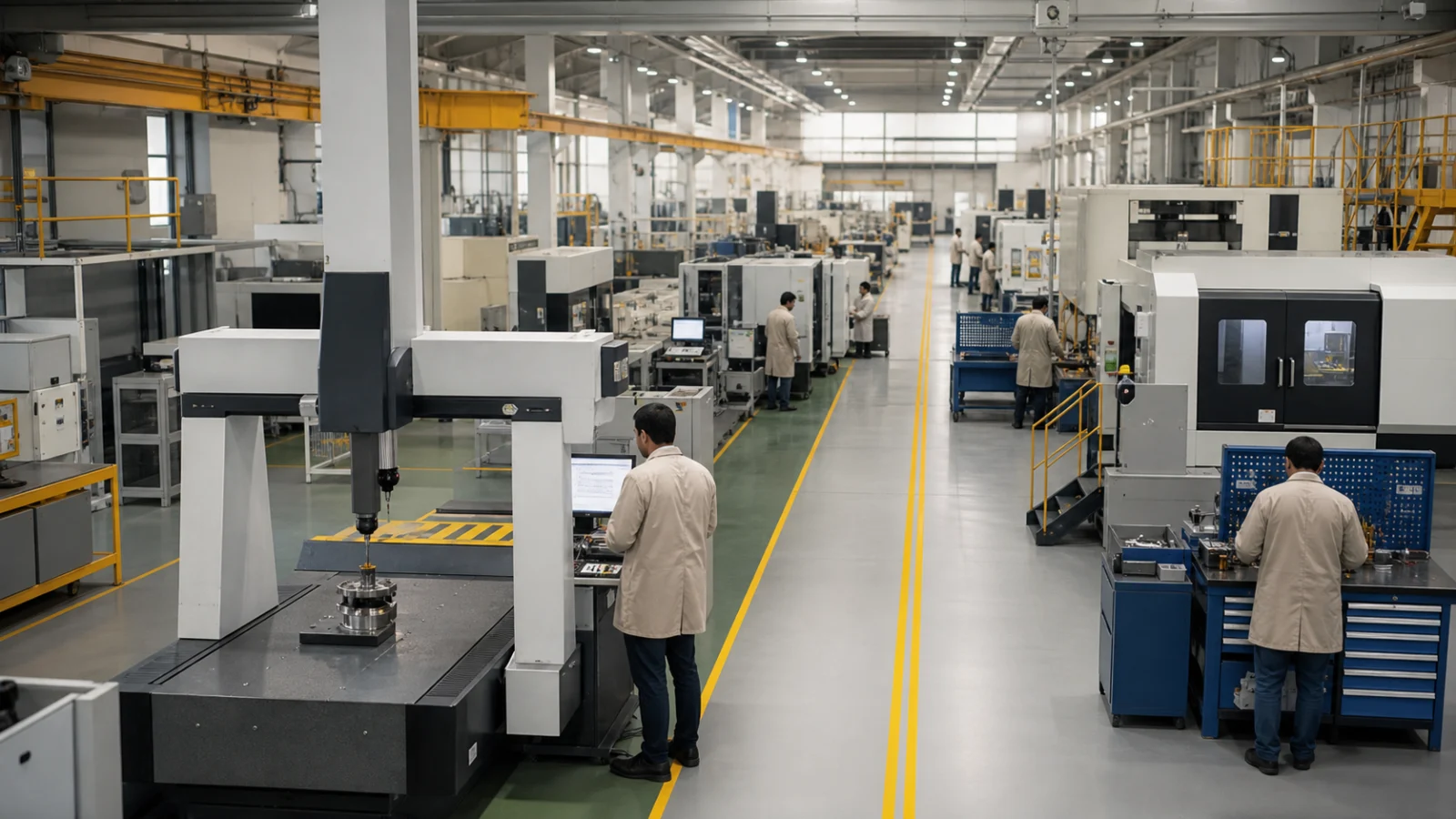
Image credit: AI-generated editorial illustration by Novexa News
Chief of Defence Forces and Chief of Army Staff Field Marshal Syed Asim Munir visited Pakistan Ordnance Factories in Wah on Saturday to review production capacity, export potential and the modernisation of one of Pakistan's largest defence-industrial organisations.
According to a statement issued by Inter-Services Public Relations and carried by state media, Munir received briefings on POF operations, indigenous development and the manufacture of military equipment. He also observed tests and trials of locally designed arms and ammunition.
The visit placed particular emphasis on institutional reform and industrial expansion. Officials briefed the army chief on the corporatisation process following the Defence Industrial Production and Regulatory Authority of Pakistan Ordinance and on two new plants expected to begin production before the end of 2026.
What the military said was reviewed
ISPR said the visit focused on three connected areas: POF's present manufacturing capability, its contribution to Pakistan's defence-industrial base and its potential to increase exports.
Pakistan Ordnance Factories produces a wide range of conventional military equipment and ammunition for the armed forces. Its public product portfolio includes infantry weapons, small-arms ammunition, artillery and mortar ammunition, tank and anti-tank systems, rockets and specialised industrial products.
Munir was shown locally developed and manufactured equipment during the visit. The public statement did not provide technical specifications, production figures or the results of individual trials, which limits any independent assessment of performance.
The demonstrations nevertheless served an institutional purpose: they allowed senior military leadership to review how research, testing and manufacturing are being connected inside the Wah complex.
Two industrial plants form part of the upgrade
Officials said two new industrial plants are being installed and are likely to start production by the end of the year. The announcement did not identify what the plants will produce, their capacity, cost or funding arrangement.
Those details will matter when progress is assessed. A new facility can expand output, replace ageing machinery or introduce a new product line, but its economic value depends on commissioning, workforce training, quality assurance and a reliable supply of components.
Modern defence manufacturing also requires more than physical machinery. Digital design, precision measurement, materials science, secure software, testing standards and maintenance systems determine whether a plant can deliver products consistently at scale.
If the new facilities begin operating on schedule, the next useful indicators would be production readiness, local content, safety certification and the extent to which they reduce dependence on imported inputs.
Corporatisation and the DIPRA framework
Munir was briefed on the progress of POF corporatisation after enactment of the DIPRA Ordinance. Corporatisation generally aims to introduce clearer commercial structures, financial accountability and operational flexibility while an organisation remains under state ownership or control.
For a defence producer, the process can help separate policy oversight from day-to-day commercial management. It may also support joint ventures, exports and more transparent measurement of costs.
The transition carries risks as well. National-security production cannot be judged only by short-term profitability because governments may need to maintain reserve capacity for emergencies. Corporate reform must also preserve parliamentary oversight, procurement integrity, worker protections and controls on sensitive technology.
The public statements did not specify which parts of POF will be corporatised or how governance will change. Greater detail about the DIPRA framework would help establish how commercial objectives will be balanced with strategic requirements.
Why indigenous defence production matters
Recent wars and disruptions to global supply chains have pushed many countries to reassess dependence on imported military equipment. Export controls, sanctions, shipping delays and sudden increases in international demand can restrict access when equipment is needed most.
Domestic production can improve supply security and allow equipment to be adapted to local operational requirements. It can also support engineering skills, technical employment and industrial research that may have civilian applications.
Indigenous production does not mean every component must be made locally. Modern systems rely on international supply chains for electronics, specialised metals, chemicals and machine tools. A realistic strategy identifies which capabilities are strategically essential, which can be sourced from trusted partners and where local production is economically sustainable.
POF's long-term performance will therefore depend on the depth of its supplier network and not simply the number of products assembled at Wah.
Export potential needs competitive standards
ISPR highlighted POF's export potential during the visit. Defence exports can earn foreign exchange, extend production runs and strengthen relationships with partner countries.
The market is highly competitive and politically sensitive. Customers assess price, reliability, after-sales support, compatibility and delivery schedules. Exporting states must also apply end-user controls so equipment is not diverted to prohibited users or used in violation of international obligations.
Pakistan will need consistent quality, transparent contracts and dependable maintenance support if POF is to expand beyond established markets. Export growth should be measured through confirmed orders and deliveries rather than expressions of interest alone.
Research, skills and civilian industrial benefits
Defence factories depend on engineers, machinists, chemists, software specialists and quality-control professionals. Investment in training and partnerships with universities can deepen the skills required for advanced manufacturing.
Some capabilities developed for defence, including precision machining, testing, industrial chemicals and materials engineering, can support civilian sectors when security rules permit. That spillover is more likely when institutions create formal routes for commercial research and small suppliers to participate.
POF has previously highlighted engagement with manufacturers, exporters, investors and academia. A stronger supplier ecosystem could allow more components to be sourced domestically while giving private firms access to demanding industrial standards.
What should be watched next
The immediate milestones are the commissioning of the two plants and further detail on the corporatisation programme. Public reporting should clarify whether the facilities begin production by year-end and how their output fits Pakistan's defence requirements.
Other useful measures include the share of local components, export orders, research partnerships, safety performance and independent financial oversight. These indicators would show whether modernisation is producing durable institutional improvement rather than a temporary increase in capacity.
Munir's visit signals that defence-industrial self-reliance remains a high priority for Pakistan's military leadership. POF's challenge is to translate that priority into efficient production, credible quality standards and technology development that can be sustained over the long term.
*The featured image is an AI-generated editorial illustration by Novexa News and does not depict POF Wah, Field Marshal Asim Munir or the facilities reviewed during the visit.*
Source links
Comments
No approved comments yet.