Trump Names Jay Clayton to Lead New Federal AI Task Force
Donald Trump names intelligence chief Jay Clayton to lead a federal AI task force the administration calls the Super Intelligence Force.
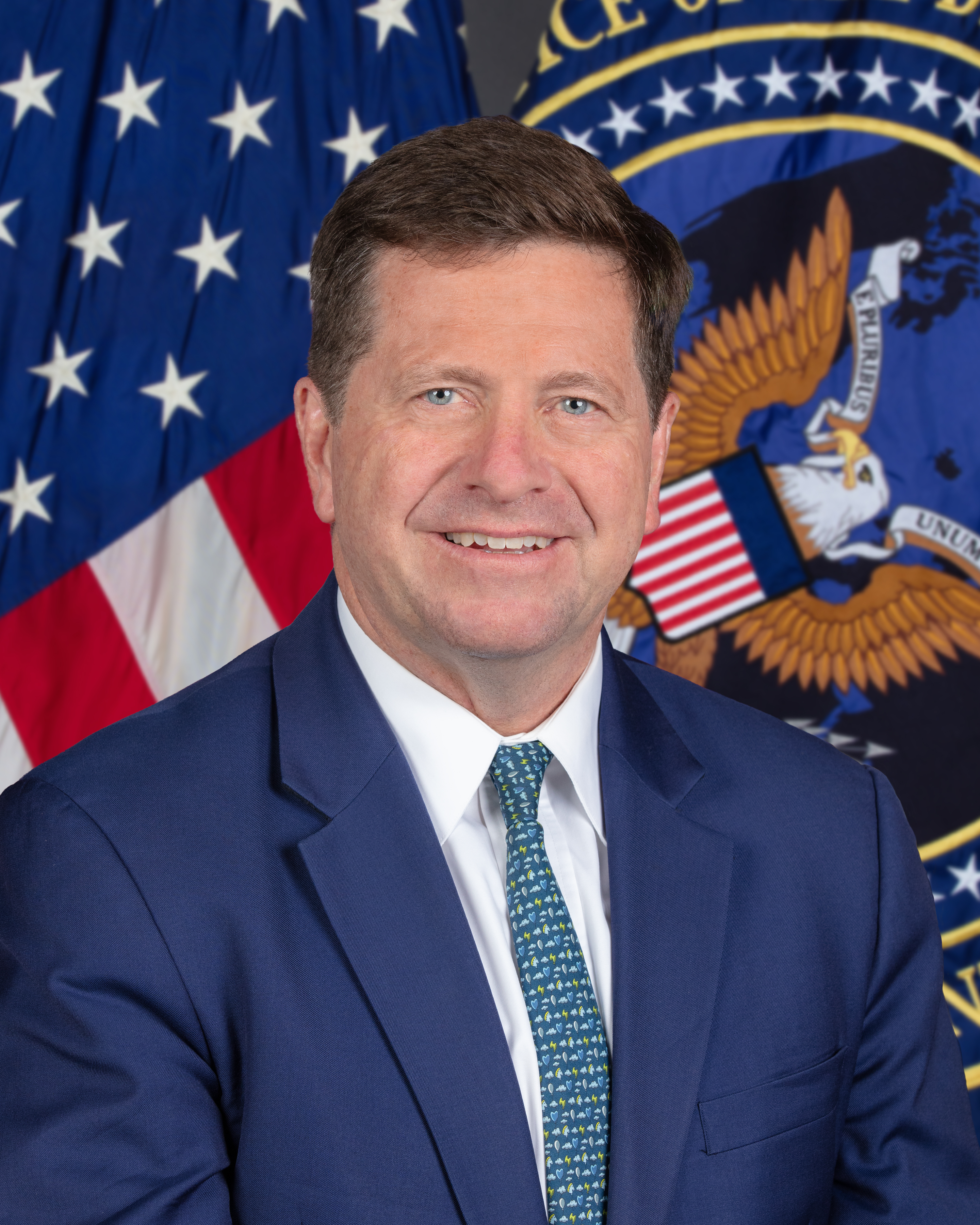
Image credit: The White House / official portrait
WASHINGTON, October 4, 2026: US President Donald Trump has named Director of National Intelligence Jay Clayton to lead a new federal task force intended to coordinate government policy and outreach on artificial intelligence, which the administration now calls “super intelligence.”
Trump announced the “Super Intelligence Force” on Sunday following a White House meeting with technology executives. The group will coordinate engagement with consumers, public-interest organisations, religious groups, critical-infrastructure providers and AI companies, according to Associated Press.
The task force will report to Trump and White House Chief of Staff Susie Wiles. Other senior members include Federal Trade Commission Chairman Andrew Ferguson, Pentagon technology official Emil Michael and Office of Personnel Management Director Scott Kupor.
The announcement gives the country's intelligence chief a central role in technology policy as Washington increasingly treats advanced AI as an issue of economic competition, cybersecurity and national security.
Administration Rebrands AI
Trump has directed executive-branch agencies to use the term “super intelligence” in place of artificial intelligence. A White House fact sheet presents the change as recognition of the technology's potential and links it to federal investment in scientific, medical, energy and manufacturing applications.
The terminology is an administration branding decision. In technical and academic usage, artificial intelligence remains the broad term for computer systems that perform tasks associated with human cognition, while “superintelligence” often refers to a hypothetical system whose capabilities exceed human performance across most domains.
Trump said the new body would work to preserve US leadership and protect American interests. The announcement did not by itself create binding technical standards, mandatory reporting rules for companies or a new military service.
The administration has generally argued against broad federal restrictions that it believes could slow innovation and help China. At the same time, officials have highlighted risks involving cybersecurity, critical infrastructure, misuse and the possibility that increasingly autonomous systems could behave unpredictably.
Intelligence Chief Takes Technology Role
Clayton was sworn in as director of national intelligence in August. The White House biography says he previously served as US attorney for the Southern District of New York and chaired the Securities and Exchange Commission during Trump's first term.
His background is primarily in law, financial regulation and government rather than AI research. Supporters may view that experience as useful for coordinating agencies and balancing economic, enforcement and national-security concerns. Critics are likely to question whether an intelligence official should have such a prominent role in civilian technology policy and whether the task force will provide enough independent oversight.
Clayton succeeds venture capitalist David Sacks as the administration's main AI coordinator, although Sacks has continued advising Trump. Nvidia chief executive Jensen Huang and other technology leaders have also participated in administration discussions about the sector.
The task force is expected to connect work spread across the White House, intelligence agencies, economic regulators, defence officials and workforce policy. Its named leadership reflects that broad remit: Ferguson brings consumer-protection and competition authority, Michael represents defence research, and Kupor oversees the federal workforce.
Details remain limited about the group's formal powers, staffing, budget and timetable. It is also unclear how its work will interact with the Office of Science and Technology Policy, existing agency AI programmes and congressional proposals.
The decision nevertheless signals that the White House views leadership in advanced AI as a strategic contest requiring direct presidential coordination. Clayton's dual role also means debates over innovation, safety and economic policy will be considered alongside intelligence assessments of foreign competitors and cyber threats.
The task force's practical significance will depend on the policies it produces and whether agencies or Congress translate its recommendations into enforceable rules, funding decisions or procurement standards.
Source links
Comments
No approved comments yet.