Baghdad Marks Transition in International Security Ties
September 30, 2026: Iraq has formally announced the conclusion of the US-led international coalition’s military mission in the country, marking a significant transition in Iraq’s post-ISIS security arrangements as coalit
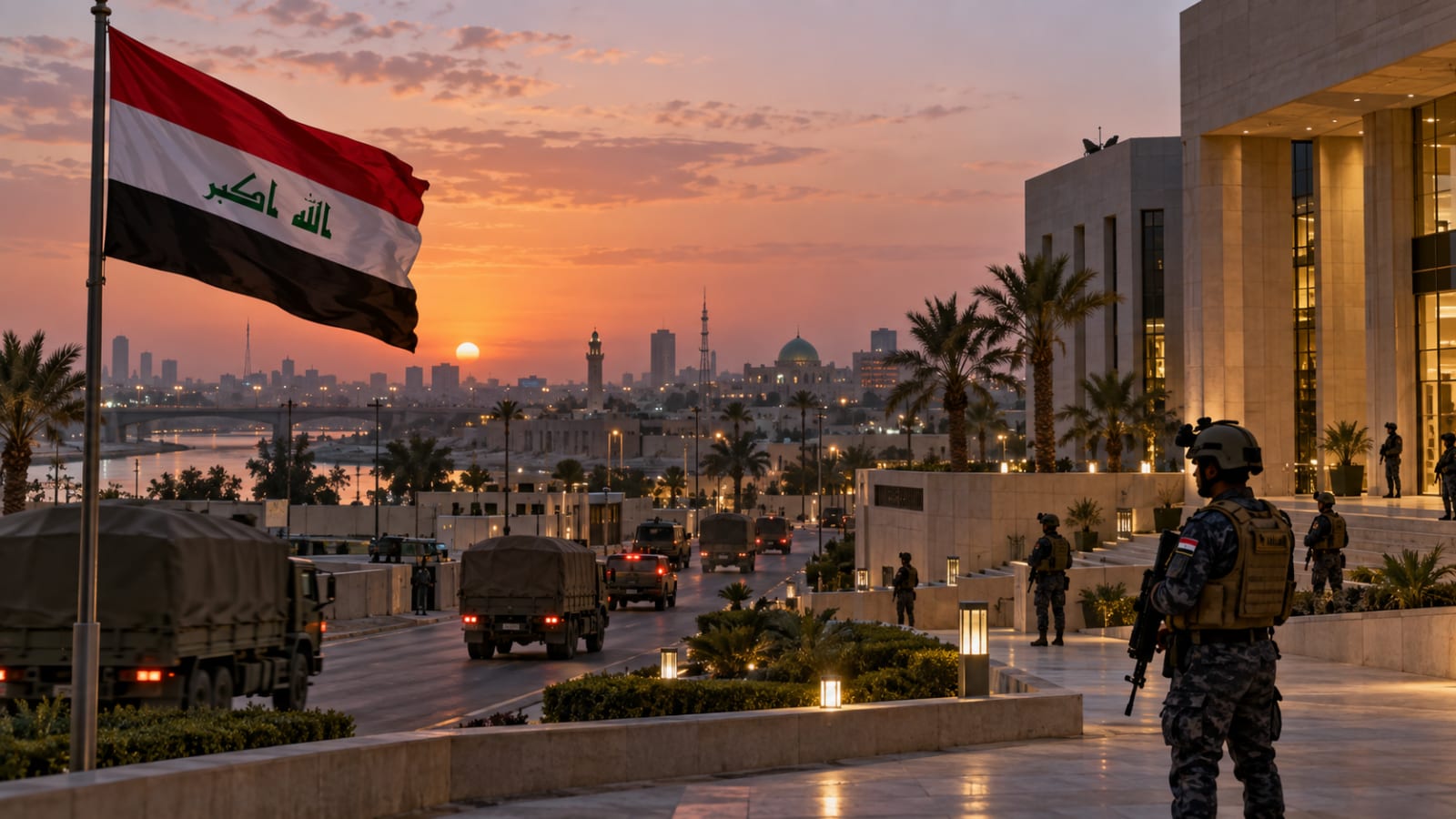
Image credit: AI-generated editorial illustration / Novexa News
September 30, 2026: Iraq has formally announced the conclusion of the US-led international coalition’s military mission in the country, marking a significant transition in Iraq’s post-ISIS security arrangements as coalition member states move toward bilateral security relationships with Baghdad.
Iraqi Prime Minister’s Security Adviser Qasim al-Araji described the conclusion of the coalition mission as an important milestone, saying the transition followed negotiations and understandings that began in July 2021. According to a statement carried by the official Iraqi News Agency, the new phase is intended to consolidate Iraq’s sovereignty while maintaining cooperation with former coalition partners through bilateral channels.
The announcement follows the completion of the withdrawal of US forces from their remaining positions in Iraq by the end of September. The United States and its coalition partners have formally concluded Operation Inherent Resolve in Iraq, while the departure of coalition personnel and equipment from Erbil Air Base marked the end of the military mission, according to US officials.
US Department of War spokesman Sean Parnell said the development represented a transition from a wartime coalition structure toward an Iraqi-led security effort supported by a more conventional bilateral security relationship. He said the campaign had defeated ISIS as an organised military threat in Iraq and across the region, while stressing that responsibility for addressing remaining security challenges would increasingly rest with the Iraqi government and its security institutions.
Qasim al-Araji emphasised that the conclusion of the coalition’s military mission should not be interpreted as the end of Iraq’s partnerships with coalition member states. He said security and intelligence cooperation, information and expertise sharing and capacity-building initiatives would continue on the basis of mutual respect and shared interests, allowing Iraq to maintain international security cooperation without the continuation of the coalition’s previous military framework.
The United States has also indicated that its security relationship with Iraq will continue following the end of the coalition mission. Sean Parnell said the Iraqi Security Forces are expected to lead continuing efforts to maintain security and suppress remaining ISIS elements, while the United States will provide targeted training and intelligence support to its Iraqi partners.
The transition follows an agreement reached by Baghdad and Washington in September 2024 to conclude the coalition’s military mission in Iraq under a timetable extending through the end of September 2026. The arrangement was designed to shift the relationship from a multinational military operation to bilateral security cooperation between Iraq and individual coalition member states.
The US-led coalition was established in 2014 after ISIS captured extensive territory in Iraq and Syria, with coalition countries providing Iraqi forces with air support, intelligence, training and other assistance during operations against the militant organisation. Iraq subsequently announced in December 2017 that its forces had regained control of territory seized by ISIS, although the group continued to pose a security challenge through insurgent and terrorist activity.
With the coalition mission now concluded, Baghdad faces the task of maintaining security through its own institutions while managing continued cooperation with international partners. The new framework places greater emphasis on Iraqi-led security operations, bilateral intelligence cooperation, training and capacity building, while preserving channels through which Iraq can work with former coalition members against remaining militant threats.
The end of the coalition mission therefore represents a change in the structure of international military involvement in Iraq rather than an immediate termination of security cooperation, with Baghdad and its international partners moving toward a relationship centred on Iraqi sovereignty, bilateral coordination and continued efforts to prevent the resurgence of ISIS and other security threats.
Source links
Comments
No approved comments yet.