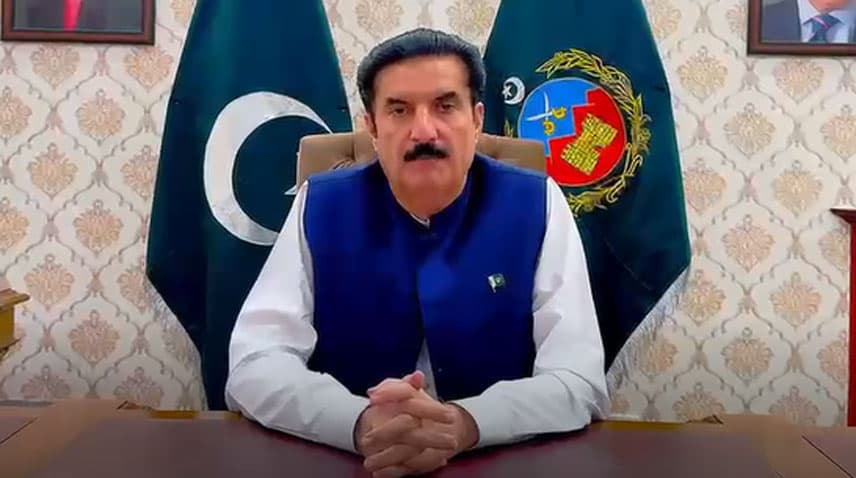
Former Balochistan CM Raisani Challenges Abolition of Kalat Division in Court
Former Balochistan Chief Minister and Sarawan tribe chief Nawab Muhammad Aslam Raisani has challenged the provincial government's decision to abolish Kalat Division and merge Mastung district into another jurisdiction.

A former Balochistan chief minister and tribal chief is taking the provincial government to court over an administrative restructuring decision he argues threatens the region's established governance boundaries.
The Legal Challenge
Former Balochistan Chief Minister and chief of the Sarawan tribe, Nawab Muhammad Aslam Raisani, has challenged the provincial government's decision to abolish Kalat Division and merge Mastung district into another jurisdiction, taking the matter to the Balochistan High Court. Raisani bringing this challenge personally, drawing on both his former chief ministerial standing and his tribal leadership position, gives the case an unusual combination of political and traditional authority behind it, beyond what a purely administrative or legal dispute would typically carry.
Why Administrative Boundaries Matter So Much In Balochistan
Divisional and district boundaries in Balochistan carry significance well beyond simple bureaucratic convenience, often intersecting with tribal territories, historical governance arrangements and local political representation in ways that make boundary changes considerably more sensitive than similar administrative reorganizations might be elsewhere. Abolishing an established division like Kalat and merging Mastung district into a different jurisdiction directly affects how local governance, resource allocation and political representation function for residents across the affected areas.
Why Raisani Is Positioned To Challenge This
As both a former chief minister with direct experience in provincial governance and the chief of the Sarawan tribe, Raisani occupies a position that gives him both the legal standing and the traditional authority to mount a credible challenge against this kind of administrative restructuring. His involvement elevates what might otherwise be treated as a routine administrative dispute into a matter carrying real political and tribal weight within Balochistan's broader governance landscape.
The Provincial Government's Likely Rationale
Provincial governments typically pursue this kind of administrative restructuring, abolishing divisions, merging districts, citing efficiency gains, cost savings, or better-aligned service delivery boundaries, rationales the Balochistan government will likely present in defending the decision before the court. Whether those stated efficiency rationales hold up against the concerns Raisani and likely other affected stakeholders are raising will be central to how the Balochistan High Court ultimately assesses the case.
The Broader Pattern Of Contested Administrative Changes
Administrative boundary changes in Balochistan have periodically drawn legal and political challenges in the past, reflecting how deeply intertwined governance boundaries are with the province's complex tribal and political dynamics. This case fits that broader pattern, another instance of a significant administrative decision facing court challenge from affected local and tribal stakeholders who argue their interests were not adequately considered before the change was implemented.
What Comes Next
The Balochistan High Court will need to examine the legal merits of Raisani's challenge, including whether the provincial government followed proper procedure in abolishing Kalat Division and merging Mastung district. Given Raisani's standing and the sensitivity of administrative boundary changes in Balochistan more broadly, the case is likely to draw significant local attention as it proceeds, with the eventual ruling carrying implications for how future administrative restructuring decisions are handled across the province and its many tribally significant districts.
Comments
No approved comments yet.