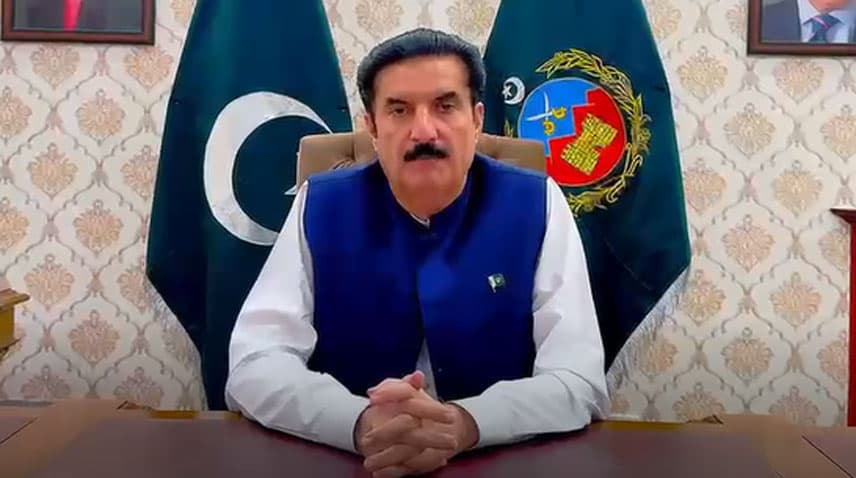
President Zardari Calls for Integrated Keti Bunder Port Development
President Asif Ali Zardari has urged an integrated development plan for Keti Bunder Port, including road, power, water and local livelihood protections.

Image credit: AI-generated editorial illustration / Novexa News
President Asif Ali Zardari has called for a coordinated development plan for Keti Bunder Port, arguing that the proposed maritime project should not be treated as a stand-alone port scheme. Speaking during a briefing in Islamabad on August 24, 2026, the president said the project would need dependable roads, power, water, industrial infrastructure and local economic planning if it is to become useful for Pakistan's wider trade network.
What happened in Islamabad
The briefing was centered on a proposed development plan presented by China Harbour Engineering Company, commonly known as CHEC. According to the official account of the meeting, the company shared a conceptual master plan for Keti Bunder Port and outlined how the site could be developed as a new deep-water maritime gateway. The plan includes multiple terminals, logistics services and supporting infrastructure, with the first phase built around a multi-purpose terminal and a 500-metre quay.
President Zardari welcomed the Chinese delegation and said Pakistan appreciated China's continued interest in the country's infrastructure and maritime development. His remarks placed Keti Bunder inside a broader conversation about ports, logistics and regional trade rather than limiting it to a single construction proposal.
The cost and first phase
The most concrete number presented during the meeting was the preliminary engineering cost for Phase-I: about $522.34 million. That first phase, according to the presentation, would include a multi-purpose terminal with a 500-metre quay. The figure is not a final financing agreement, but it gives the project a clearer scale and shows that officials are discussing Keti Bunder as a serious infrastructure proposal rather than a distant policy slogan.
The president encouraged continued technical engagement between Chinese experts and Pakistani authorities so the master plan can be refined and an implementation and financing framework can be identified. That point matters because port projects usually depend on more than marine engineering. Financing terms, land connectivity, regulatory approvals, environmental safeguards and commercial demand all shape whether a plan can move from paper to construction.
Why Keti Bunder matters
Keti Bunder sits in Sindh near the Indus Delta and has long been discussed as a potential maritime and economic gateway. Supporters of the idea see it as an additional entry point that could strengthen Pakistan's port and logistics network, ease pressure on existing routes and create space for new industrial activity around the coast. President Zardari repeated that argument, saying the site has significant potential to support connectivity and trade.
For Pakistan, the timing is important. The country has been trying to make better use of its coastline, ports and regional position as trade patterns shift across the Arabian Sea and the wider region. Karachi Port and Port Qasim already carry much of the country's maritime load, while Gwadar remains part of long-term connectivity planning. Keti Bunder would have to prove where it fits inside that system.
Local livelihoods and the Indus Delta
One of the stronger messages from the meeting was that development should include environmental protection and local livelihoods from the beginning. President Zardari specifically pointed to the fragile ecosystem of the Indus Delta and the interests of fishing communities living around the area. That caveat is not cosmetic. Large port and industrial projects can change coastal water flows, land use, access to fishing grounds and the daily economy of nearby settlements.
If the project advances, transparent environmental assessment and local consultation will be central to its credibility. A port that improves national trade but weakens the lives of nearby communities would face social and political resistance. The president's remarks suggest the government wants the plan to carry a development argument as well as an infrastructure argument.
Who attended the meeting
The Chinese delegation included Wu Ping, CHEC's chief representative in Pakistan, Wang Zongde, head of the company's marketing department, engineer Xu Tielin and Ali Raza, general manager for strategy and marketing. Senior Sindh officials also attended, including Chief Minister Syed Murad Ali Shah, Senators Saleem Mandviwala and Sherry Rehman, Sindh Energy and Planning and Development Minister Nasir Hussain Shah, Special Assistant to the Sindh Chief Minister for Investment and Public Private Partnership Syed Qasim Naveed Qamar, and Chief Secretary Syed Asif Hyder Shah.
That attendance list is significant because a project of this kind would require provincial coordination as well as federal-level policy support. Roads, power, land, industrial zones, fishing communities and environmental rules all cut across different institutions. Without coordination, even technically strong port proposals can become slow-moving files.
What needs to happen next
The immediate next step is not construction. It is technical refinement. The master plan will need more detailed engineering, cost review, environmental analysis, commercial demand assessment and a financing structure acceptable to Pakistan. Officials will also need to decide how the project connects with existing ports and whether it attracts enough cargo and industrial activity to justify the investment.
For now, the development plan gives Keti Bunder fresh policy momentum. The clearest test will be whether the discussion moves beyond presentations into transparent feasibility work, public consultation and a practical financing route. If those steps are handled carefully, Keti Bunder could become a meaningful addition to Pakistan's maritime infrastructure. If they are rushed, the project risks becoming another ambitious plan that struggles between promise and delivery.
Source links
Comments
No approved comments yet.