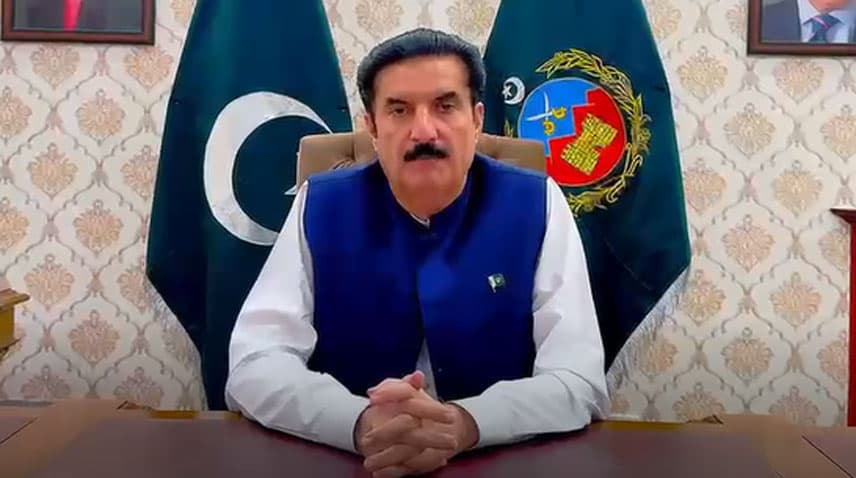
PM Shehbaz Appreciates Trump's Support for Makkah Defence Agreement
PM Shehbaz Sharif has welcomed Donald Trump's support for the Makkah Defence Agreement, framing it as a step toward regional stability.

Image credit: Image from Pixabay
Prime Minister Shehbaz Sharif has welcomed US President Donald Trump's support for the signing of the Makkah Joint Defence Agreement, describing the development as an important moment for regional security, cooperation and diplomatic engagement.
In a message shared on X, the prime minister said Pakistan, together with its brotherly partners Saudi Arabia and Turkiye, would continue working to strengthen the defence and stability of their countries as well as the wider region. His remarks placed the agreement within a broader effort to improve coordination among Muslim-majority states at a time of rising uncertainty across the Middle East and South Asia.
Shehbaz also praised Trump for what he called courageous and decisive leadership, crediting his efforts with helping prevent a possible nuclear crisis in South Asia and protecting millions of lives. The statement reflects Islamabad's attempt to acknowledge Washington's diplomatic role while also highlighting Pakistan's interest in avoiding escalation in a region where security tensions can quickly become wider international concerns.
The prime minister stressed that lasting peace remains essential for economic development and a secure future for the people of the region. That point is central to Pakistan's current foreign-policy messaging. Islamabad has repeatedly linked peace, investment, trade and regional connectivity, arguing that security stability is necessary if Pakistan and its neighbours want to build stronger economies.
The Makkah Joint Defence Agreement has attracted considerable attention because of its collective-defence commitment. Pakistan has maintained that the pact is aimed at strengthening mutual security and should not be viewed as an arrangement directed against any particular country. Officials have also tried to present it as a framework for cooperation rather than confrontation.
For Pakistan, the agreement carries several layers of importance. Saudi Arabia remains one of Islamabad's closest strategic and economic partners, while Turkiye has become an increasingly visible defence and diplomatic partner. A formal platform involving the three countries could create more regular coordination on military training, intelligence sharing, defence production and crisis response.
Shehbaz's comments also underline Islamabad's effort to balance relationships with major partners. Pakistan wants to deepen strategic ties with Riyadh and Ankara without closing the door on constructive engagement with Washington. Praising Trump's support allows the government to signal that the defence pact does not have to be read as an anti-US move, but as part of Pakistan's broader search for stability.
The regional context matters. The Middle East is facing pressure from the Gaza war, instability around the Red Sea, tensions involving Iran-linked groups and concerns over energy routes. South Asia also remains sensitive because of the unresolved Pakistan-India dispute and the risk that military incidents could escalate. In that environment, any defence agreement involving Pakistan, Saudi Arabia and Turkiye will be watched closely by regional capitals.
At the same time, the pact's practical meaning will depend on how the member states implement it. Public statements can build momentum, but real cooperation requires clear mechanisms, joint planning and trust between military and political institutions. Observers will be looking for follow-up meetings, exercises, working groups or policy statements that explain how the Makkah agreement will function during an actual crisis.
The prime minister's remarks therefore serve two purposes. Domestically, they present the agreement as a diplomatic gain for Pakistan and a sign that Islamabad is active in shaping regional security. Internationally, they frame the pact as a stabilising arrangement that can sit alongside continued engagement with the United States and other partners.
For now, Shehbaz's appreciation of Trump's support gives the story a wider diplomatic angle. It shows Pakistan trying to strengthen its security partnerships while keeping open channels with Washington. The next test will be whether the Makkah agreement moves from political messaging to practical cooperation that can reduce risk and support stability across a volatile region.
Source links
Comments
No approved comments yet.