Pakistan Rejects US Envoy Claim Over Munir Iran Visit
Pakistan's Foreign Office says Field Marshal Asim Munir travelled to Tehran as part of Islamabad's mediation efforts, not as an envoy for Washington.

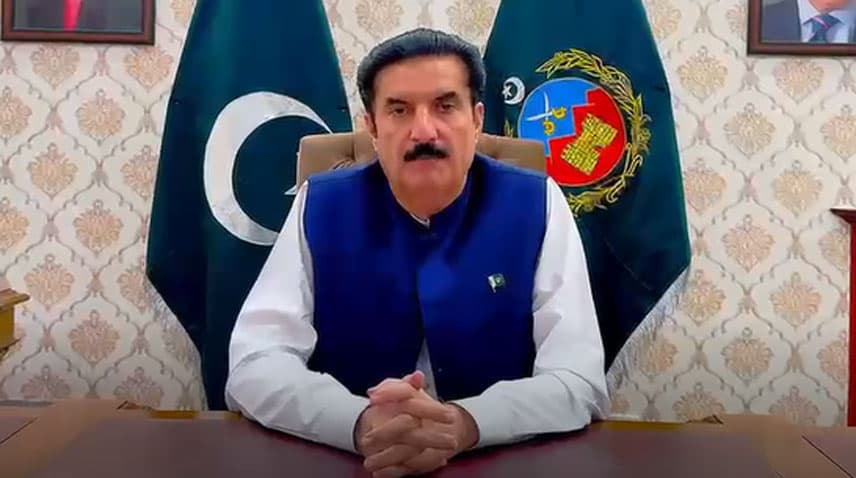
Image credit: AI-generated editorial illustration by Novexa News
Pakistan's Foreign Office has rejected claims that Field Marshal Syed Asim Munir travelled to Iran as an envoy of the United States, saying his August 24 visit was undertaken solely within Islamabad's role as a mediator in the Iran-US conflict.
Foreign Office spokesperson Tahir Andrabi addressed the reports during his weekly briefing in Islamabad on Thursday. He said the claims were misleading and factually incorrect, and stressed that the chief of defence forces and army chief had represented Pakistan's own diplomatic initiative rather than President Donald Trump or the US government.
The clarification follows several days of speculation about the purpose of Munir's meetings in Tehran and the extent of coordination between Islamabad and Washington. Pakistan has maintained regular contact with both sides during the conflict, but the Foreign Office drew a clear distinction between facilitating communication and carrying out a mission on behalf of another government.
Foreign Office Defines the Visit's Purpose
Munir made the day-long visit to Tehran with Interior Minister Mohsin Naqvi. According to Pakistan's official account, their discussions with Iranian leaders focused on lowering regional tensions, breaking the military deadlock and identifying a path towards a negotiated settlement.
The delegation met senior Iranian political and security officials, including President Masoud Pezeshkian, Parliament Speaker Mohammad Bagher Ghalibaf, Foreign Minister Abbas Araghchi and Interior Minister Eskandar Momeni. Pakistan said the meetings also addressed efforts to reopen the Strait of Hormuz and restore momentum behind the Islamabad memorandum of understanding.
Andrabi said Iranian leaders had acknowledged Pakistan's contribution to dialogue and de-escalation. Islamabad, he added, remained prepared to support a peaceful resolution and prevent the conflict from spreading further across the Gulf and the wider Middle East.
The Foreign Office's wording matters because an envoy normally carries the authority or instructions of the government that appointed them. Pakistan's position is that Munir was acting as a Pakistani representative and mediator, even though Islamabad remains in close communication with Washington.
Iranian Officials Describe Productive Talks
An official in the Iranian president's office also pushed back against inaccurate speculation surrounding the visit. Seyyed Mehdi Tabatabaei, the office's deputy for communications, described the meetings as fruitful and said they had produced valuable diplomatic results whose effect would become clearer with time.
Naqvi offered a similarly positive account after returning from Tehran. He said the exchange with Pezeshkian covered the Iran-US conflict, broader Middle East tensions and the measures needed to revive the Islamabad framework. Those statements indicate that the talks were substantive, although neither side announced a new agreement or disclosed detailed commitments.
That distinction is important. Positive descriptions from officials show that communication remains active, but they do not by themselves establish that Washington and Tehran have resolved their disagreements over sanctions, maritime access, security guarantees or the terms of a lasting ceasefire.
Why the US Envoy Claim Gained Attention
The speculation emerged partly because US officials have publicly recognised Pakistan's role as an intermediary. Earlier in the diplomatic process, US Secretary of State Marco Rubio said Washington was in regular contact with senior Pakistani leaders and praised Pakistan's efforts to facilitate talks.
Such coordination is normal for a mediator, but it can create ambiguity when messages pass between governments that are not negotiating directly. The Foreign Office's latest statement seeks to remove that ambiguity by presenting Pakistan as an independent facilitator with its own interest in regional stability.
Pakistan has economic and security reasons to avoid a prolonged conflict. Disruption in the Strait of Hormuz affects energy prices, shipping costs and trade routes used by countries across South Asia. Escalation can also place pressure on Pakistan's borders, overseas citizens and relations with Gulf partners.
At the same time, Islamabad must preserve confidence in Tehran while maintaining its longstanding relationship with Washington. Being seen as the agent of either side could weaken its ability to carry proposals, host talks or help negotiate a sequence of confidence-building measures.
Pakistan's Role Alongside Other Mediators
Pakistan is not working alone. Qatar and Oman have also maintained channels with Iran and the United States. Oman has concentrated heavily on maritime arrangements in and around Hormuz, while Qatar has used its diplomatic relationships to keep indirect communication open.
Islamabad's contribution has included hosting negotiations, relaying messages and engaging political, diplomatic and military leaders. The Islamabad memorandum created a framework for further discussion, but renewed tensions and unresolved disputes have prevented a comprehensive settlement.
The August 24 visit should therefore be viewed as one part of a continuing process rather than a standalone mission. Its immediate purpose was to sustain contact and explore whether the parties could return to a more structured negotiating track.
What the Clarification Changes
The Foreign Office statement does not resolve the underlying Iran-US dispute, but it clarifies how Pakistan wants its role understood. Islamabad is willing to communicate with both governments and assist negotiations, while rejecting the suggestion that its senior officials are acting under American direction.
The next measure of progress will be whether diplomatic contacts produce practical movement on maritime traffic, de-escalation and the stalled political framework. Until then, official descriptions of productive meetings will need to be assessed against concrete agreements and changes on the ground.
For Pakistan, maintaining credibility with both parties may be as important as any single proposal. The government's message is that its engagement with Iran is a Pakistani diplomatic effort aimed at regional peace, not an extension of another country's foreign policy.
Source links
Comments
No approved comments yet.