Pakistan, Kyrgyzstan Agree to Boost Trade to $200 Million
Pakistan and Kyrgyzstan have signed a formal agreement to raise bilateral trade from about $16 million to $200 million within two years.
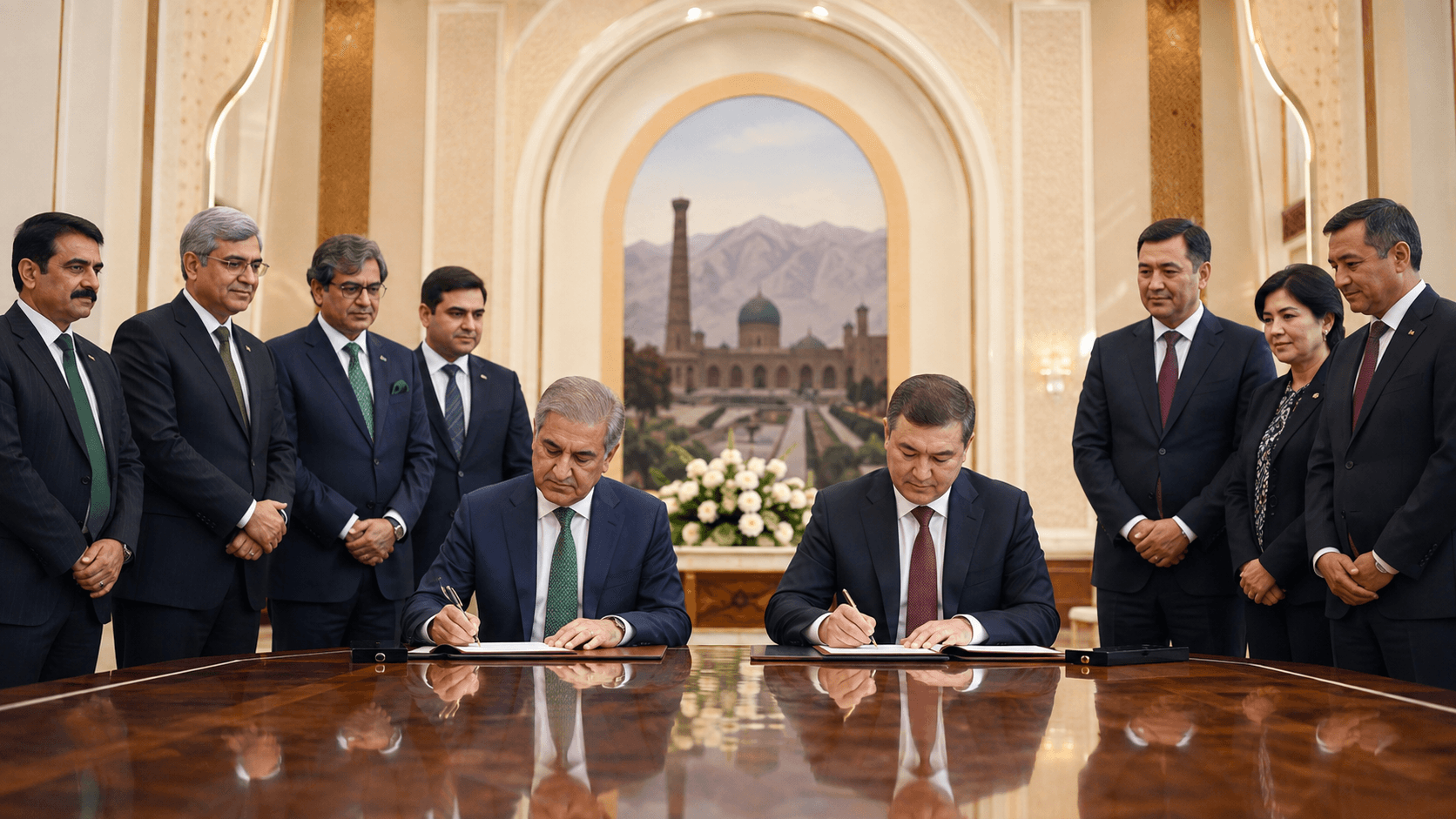
Image credit: AI-generated editorial illustration
Pakistan and Kyrgyzstan have agreed to raise bilateral trade from the current level of about $16 million to $200 million over the next two years, giving Prime Minister Shehbaz Sharif's Bishkek visit a clear economic outcome.
The agreement was signed at Bishkek airport shortly before the prime minister departed for Pakistan. Deputy Prime Minister and Foreign Minister Ishaq Dar and Kyrgyz Foreign Minister Jenbek Kulbayev signed and exchanged the documents in the presence of Shehbaz and Kyrgyz President Sadyr Japarov.
A formal agreement replaces a softer understanding
Shehbaz told the media that the current trade volume is far too small when compared with the friendly relationship between Pakistan and Kyrgyzstan. He said both countries needed to make stronger efforts to expand trade and create more business opportunities.
The prime minister said he proposed that the two sides move beyond an earlier memorandum of understanding and sign a formal agreement aimed at increasing bilateral trade to $200 million within two years.
President Japarov accepted the proposal, and the agreement was signed before Shehbaz's departure. That shift matters because a formal agreement creates a clearer framework for follow-up work by ministries, chambers of commerce and businesses.
Trade target needs practical follow-through
The two countries agreed to develop a comprehensive plan to gradually expand trade, improve trade mechanisms, promote joint investment, strengthen industrial cooperation and increase business-to-business contact.
Those steps will be important because the trade target cannot be reached through diplomatic statements alone. Exporters and investors need predictable transport arrangements, simpler customs procedures, reliable payment channels and clear information about market opportunities.
For Pakistan, stronger trade with Kyrgyzstan supports a wider effort to deepen economic ties with Central Asia. For Kyrgyzstan, Pakistan offers access to a large consumer market and possible links to South Asian and international trade routes.
Connectivity is central to the plan
Both sides discussed ways to improve transport connectivity and facilitate the movement of goods between Pakistan and Kyrgyzstan. They expressed interest in strengthening transport links, simplifying customs procedures and streamlining trade routes.
Improved logistics could reduce barriers that currently make trade between the two countries smaller than its potential. Even when political relations are warm, difficult routes and administrative delays can make regular commercial exchange expensive and slow.
If the new agreement leads to workable transit arrangements, it could help businesses reach markets in Pakistan, Kyrgyzstan and the wider region more easily.
Japarov points to stronger ties
President Japarov described Pakistan as a reliable and important partner of Kyrgyzstan. He said bilateral relations had gained significant momentum in recent months.
He referred to increased high-level contacts, including a state visit to Pakistan in December last year and President Asif Ali Zardari's visit to Kyrgyzstan in July this year. According to Japarov, these frequent exchanges show mutual trust and a shared desire to take relations to a new level.
He also said stronger friendship, mutual understanding and cooperation are especially important at a time of rising international tensions.
Several sectors included in the visit
During Shehbaz's visit, Pakistan and Kyrgyzstan signed a number of agreements and memoranda covering health, science, education, defence and other sectors.
These agreements show that the relationship is being framed beyond trade alone. Cooperation in education and health can support people-to-people ties, while science, defence and other sectors can create additional channels for institutional engagement.
The broader package also helps both governments present the visit as a multi-sector partnership rather than a single commercial announcement.
Cultural diplomacy also featured
Shehbaz also visited Ala-Archa National Park with President Japarov, where he attended traditional Kyrgyz cultural performances and learned about the country's customs and heritage.
He watched demonstrations of traditional horseback riding and eagle hunting and expressed appreciation for Kyrgyzstan's cultural traditions. Earlier, he received a red-carpet welcome at the Intimak Ordo presidential palace and a guard of honour from units of the Kyrgyz army.
The visit ended with a personal gesture from Japarov, who drove the prime minister to the airport before departure. Such gestures do not replace policy work, but they do reflect the warmth both sides are trying to attach to the relationship.
The real measure of the visit will come over the next two years. If the two governments can turn the agreement into better routes, simpler trade rules and active business links, the $200 million target could become a meaningful step in Pakistan's engagement with Central Asia.
Comments
No approved comments yet.