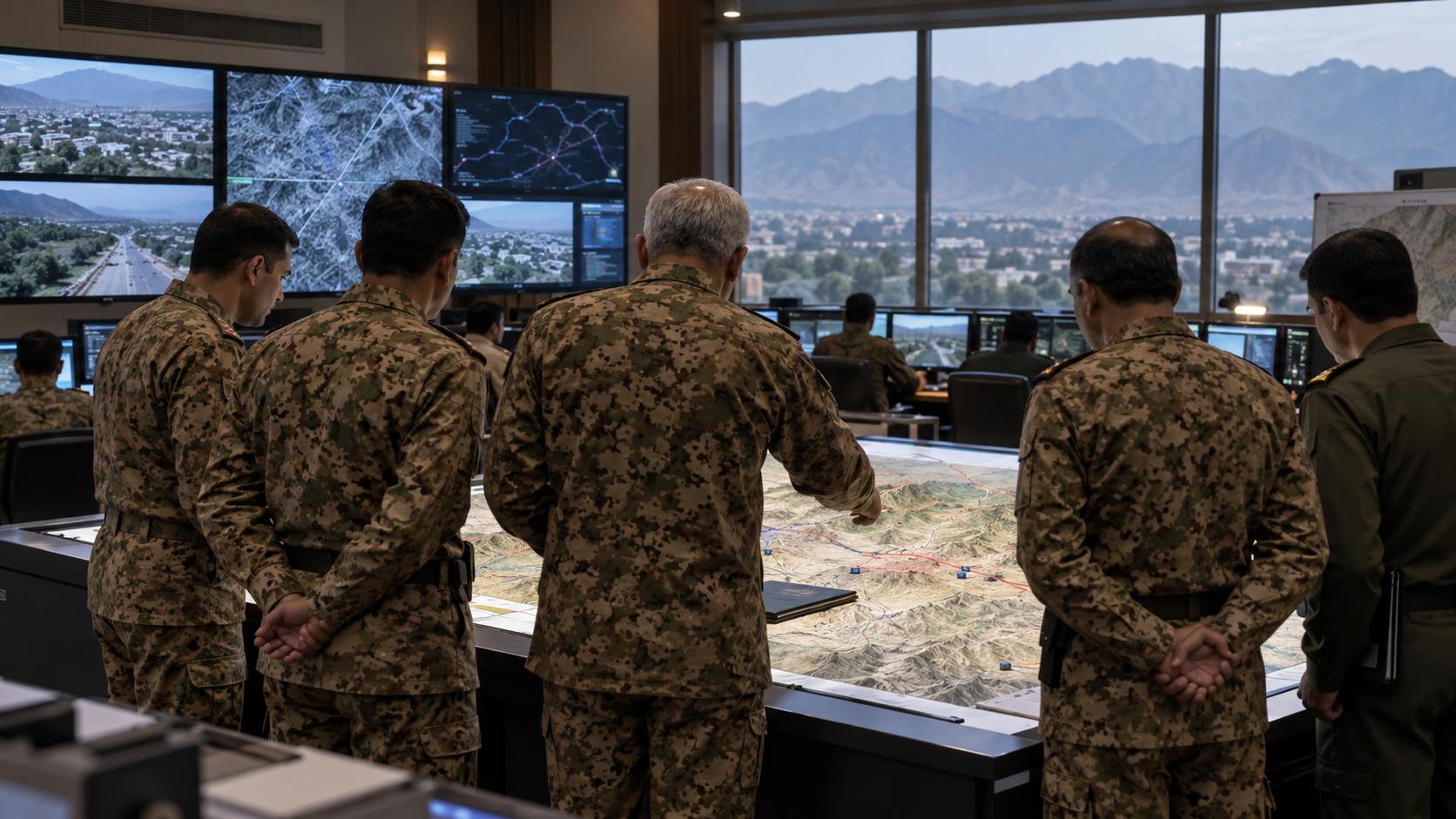
Pakistan and China Advance Plans for Expanded Development Cooperation
Pakistan and China discuss expanded cooperation on material aid, local infrastructure, technology transfer and capacity building.
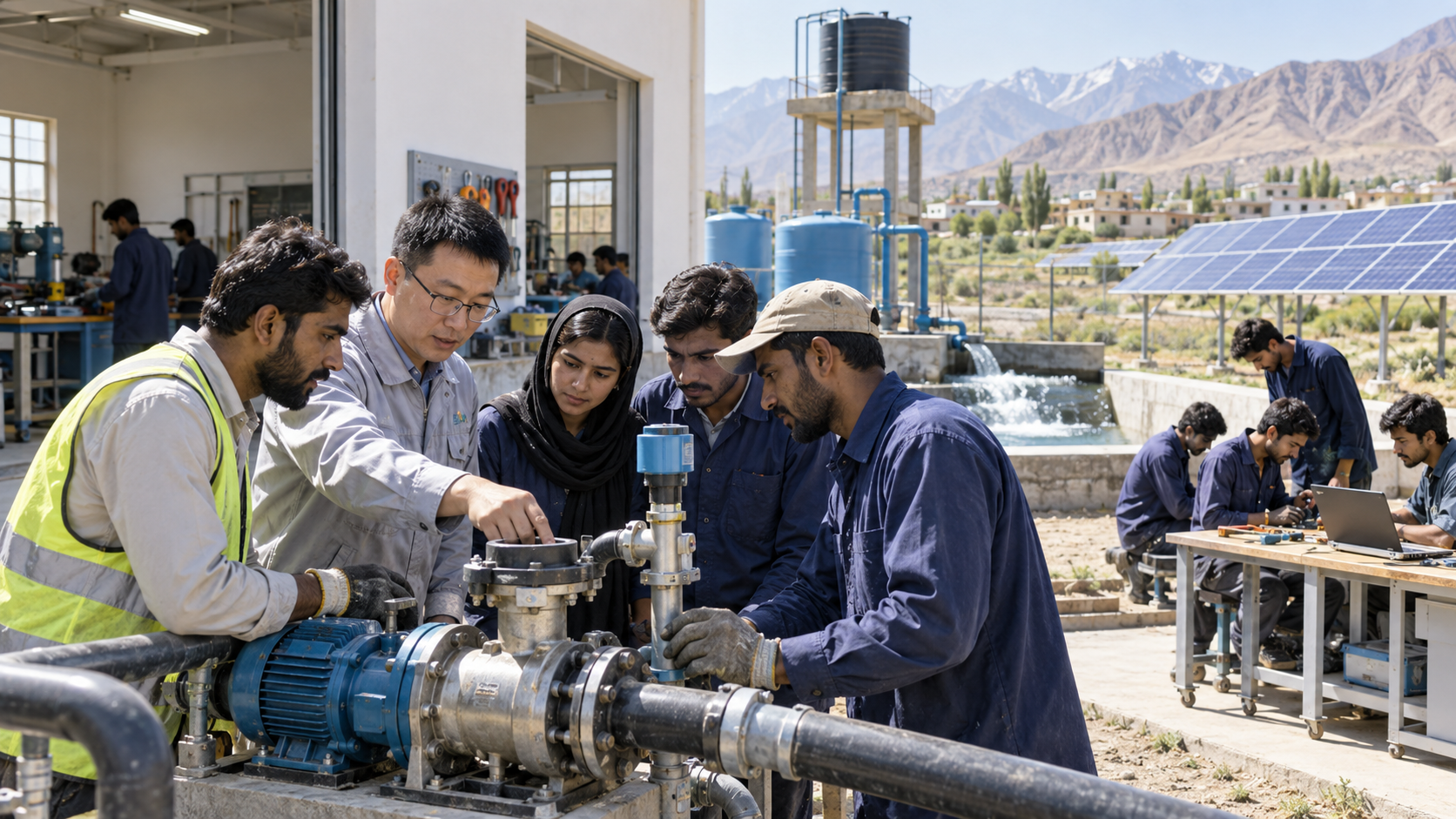
Image credit: AI-generated editorial illustration by OpenAI
Pakistan and China have discussed expanding development cooperation through material assistance, construction projects, technology transfer and professional training, with both sides examining programmes intended to produce visible benefits for local communities.
The proposals were reviewed during a meeting between Rana Ihsaan Afzal Khan, coordinator to the prime minister on commerce, and a delegation from the China International Center for Economic and Technical Exchanges led by Deputy Director-General Li Shuyin.
Officials considered how Chinese technical and financial support could be aligned with Pakistan's development priorities. The discussion included community infrastructure, capacity building and possible projects in Balochistan, where gaps in water, energy, health and skills remain major constraints on growth.
CICETE coordinates international development projects for China's Ministry of Commerce and works with UN agencies and partner governments. UNIDO describes the centre as a partner in South-South cooperation focused on technology, industrial capacity and sustainable development.
From commitments to local projects
The meeting placed emphasis on practical forms of cooperation rather than a single large announcement. Material aid can address immediate needs, while construction and technology transfer can create longer-term capacity when projects are supported by maintenance, training and local participation.
Pakistan has sought to broaden its economic relationship with China beyond traditional infrastructure. The second phase of the China-Pakistan Economic Corridor is expected to give greater weight to industrial cooperation, agriculture, technology and livelihoods.
Development programmes discussed with CICETE can complement that agenda without necessarily being part of a major CPEC transport or energy scheme. Smaller community projects may be easier to deliver quickly and can target districts that have not received the same level of investment as national corridors.
Afzal stressed the importance of designing initiatives around Pakistan's priorities. That includes selecting projects through evidence, coordinating with provincial and local authorities and ensuring that equipment or facilities remain usable after external support ends.
Li's delegation outlined CICETE's experience in managing cooperation programmes, technical exchanges and capacity-building projects. The centre has worked internationally on subjects ranging from digital development and environmental resilience to small-enterprise support.
Technology and skills
Technology transfer can have a wider effect than the delivery of equipment alone, but only when local institutions acquire the knowledge to operate, repair and adapt what is provided. Training for technicians, administrators and community organisations is therefore central to the proposals.
Possible areas include water management, renewable energy, agricultural productivity, disaster resilience and vocational education. The meeting did not announce final budgets or implementation dates, so individual projects will require further agreement before they can begin.
Pakistan and China already cooperate across several of these sectors. A joint statement previously highlighted agriculture, health, education, climate response and disaster prevention as priorities for socioeconomic cooperation. The Associated Press of Pakistan reported that the two sides supported projects aimed at livelihoods as well as traditional infrastructure.
The role of Pakistani ministries and provincial departments will be important. Development assistance can become fragmented when agencies pursue overlapping schemes or when responsibility for operations is unclear. A shared monitoring framework would help identify delays, measure outcomes and prevent duplication.
Focus on Balochistan
Balochistan's inclusion is politically and economically significant. The province hosts Gwadar and several projects associated with Pakistan-China cooperation, yet many communities continue to face limited public services and employment opportunities.
Community-level investment can help address that gap, but it must be developed through consultation and transparent selection. Residents need clarity about land, jobs, environmental effects and who will manage completed facilities.
Security is another consideration for Chinese personnel and projects. Pakistan has repeatedly promised stronger protection, while also recognising that durable stability depends on wider economic inclusion and public confidence.
The meeting provides a framework for follow-up rather than a completed investment package. Future announcements will need to specify the location, cost, implementing agency and expected beneficiaries of each project.
That detail will determine whether the initiative produces measurable development. Material support can meet short-term requirements, construction can close infrastructure gaps and training can strengthen institutions, but each element requires accountability after the launch ceremony.
For Pakistan, the opportunity is to direct a longstanding strategic partnership toward practical local needs. For China, successful projects would demonstrate the value of its South-South cooperation model. The next stage is to convert the areas discussed into funded, time-bound programmes with public reporting on delivery and results.
Source links
Comments
No approved comments yet.