Pakistan and Turkiye Relations Move From Strategic Friendship to Regional Partnership
Pakistan and Turkiye are moving beyond traditional friendship in 2026, with defence cooperation, trade goals and regional diplomacy giving the relationship a sharper strategic shape.

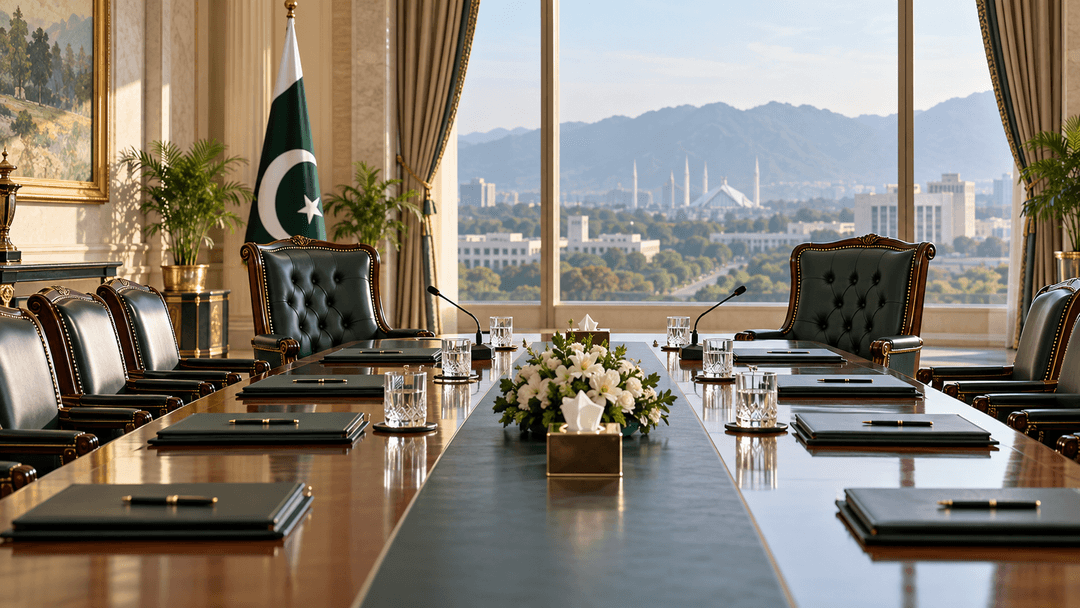
Image credit: AI-generated image by Novexa News via Cloudinary
Pakistan and Turkiye entered 2026 with a relationship that was already warm, but the year has pushed that relationship into a more practical and strategic phase. What was often described through the language of brotherhood, shared history and cultural affinity is now being tested through trade targets, defence cooperation, regional diplomacy and security coordination.
The shift matters because both countries are trying to navigate a region shaped by war, economic uncertainty and changing alliances. Islamabad and Ankara have long supported each other on major diplomatic questions, but their latest engagement shows a broader ambition: to turn political goodwill into measurable economic and strategic cooperation.
The most visible development this year was the Makkah Joint Defence Agreement signed by Pakistan, Turkiye and Saudi Arabia in August. The agreement has been presented by Pakistani officials as defensive in nature, not as a move against any single country. Still, it gives the Pakistan-Turkiye relationship a sharper regional security dimension because it places the two countries inside a wider framework with Saudi Arabia.
Under the new arrangement, the three countries are expected to deepen political and military coordination, including joint exercises across land, sea, air and cyber domains. The agreement also opens space for cooperation in defence production, technology transfer, unmanned systems, electronic warfare and artificial intelligence. For Pakistan, that is important because Turkiye has become one of the more active defence technology players in the Muslim world, especially in drones, naval systems and modern military platforms.
The defence side is not new. Pakistan and Turkiye have years of experience in military training, exercises and production cooperation. What looks different in 2026 is the wider strategic context. Both countries are thinking more seriously about regional deterrence, crisis management and their ability to operate with trusted partners when global power politics becomes less predictable.
Economic cooperation is the second major test. During Prime Minister Shehbaz Sharif's meeting with President Recep Tayyip Erdogan in Istanbul on July 4, both sides discussed ways to expand cooperation in trade, investment, energy, petroleum exploration, minerals and information technology. They also repeated the goal of taking bilateral trade toward $5 billion.
That target has been mentioned before, but it remains significant because trade between the two countries has not matched the warmth of their political relationship. Pakistan wants more Turkish investment in energy, mining, infrastructure and technology. Turkiye, meanwhile, has companies with experience in construction, defence, transport and industrial projects, giving it a practical base for deeper commercial engagement.
The challenge is execution. Political statements can create momentum, but trade grows only when businesses see easier market access, clearer rules, reliable payments, competitive logistics and real project pipelines. If Islamabad and Ankara want the $5 billion goal to become more than a slogan, they will need to help private companies move faster and reduce the friction that often slows cross-border investment.
Regional diplomacy is also pulling the two countries closer. In 2026, Pakistan and Turkiye found themselves watching the same crises with similar concerns, especially tensions involving Iran and the United States. Both countries have an interest in preventing wider escalation because conflict in the region can affect energy supplies, trade routes, security planning and domestic economic stability.
Turkiye has publicly supported diplomatic engagement with Iran, while Pakistan has also tried to position itself as a country interested in mediation and de-escalation. Meetings between Deputy Prime Minister and Foreign Minister Ishaq Dar and Turkish Foreign Minister Hakan Fidan have reflected that shared interest in regional stability, including Afghanistan and wider Middle East security questions.
This does not mean Pakistan and Turkiye have identical foreign policies. They have different geographic pressures, different economic needs and different relationships with global powers. But the space for coordination has grown. Both countries want room to protect their interests without being trapped entirely inside outside power blocs.
Public connection remains one of the strongest parts of the relationship. Turkish dramas, historical memory, religious affinity, tourism, education links and people-to-people goodwill have helped keep the relationship popular beyond official meetings. That soft connection gives leaders on both sides more political room to build formal cooperation.
The risk is that expectations may rise faster than delivery. Defence agreements, trade targets and diplomatic statements will be judged by results: new investments, better exports, training programs, joint projects, technology cooperation and clearer regional coordination. Without that follow-through, the relationship could remain impressive in speeches but less visible in everyday economic outcomes.
For now, the direction is clear. Pakistan and Turkiye are moving from a relationship built mainly on historic friendship toward one shaped by shared interests and strategic needs. If the two governments can translate that momentum into trade, investment and credible security cooperation, 2026 may be remembered as a turning point in how Islamabad and Ankara define their partnership.
Comments
No approved comments yet.