Islamabad Governance Plan Proposes Elected Assembly
Islamabad's long-running argument over local power has moved back to the centre of federal politics after a high-level committee proposed a formal elected government for the capital territory. The draft framework would…

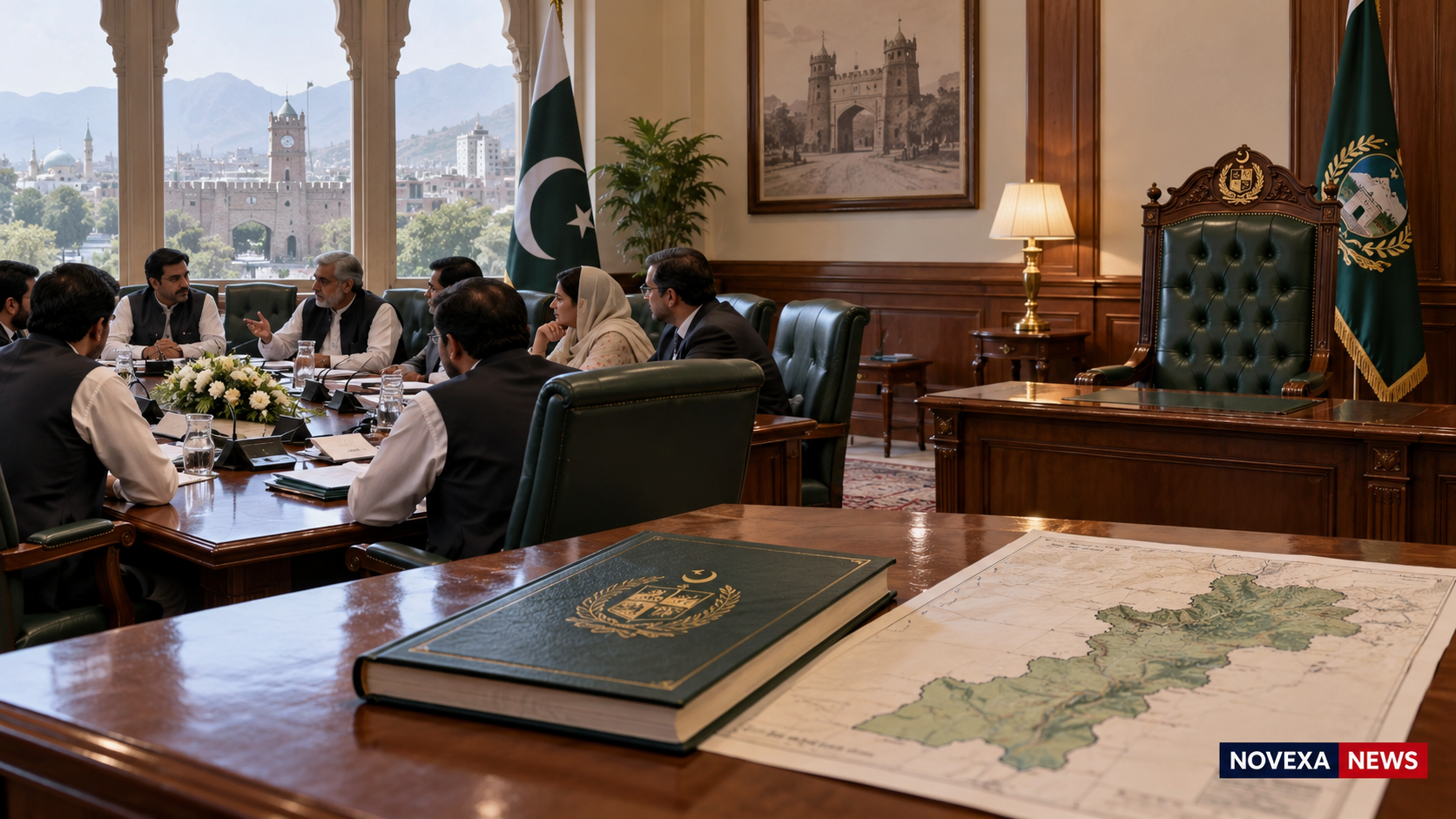
Image credit: AI-generated editorial illustration
Islamabad's long-running argument over local power has moved back to the centre of federal politics after a high-level committee proposed a formal elected government for the capital territory. The draft framework would give Islamabad its own assembly, chief executive and administrative departments while keeping selected national responsibilities with the federal government.
What the draft proposes
The proposal calls for a 27-member Islamabad Capital Territory assembly. The structure reported in the draft includes 21 directly elected seats, five reserved seats for women and one reserved seat for minorities. Elections would be handled by the Election Commission of Pakistan, and candidates would have to meet the constitutional qualifications normally applied to lawmakers under Articles 62 and 63.
The committee's idea is to move Islamabad away from a governance model dominated by federal departments and development authorities. Residents vote in National Assembly elections and have seen different local government arrangements over the years, but the capital has not had a durable elected territorial setup with clear control over everyday services. The proposed assembly is meant to fill that gap.
A chief executive for the capital
Under the framework, the elected house would choose a leader who could be designated as chief minister or mayor. That office would act as the chief executive of the Islamabad Capital Territory Government and would be answerable to the assembly rather than operating as an appointed administrative figure.
This is the most politically important part of the plan. Islamabad's citizens often deal with overlapping institutions when they need work on roads, schools, clinics, sanitation, building rules or environmental management. A chief executive backed by an elected assembly would create a single public office that residents could praise, challenge or vote against.
Departments and public services
The draft proposes 27 administrative departments under the new Islamabad government. The areas mentioned include education, healthcare, environment and municipal services. A chief secretary, currently linked to the chief commissioner's office, would continue as the senior administrative officer, supported by four secretaries overseeing groups of departments.
For residents, the practical test would be whether this arrangement shortens the distance between complaint and decision. Islamabad's urban villages, planned sectors, rural communities and expanding suburbs face different pressures. A territorial government would have to deal with all of them, not only the polished parts of the capital that appear in official photographs.
What happens to CDA powers
One of the biggest proposed changes concerns the Capital Development Authority. The draft says CDA functions, except master planning, would move to the new Islamabad government. That would be a major institutional shift because the CDA has long shaped land use, development approvals and civic services across the capital.
Master planning would remain with the federal side, according to the proposal, along with law and order. That division tries to balance two realities: Islamabad is a city with local needs, but it is also the federal capital, home to national institutions, foreign missions and sensitive state buildings.
The legal route
The plan is expected to require federal cabinet approval before legislation can be introduced in Parliament. Reporting on the draft describes a proposed Islamabad Capital Territory Government Act 2026, intended to consolidate earlier local government and CDA-related arrangements into a clearer law for the territory.
The committee linked to the proposal is headed by Planning Minister Ahsan Iqbal and includes federal ministers and Islamabad representatives. If the government moves ahead, the legislation will still have to survive cabinet review, parliamentary scrutiny and likely debate over how much authority Islamabad's elected setup should actually receive.
Why it matters
The capital's governance question has never been only about administrative charts. It is about whether citizens living in Islamabad can shape decisions that affect their schools, parks, transport, zoning, clinics and neighbourhood services. A territorial assembly would not automatically solve those problems, but it would make responsibility easier to locate.
The proposal also carries political risk. Federal authorities may be reluctant to surrender operational control, while residents will judge the plan by results rather than titles. If the draft becomes law, the first elected government would inherit a complicated city and a public that has heard promises of reform before.
For now, the framework remains a proposal, not a functioning government. Its significance lies in the direction it points: toward giving Islamabad a more direct democratic voice while preserving federal control over the capital's most sensitive national functions.
Source links
Comments
No approved comments yet.