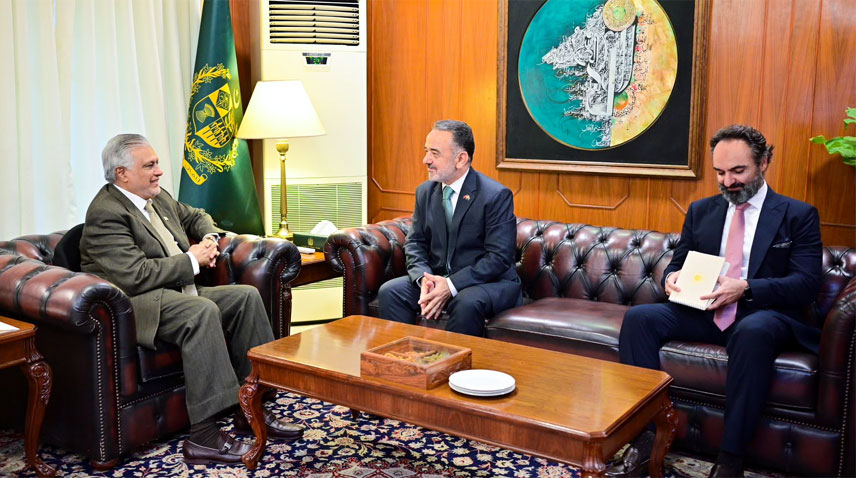
Ishaq Dar Leaves for New York With Wide-Ranging UNGA Agenda
Ishaq Dar leaves for New York for the 81st UN General Assembly, with meetings on Kashmir, Palestine, AI, health security and regional trade.
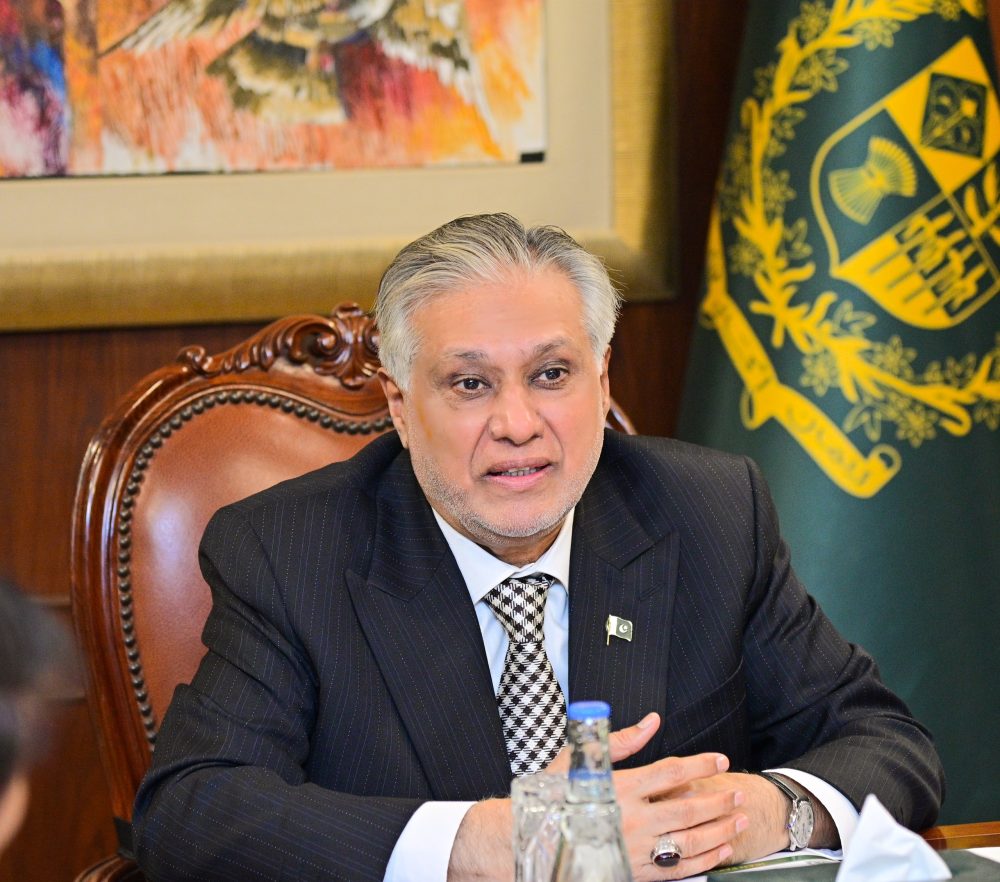
Image credit: Associated Press of Pakistan / file photograph
Deputy Prime Minister and Foreign Minister Ishaq Dar has departed for New York to attend the high-level segment of the 81st session of the United Nations General Assembly, where Pakistan is expected to focus on regional security, Palestine, Kashmir, artificial intelligence and economic cooperation.
Dar will be in New York from September 21 to 25 and will join the delegation led by Prime Minister Shehbaz Sharif. The visit combines Pakistan's participation in the General Assembly with a series of ministerial meetings held on the sidelines of the annual gathering.
The schedule was set out in a curtain-raiser issued by Pakistan's Ministry of Foreign Affairs. The ministry said Dar would also accompany the prime minister in bilateral engagements with other leaders.
Prime Minister Shehbaz is expected to address the General Assembly on September 25. His trip follows a stop in the United Kingdom before the United States, as covered in Novexa's report on the prime minister's UNGA visit.
Kashmir and OIC diplomacy
Dar is scheduled to participate in the meeting of the Organisation of Islamic Cooperation's Contact Group on Jammu and Kashmir. The forum gives Pakistan an opportunity to present its position on the dispute and seek diplomatic support from OIC member states.
He will also attend the annual coordination meeting of OIC foreign ministers and other contact-group sessions. These meetings usually allow ministers to align positions before matters are raised in broader United Nations forums.
Pakistan's diplomatic agenda is likely to emphasize political dialogue and the implementation of international commitments. Islamabad regularly uses the General Assembly week to hold a larger number of bilateral meetings than would be practical during separate visits, making the sidelines nearly as important as formal speeches in the chamber.
Meetings focused on Palestine
The continuing crisis in the Middle East is another major part of Dar's programme. He is expected to attend meetings involving the Group of Eight Arab and Islamic countries and the Global Alliance for the Implementation of the Two-State Solution.
Pakistan has consistently called for a ceasefire, unhindered humanitarian assistance and an independent Palestinian state based on internationally recognized parameters. At the UN, its representatives have also argued that the lack of a political settlement has prolonged instability across the region.
The two-state alliance is intended to turn broad diplomatic support into practical steps. For Pakistan, participation provides a way to coordinate with Arab and other Muslim-majority countries while engaging a wider group of states involved in humanitarian, legal and diplomatic initiatives.
Artificial intelligence and health security
Dar will take part in a high-level United Nations Security Council briefing on artificial intelligence and is expected to deliver Pakistan's national statement. The issue has moved rapidly onto the international security agenda as governments consider how AI may affect warfare, disinformation, cyber operations and strategic decision-making.
Pakistan's participation comes as developing countries seek a stronger voice in global rules for advanced technology. Questions of access, capacity and unequal technological power sit alongside concerns about safety and military misuse. A Security Council discussion is unlikely to settle those debates, but it can clarify where major states agree and where governance gaps remain.
The deputy prime minister is also due to attend a high-level meeting on pandemic prevention, preparedness and response. That discussion is expected to focus on stronger health systems, equitable access to medical countermeasures and better international coordination before the next global health emergency.
ECO and bilateral engagements
Dar will chair a meeting of the Council of Ministers of the Economic Cooperation Organization. The regional group includes Pakistan, Türkiye, Iran, Afghanistan and Central Asian states, with an agenda covering trade, transport connectivity, energy and economic integration.
Pakistan has long promoted regional transit links but progress has often been slowed by political tensions, limited infrastructure and security concerns. The New York meeting offers ministers a chance to review priorities without requiring a separate summit.
According to the Associated Press of Pakistan, Dar's programme also includes bilateral meetings with counterparts from other countries. The precise list may evolve as delegations confirm schedules during the week.
The breadth of the agenda shows how Pakistan intends to use the UN gathering: combining its established diplomatic priorities with newer global issues such as AI governance and pandemic readiness. The measure of the visit will be whether those meetings produce concrete follow-up, particularly on regional economic ties and coordination over urgent conflicts.
Source links
Comments
No approved comments yet.