Report Says Iran Weighing Makkah Defence Pact Invitation
A media report says Iran is considering an invitation to the Makkah Joint Defence Agreement, but Tehran and the pact's three members have not officially confirmed it.

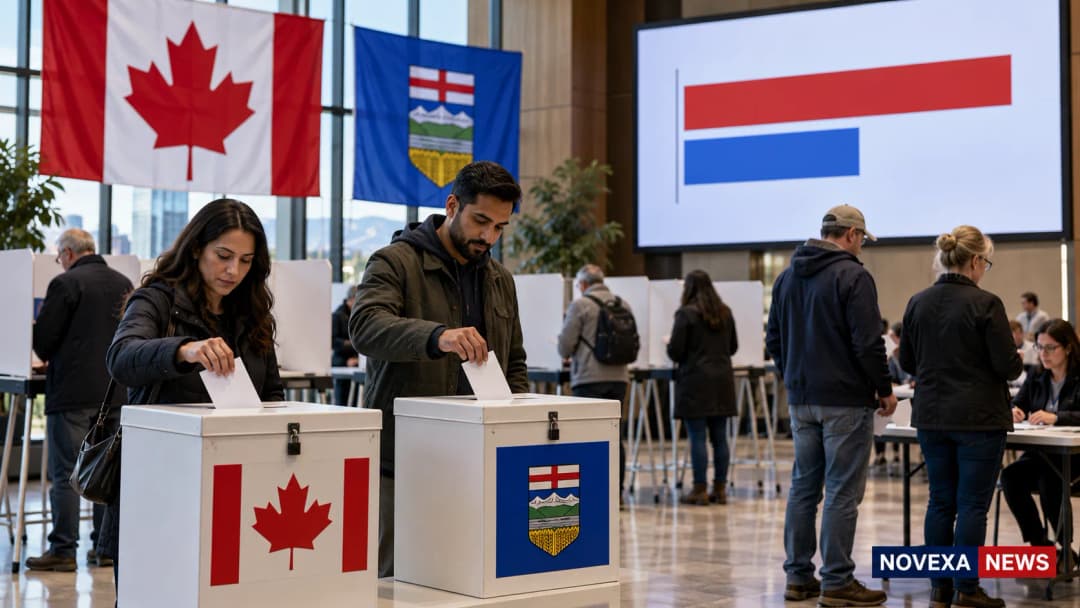
Image credit: AI-generated editorial illustration by Novexa News
Iran is reportedly considering an invitation to join the Makkah Joint Defence Agreement, a recently signed security framework involving Pakistan, Saudi Arabia and Turkiye. The claim could become an important diplomatic development, but it remains unconfirmed by Iran's Foreign Ministry and by the three governments that signed the agreement.
The report published on August 23 attributes the information to Mehdi Rahimi, identified as the head of the Iranian parliament's Khaneh Mellat news agency, speaking to Al Mayadeen. According to that account, Iran had received an invitation and the matter was under consideration. Novexa News did not find a corresponding public statement from Tehran or a signatory government confirming that a formal invitation had been delivered.
That gap does not make the report irrelevant, but it determines how it should be read. At present, there is a reported claim of diplomatic consideration, not a confirmed Iranian decision to join the pact.
What is officially confirmed
Pakistan, Saudi Arabia and Turkiye signed the Makkah Joint Defence Agreement on August 7. Pakistan's Foreign Ministry has described it as a defensive arrangement intended to strengthen collective security, deterrence and cooperation among the three states.
At an August 12 briefing, the ministry's spokesperson confirmed that the agreement remains open to additional countries. When asked which states might join, however, the spokesperson said he was not aware of any specific country preparing to do so. That official answer supports the possibility of expansion in principle, but it does not confirm an invitation to Iran.
Pakistan has also discussed the agreement directly with Tehran. An official government account said Deputy Prime Minister and Foreign Minister Ishaq Dar shared the pact's contours with Iranian Foreign Minister Abbas Araghchi on August 10. The two ministers discussed regional developments and peace efforts, and Araghchi thanked Dar for explaining the agreement.
These official contacts establish that Iran has been briefed and that the pact is not formally closed to new members. They do not establish that Iran has accepted, or even officially acknowledged, an invitation.
Why the reported invitation matters
Iran's possible participation would change the political meaning of a framework currently composed of Pakistan, Saudi Arabia and Turkiye. Each country has its own security relationships, strategic priorities and regional interests. Bringing Tehran into the same structure would require decisions about obligations, command arrangements, consultation procedures and the scope of collective defence.
It could also raise difficult questions. Iran and Saudi Arabia have improved diplomatic contact in recent years, but they continue to approach some regional issues from different positions. Turkiye maintains its own security priorities, while Pakistan has repeatedly said it seeks balanced relations across the Middle East.
For those reasons, joining would be more complicated than expressing political support for regional cooperation. The text of the agreement, the accession process and any reservations attached by a new member would all be important. Much of that detail has not been made public.
Pakistan's role in the regional conversation
Islamabad has presented the Makkah agreement as defensive and not directed against another state. The Foreign Ministry says an attack on one signatory is to be regarded as an attack on all three, while broader cooperation is intended to support regional security.
Pakistan has simultaneously maintained high-level contact with Iran. The August discussions took place amid wider diplomatic work on regional tensions and maritime security. That combination allows Islamabad to argue that closer defence cooperation with Riyadh and Ankara does not require hostility toward Tehran.
This approach is consistent with Pakistan's recent effort to maintain channels across competing relationships. The country's contacts with Iran have included senior-level engagement examined in Novexa News' report on Pakistan's diplomacy during Asim Munir's Tehran visit.
Whether that balancing role can translate into Iranian membership is a separate question. A formal application or accession announcement would need to come from the governments involved.
What confirmation would look like
The strongest confirmation would be a statement from Iran's Foreign Ministry, the Iranian presidency or another body authorised to speak for the government. A joint declaration from Pakistan, Saudi Arabia and Turkiye would also establish whether an invitation was formally issued and on what terms.
Until then, headlines should not describe Iran as a member of the pact. Nor should the report be used to infer new military commitments. Consideration, even when officially acknowledged, is not accession.
Questions that remain unanswered include whether all three signatories must approve a new member, whether accession would require a separate protocol, and whether the same collective-defence provision would apply immediately. Public answers would help analysts distinguish a political opening from a near-term security commitment.
A developing diplomatic report
The available evidence points to three separate facts. The Makkah Joint Defence Agreement exists; Pakistan says it is open to other states; and Pakistan has briefed Iran on its objectives. A media report now says Tehran has been invited and is considering the proposal, but that final claim has not received official confirmation.
The distinction matters for readers and policymakers alike. If Iran confirms the invitation, attention will shift to the terms and Tehran's response. If no confirmation follows, the claim should remain treated as an attributed report rather than an established diplomatic decision. Novexa News will update this article if the Iranian government or one of the signatory states issues a formal statement.
Source links
Comments
No approved comments yet.