Asim Munir to Visit Tehran as Pakistan Pushes Diplomacy
Field Marshal Syed Asim Munir is set to lead a Pakistani delegation to Tehran as Islamabad supports dialogue, bilateral cooperation and regional de-escalation.
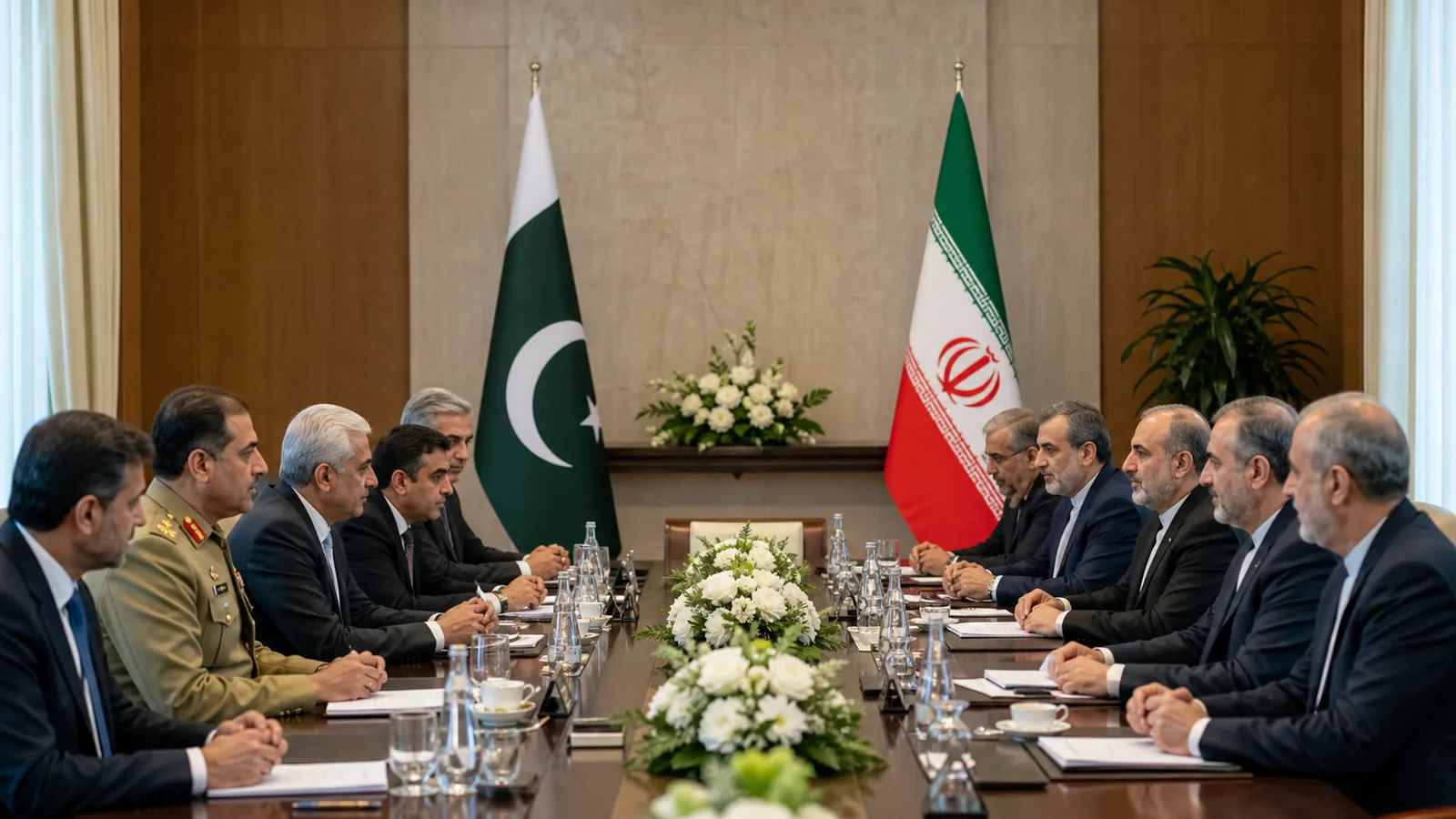
Image credit: AI-generated editorial illustration by Novexa News
Pakistan's Chief of Defence Forces and army chief, Field Marshal Syed Asim Munir, is expected to lead an official delegation to Tehran on Monday, placing Islamabad's regional diplomacy back in focus as tensions between Iran and the United States remain unresolved.
Iranian Foreign Ministry spokesperson Esmaeil Baghaei announced the visit on Sunday. According to the ministry's account, the trip is intended to strengthen bilateral cooperation and continue Pakistan's efforts to support peace and security in the region. Iranian media said Munir is expected to meet senior officials during the visit.
The announcement provides a clear purpose for the journey, but neither Islamabad nor Tehran had published a detailed agenda at the time of writing. That distinction matters: the visit is confirmed, while the precise proposals and negotiating positions that may be discussed remain subject to official disclosure.
Why the Tehran visit matters
Pakistan has maintained direct communication with Iran while also preserving working relationships with the United States and major Gulf partners. That gives Islamabad an unusual, if difficult, diplomatic position at a time when regional governments are trying to prevent further military escalation and protect trade and energy routes.
The visit follows recent contact between Munir and Iranian Foreign Minister Abbas Araghchi. Public reporting on that exchange said the two sides discussed regional developments and political and diplomatic paths toward de-escalation. The Monday meetings are likely to build on that contact, although officials have not released a complete list of participants or subjects.
Pakistan's role should not be overstated. Islamabad cannot independently settle the disputes separating Washington and Tehran, and any durable agreement would require decisions by the principal parties. It can, however, carry messages, clarify positions and help keep communication open when direct engagement is limited. In a fast-moving crisis, even that narrower role can be valuable.
Bilateral relations remain central
The trip is not only about Iran-US tensions. Pakistan and Iran share a long border and have practical interests in border security, trade, energy and the movement of people. Both governments have repeatedly said that stable bilateral relations are important for the wider region.
Baghaei's description of the visit placed bilateral cooperation alongside peace and security. That wording suggests the delegation's discussions may cover the broader Pakistan-Iran relationship as well as the immediate regional crisis. Any specific agreement, however, should be judged only after an official statement is issued.
For Pakistan, maintaining communication with Tehran also requires careful balancing. Islamabad has close political and economic ties with Saudi Arabia and Turkiye and a longstanding relationship with Washington. Its diplomacy therefore depends on presenting de-escalation as a shared regional interest rather than aligning itself fully with one side.
Economic pressure raises the stakes
The diplomatic push comes as Iran faces the prospect of additional US sanctions and continuing pressure on its economy. Disruption and uncertainty around the Strait of Hormuz have added to concerns about shipping, insurance costs and energy markets. The waterway is one of the world's most important routes for oil and liquefied natural gas, meaning prolonged instability can affect countries far beyond the Gulf.
Pakistan is particularly exposed to external energy prices and wider market volatility. A rise in transport or fuel costs can feed into inflation, foreign-exchange demand and the cost of imported goods. This gives Islamabad an economic reason, as well as a security reason, to encourage restraint and sustained dialogue.
Still, the public should be cautious about claims that one visit will produce an immediate breakthrough. High-level meetings can create space for negotiations, but they do not remove the underlying disagreements over sanctions, military activity, security guarantees and freedom of navigation.
What to watch after Monday's meetings
The most useful signals will come from official readouts issued after Munir's meetings in Tehran. Those statements may clarify whether the talks focused mainly on bilateral cooperation, message-carrying between Iran and the United States, regional maritime security, or a combination of those issues.
Observers will also watch whether Pakistan announces further consultations with Washington or Gulf capitals. Follow-up engagement would indicate that the Tehran visit forms part of a wider diplomatic sequence rather than a standalone bilateral trip.
Another important measure will be whether the language used by the parties becomes more restrained. Diplomatic progress is easier to sustain when public threats are reduced and practical channels remain open. Conversely, new military action or sweeping sanctions could quickly narrow the room for mediation.
Pakistan's diplomatic test
Munir's visit gives Pakistan another opportunity to advocate dialogue at a moment when the costs of escalation are increasingly regional and economic, not only military. The confirmed objective is modest but significant: strengthen cooperation with Iran and support efforts aimed at peace and security.
The outcome should be assessed through verified announcements rather than expectations attached to the trip. If the delegation can preserve communication, identify areas of common ground and support a return to structured talks, the visit will have served a practical purpose. A broader settlement, however, will still depend on choices made in Tehran and Washington after the Pakistani delegation leaves.
Source links
Comments
No approved comments yet.