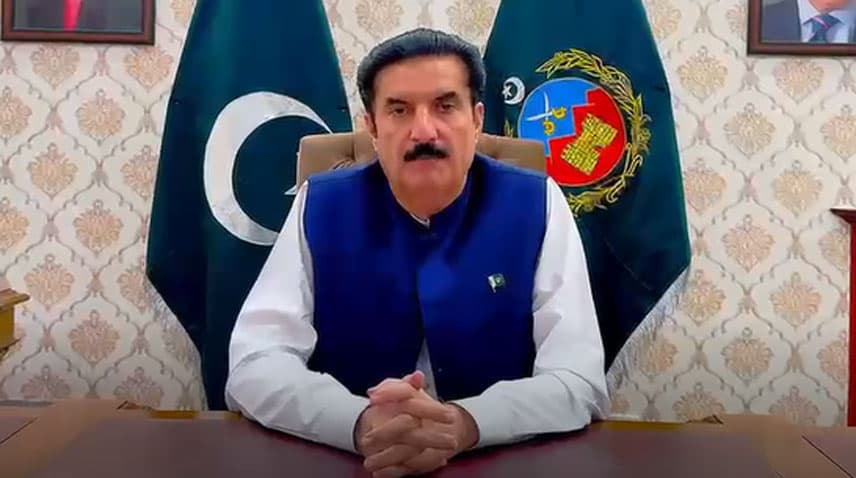
Iftikhar Gilani Elected AJK Prime Minister
Barrister Syed Iftikhar Ali Gilani has been elected AJK prime minister, completing a swift comeback through the assembly's technocrat seat.

Image credit: AI-generated editorial illustration by Novexa News
MUZAFFARABAD: Barrister Syed Iftikhar Ali Gilani has been elected prime minister of Azad Jammu and Kashmir, completing a fast political comeback and giving the Pakistan Muslim League-Nawaz control of the region's top elected office after its strong showing in the new Legislative Assembly.
Gilani secured 30 votes in the assembly session, while the Pakistan Peoples Party's Sardar Mukhtar Khan received 14, according to Samaa TV. The result confirmed the PML-N's advantage in the house, but the route to the vote was not a routine one. Gilani's nomination came after internal party debate, a withdrawn earlier choice and questions over how a politician who lost his constituency seat returned through a reserved technocrat seat and reached the premiership within weeks.
A comeback through the assembly
Gilani's rise is politically unusual because he did not enter this phase from a direct constituency win. In the 2026 AJK general elections, he contested the LA-29 Muzaffarabad city seat and lost to PPP candidate Mukhtar Ahmed Abbasi by around 3,000 votes, according to Pakistan Observer's profile of the PML-N nominee.
That defeat could have pushed him to the sidelines. Instead, Gilani returned to the Legislative Assembly on a reserved technocrat seat. From there, his party placed him in contention for the premiership after the PML-N secured the strongest numbers in the new house.
The turnaround has made his election more than a normal change of government. It has become a test of how parties use reserved seats, how internal leadership choices are made and how the new AJK government will defend its mandate before voters.
How the numbers lined up
The PML-N entered the government-formation phase with the largest bloc in the AJK Assembly. Recent reports placed the party's strength at 32 members with the support of an allied Jammu and Kashmir Awami Dast-o-Bazu lawmaker, while the PPP held 14 members.
Those numbers made the PML-N candidate the favorite going into the vote. Still, the final result mattered because party unity had been under scrutiny after several senior figures expressed reservations over Gilani's nomination.
The voting result gave Gilani a clear win, but it also showed that the next phase will require careful political management. A majority can elect a prime minister; keeping a government steady requires discipline, consultation and a credible governing program.
A nomination that stirred debate
The PML-N's decision to nominate Gilani came after a shifting internal process. Earlier, Shah Ghulam Qadir had been discussed as the party's candidate for the top office after the election victory. That changed when PML-N President Nawaz Sharif approved Gilani's nomination.
Media reports said the change created unease among some senior PML-N leaders in AJK. Qadir and former premier Raja Farooq Haider were both reported to have concerns, while Qadir was said to have stayed away from the assembly session.
The disagreement did not stop Gilani's election, but it will shape the early reading of his premiership. His first political task is likely to be bringing dissenting voices back into the party fold before routine governance is overshadowed by internal friction.
Gilani's political background
Gilani is a barrister by profession and has served in AJK politics before. He was elected to the Legislative Assembly in the 2011 and 2016 terms and later served as education minister under former premier Raja Farooq Haider.
His earlier work in the education portfolio is often linked to merit-based teacher recruitment through the National Testing Service. Supporters cite that record as evidence that he understands administrative reform and public-service delivery.
That background may help him frame his new government as more than a product of party arithmetic. But voters will judge the premiership by practical outcomes: schools, services, development, employment, local administration and the ability to keep assembly business moving.
A civil moment in the house
Before the vote, Gilani and his PPP rival Sardar Mukhtar Khan shook hands in the assembly, according to Samaa TV. In a tense political environment, that gesture carried symbolic value.
AJK politics has moved through a compressed period of elections, reserved-seat contests, speaker elections and leadership negotiations. A cordial exchange between rivals does not remove political disagreements, but it can set a healthier tone for the parliamentary term.
The PPP now moves into an opposition role where it is expected to challenge the government, especially on representation and governance. The strength of the new assembly will depend partly on whether that opposition is allowed meaningful space.
What comes next
Gilani has promised a people-centered government focused on rights, development and public service. The challenge is turning those broad commitments into cabinet choices, legislative priorities and visible local results.
Seven constituencies in Poonch and Sudhnoti districts still await elections, which means the assembly's final shape is not fully settled. That makes early coalition management even more important for the new prime minister.
For now, Gilani begins with the office secured and the PML-N firmly ahead in the assembly. His larger test starts after the vote: holding his party together, answering questions around his route to power and proving that the new government can move quickly from political victory to public delivery.
Source links
Comments
No approved comments yet.