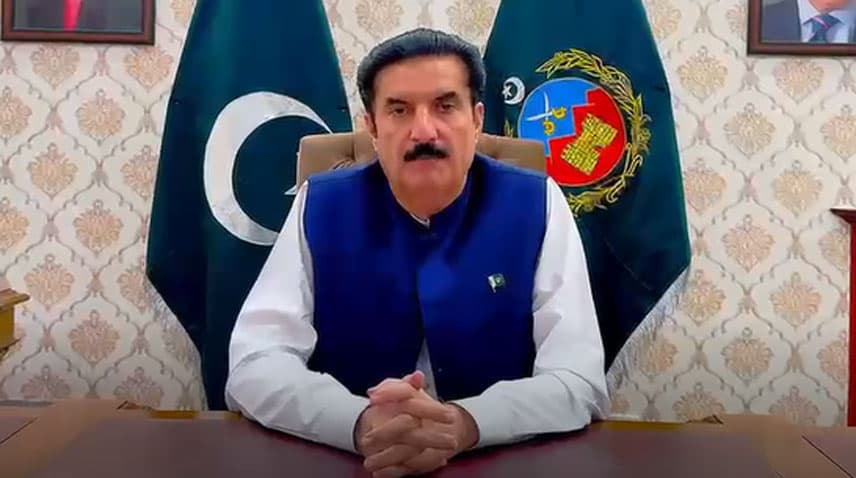
FO Rejects Indian Home Minister's Assertions Linking Arrests With Pakistan
Pakistan's Foreign Office has rejected remarks by India's home minister linking certain arrests in India to Pakistan, calling the allegations baseless and part of a wider campaign against Islamabad. The statement came…
Image credit: Original Novexa News graphic
Pakistan's Foreign Office has rejected remarks by India's home minister linking certain arrests in India to Pakistan, calling the allegations baseless and part of a wider campaign against Islamabad.
The statement came after Indian Home Minister Amit Shah claimed that Indian authorities had destroyed an allegedly Pakistan-backed group and arrested scores of operatives. Pakistan's Foreign Office said the assertion was another example of New Delhi trying to link domestic security matters to Pakistan for political gain.
The FO said Pakistan strongly rejected the attempt to connect Islamabad with the arrests. It argued that such claims were meant to divert attention from India's own internal security challenges and to blame Pakistan for narrow domestic political purposes.
The exchange reflects how quickly security allegations can become part of the wider Pakistan-India diplomatic dispute. Both countries regularly accuse each other of hostile activity, and statements from senior officials often become front-page political issues before any independent verification is possible.
Pakistan's statement also repeated Islamabad's broader claim that India is involved in destabilising activity beyond its borders. The FO referred to past Pakistani allegations and cited the case of Kulbhushan Jadhav as evidence of India's involvement in subversion and terrorism in Pakistan.
India has consistently rejected Pakistan's accusations, while Pakistan rejects Indian allegations linking it to violence or arrests inside India. That cycle has made regional diplomacy harder because security claims often arrive with strong political language and little space for de-escalation.
For Pakistan, the immediate purpose of the FO response is to contest the Indian narrative before it becomes accepted in regional or international debate. For India, such statements are often framed as domestic security claims and proof of action against threats.
The larger issue is that accusations between the two nuclear-armed neighbours can harden public opinion and reduce room for dialogue. Even when no immediate crisis follows, repeated claims and counterclaims can keep diplomatic channels under pressure.
The next meaningful development would be whether either side presents evidence through official channels or whether the statement remains part of the familiar cycle of allegation and denial. Until then, the confirmed point is that Pakistan has formally rejected the Indian minister's claim and urged the international community not to accept it.
For diplomacy, the danger is that repeated public accusations can become a substitute for evidence-sharing or formal engagement. If either country believes it has actionable proof, regional stability is better served by verifiable channels than by speeches aimed mainly at domestic audiences. Without that discipline, each new allegation risks becoming another trigger for public anger rather than a step toward accountability.
The useful way to read this story is to watch for confirmed next steps rather than only the first political reaction. Early reports identify the direction of a development, but the real public impact depends on official follow-up, measurable action and whether affected institutions change their position. Novexa News will treat those later details as important updates if they add verified information beyond the initial report. That distinction matters for regional peace.
Source links
Comments
No approved comments yet.