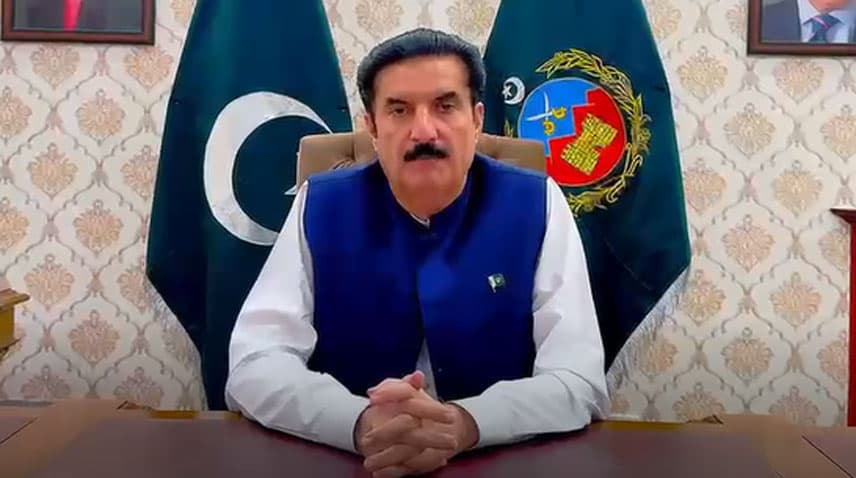
Ahsan Iqbal Proposes 15 New Provinces
Ahsan Iqbal has proposed 15 new provinces or empowered district governments to improve governance and bring services closer to citizens.
Image credit: Novexa News generated editorial card
Federal Minister for Planning, Development and Special Initiatives Ahsan Iqbal has proposed the creation of 15 new provinces as part of a wider debate on governance, public administration and the delivery of services to citizens.
Speaking on the need for administrative reform, Ahsan said Pakistan's existing governance structure required serious changes because the current system has not been able to fully answer local service-delivery challenges. He suggested that the country could either create 15 additional provinces or establish around 160 fully empowered district governments.
Why the proposal matters
The proposal touches one of Pakistan's oldest governance questions: how much authority should remain with provincial capitals, and how much should move closer to citizens at the district and local level.
Ahsan argued that the current two-tier structure of federal and provincial governments has not produced the improvements Pakistan needs in social and economic indicators. In his view, the problem is not only policy design but also distance. When authority sits too far away from the people affected by decisions, basic public issues often move slowly.
The minister's argument is that smaller or more empowered administrative units could make government more accessible, more responsive and easier to hold accountable.
Two options on the table
Ahsan placed two broad options before the public discussion. The first is the creation of 15 additional provinces. That would be a major constitutional and political change, requiring broad consensus across parties, provinces and national institutions.
The second option is a stronger district-government model. Under that approach, Pakistan would not necessarily redraw provincial boundaries. Instead, around 160 district governments would receive greater administrative and financial authority to manage local affairs.
That alternative could be seen as a more practical route if political agreement on new provinces proves difficult. It would still require clear laws, funding powers and institutional safeguards, but it may avoid some of the sensitivities linked to provincial boundaries.
The 18th Amendment question
Ahsan referred to the 18th Constitutional Amendment, which transferred 17 subjects to the provinces in 2010. The amendment was a major step in decentralising authority from the federal government to the provinces.
His concern is that decentralisation did not move far enough. According to the minister, provinces received powers from the federation but did not transfer those responsibilities further to local governments.
That has created a gap between authority and citizens at the grassroots level. In many areas, people still rely on distant administrative structures for services that could be handled more effectively by empowered local institutions.
Article 140-A and local powers
The minister also pointed to Article 140-A of the Constitution, which provides for local governments. His criticism is that the article does not clearly define the full extent of administrative, financial and political powers that local bodies should hold.
That lack of clarity has allowed local government systems to remain weak or inconsistent. Provinces can hold local elections and create municipal structures, but those bodies often struggle without real control over money, staff and decision-making.
Ahsan's proposal suggests that local governments should not exist only on paper. They need defined authority if they are expected to solve problems linked to roads, sanitation, health, education, planning and local development.
Islamabad also part of the plan
The planning minister also discussed possible reforms for the Islamabad Capital Territory. He proposed an Islamabad Capital Territory Government and an elected ICT Assembly to give residents greater representation in local decision-making.
Under the suggested arrangement, the ICT Assembly could include 27 members. That would include 21 directly elected representatives, five reserved seats for women and one seat for a minority representative.
The federal government would continue to oversee areas such as law and order and master planning. Other local matters would move to the proposed ICT government, giving Islamabad residents a clearer political structure for day-to-day governance issues.
CDA restructuring proposed
Ahsan also suggested restructuring the Capital Development Authority so that it fits into the proposed administrative arrangement for Islamabad.
The CDA has long played a powerful role in the capital's planning and development. Any change to Islamabad's governance model would therefore need to define how the CDA, local representatives and federal authorities would share responsibility.
The minister said a unified legislative framework would be needed to clearly define institutional powers. Without that clarity, overlapping authority could create fresh confusion instead of solving existing governance problems.
Political consensus will be the real test
Creating new provinces would require broad political and constitutional agreement. It would involve questions of identity, resources, representation, boundaries and provincial power. Those issues are sensitive in every federation, and Pakistan is no exception.
The district-government option may appear more immediate, but it would still require political will. Empowered districts would need predictable funding, elected leadership, administrative control and legal protection from being weakened whenever governments change.
The proposal has opened a useful debate because it connects constitutional design with ordinary public services. Whether Pakistan chooses new provinces, stronger districts or a separate Islamabad government, the central question remains the same: can governance be brought close enough to citizens to make daily life work better?
Comments
No approved comments yet.