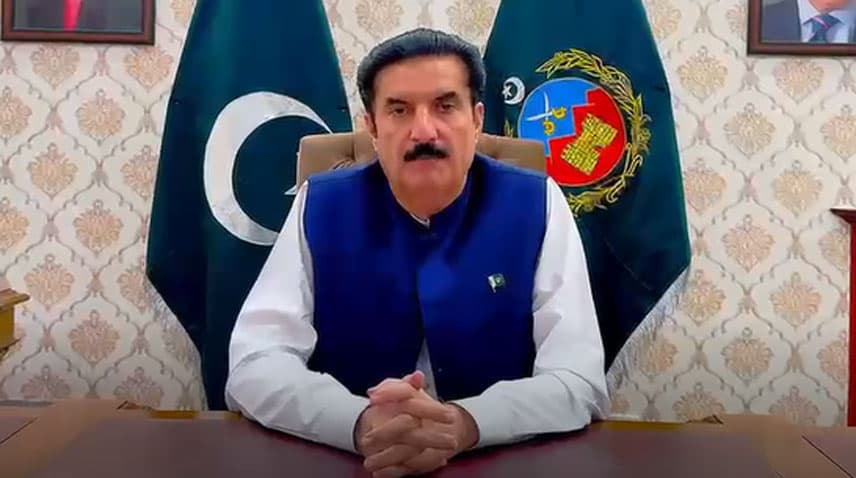
Ahsan Iqbal Urges Pakistan to Fast-Track Shift to Electric Vehicles
Pakistan's planning minister used a public appearance in Lahore to make a blunt case: the global shift away from gasoline-powered transportation is already underway, and Pakistan needs to move faster to keep pace with…

Pakistan's planning minister used a public appearance in Lahore to make a blunt case: the global shift away from gasoline-powered transportation is already underway, and Pakistan needs to move faster to keep pace with it.
The Minister's Message
Ahsan Iqbal, Minister for Planning and Development, said the world is moving away from gasoline in transportation as the EV revolution accelerates across the globe, and called specifically for Pakistan to fast-track its own transition to electric vehicles rather than allow the shift to happen gradually or reactively. He noted that a significant share of the petrol Pakistan currently imports, roughly 80 percent by his figure, goes directly toward transportation use, framing the EV transition explicitly as an opportunity to cut that import dependence.
Why Import Dependence Is The Real Argument
Pakistan imports the overwhelming majority of its petroleum products, making fuel costs a direct and significant drain on the country's foreign exchange reserves and a major contributor to its persistent trade deficit. Framing the EV transition around cutting petrol imports, rather than purely around environmental benefits, reflects an argument likely to resonate more broadly across Pakistan's political spectrum, since reducing import dependence speaks directly to the kind of balance-of-payments pressure that has repeatedly constrained Pakistani economic policy in recent years.
The Real Obstacles To Fast-Tracking EVs
Iqbal's call for acceleration runs into practical realities that have slowed EV adoption in Pakistan so far: limited charging infrastructure outside major cities, the relatively high upfront cost of electric vehicles compared to average Pakistani household incomes, and an electricity grid that itself faces reliability and capacity challenges that would need to be addressed alongside any serious EV expansion. None of those obstacles are unique to Pakistan, but they do mean a genuine fast-track transition would require substantial coordinated investment well beyond ministerial statements of intent alone.
What Would Actually Need To Happen
Turning this kind of high-level call into a real fast-tracked transition would likely require a combination of import duty incentives for EVs, coordinated public and private investment in charging infrastructure, and policies aimed at making electric vehicles genuinely price-competitive with the gasoline-powered vehicles most Pakistani consumers currently drive. Whether Iqbal's remarks translate into that kind of concrete policy package, or remain a statement of ambition without the accompanying investment, will determine how seriously Pakistan's EV transition timeline actually shifts in the coming years.
Regional context adds further pressure to move quickly. Neighboring economies have already begun rolling out their own EV incentive programs and charging networks, and every year Pakistan delays a serious transition is a year local manufacturers and consumers fall further behind on infrastructure and technology that will eventually become the global default regardless of how quickly any individual country chooses to adapt to it. Iqbal's ministry is expected to outline more specific EV policy proposals in the coming budget cycle.
Local automakers, many of whom have built their business models around conventional internal combustion vehicles for decades, will also need clear policy signals well in advance if they are expected to retool production lines toward electric models on any accelerated timeline. How the government balances pressure to move faster on climate and import-substitution grounds against the practical realities facing domestic manufacturers will shape whether Iqbal's fast-track vision becomes policy or remains aspirational rhetoric.
Comments
No approved comments yet.