UN Security Council Condemns Houthi Attacks on Saudi Arabia
The UN Security Council condemns Houthi attacks on Saudi civilian and energy infrastructure as displacement and maritime risks grow.
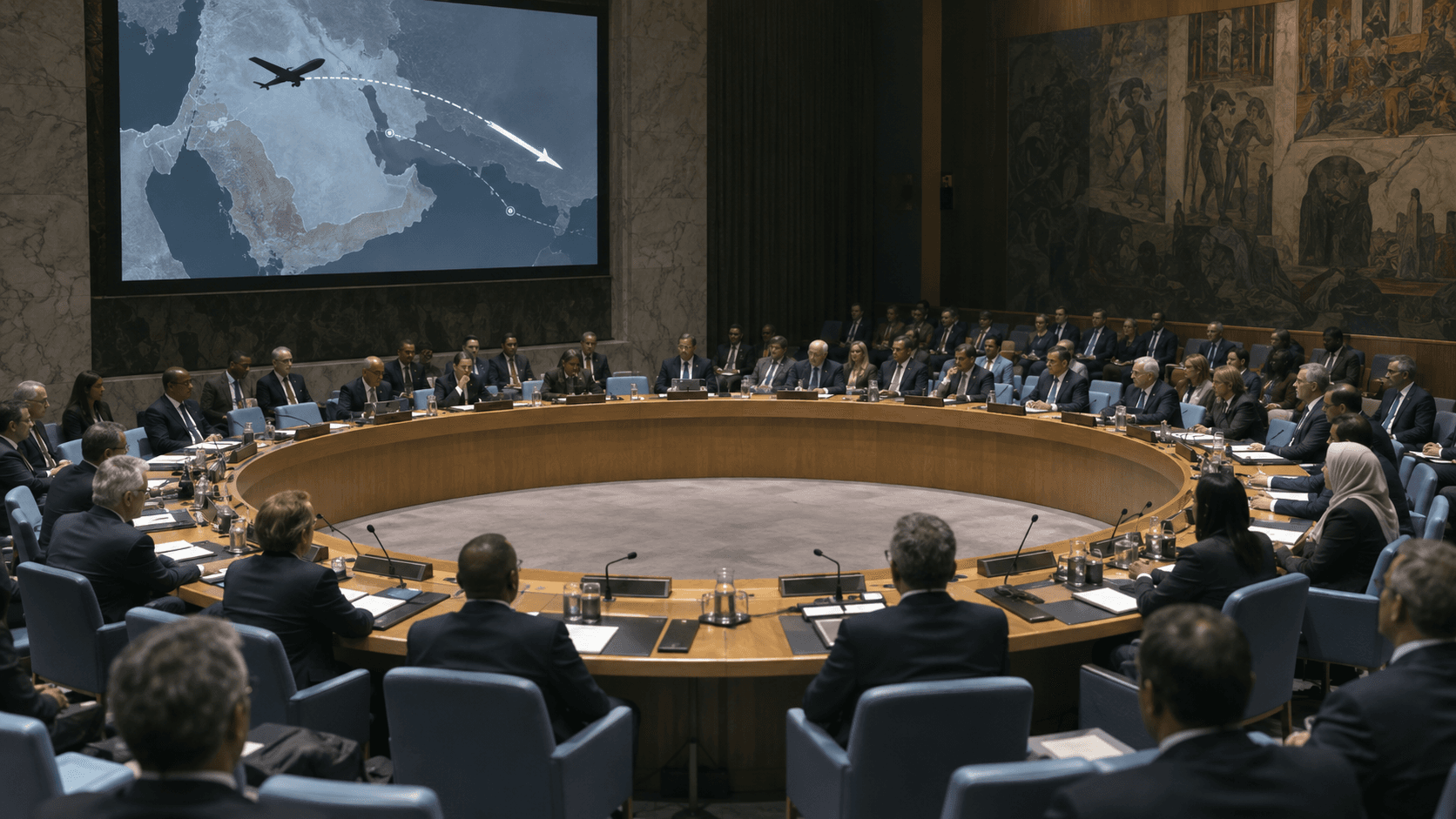
Image credit: AI-generated editorial illustration by OpenAI
The United Nations Security Council has condemned continuing Houthi attacks on Saudi Arabia, including strikes affecting civilian and energy infrastructure, and demanded an immediate end to the military escalation as fighting deepens Yemen's humanitarian emergency.
French Ambassador Jerome Bonnafont, serving as the council's rotating president, delivered the joint statement after a meeting on Yemen. Council members said the attacks had injured civilians, including women and children, and reiterated the need to protect commercial shipping and freedom of navigation.
The statement represents an unusual point of agreement among council members at a time of wider international division over conflicts in the Middle East. It places attacks on Saudi territory, the conflict inside Yemen and threats to Red Sea shipping within the same security crisis.
Civilian and energy infrastructure under threat
Saudi authorities have reported intercepting missiles and drones launched from Yemen, while strikes and falling debris have caused casualties and damage. The Houthis have also targeted shipping and claimed a blockade affecting Saudi-linked vessels.
The Security Council called for the escalation to stop and for navigation rights to be respected under international law. The Bab al-Mandab Strait is one of the world's most important maritime passages, connecting the Red Sea with the Gulf of Aden and routes towards the Indian Ocean.
Disruption there can affect oil shipments, container traffic and insurance costs far beyond the immediate conflict zone. It also complicates humanitarian access to Yemen, where millions already depend on aid.
The Houthi movement has linked its military campaign to the wider regional conflict and disputes Saudi accounts of some attacks, including an alleged attempt to target Makkah. The Security Council statement reflects the members' collective position, while individual claims about particular strikes may still require independent verification.
Displacement rises across Yemen
UN officials told the council that civilians were paying the highest price. Barham Salih, the UN high commissioner for refugees, said more Yemenis were crossing towards Djibouti to escape the violence and that additional movements were reported to be under way.
More than 125,000 people have been displaced inside Yemen since the renewed fighting intensified in early September, according to figures cited at the meeting. Many families have left with limited possessions and face shortages of shelter, food, water and medical care.
The new displacement compounds a crisis created by more than a decade of war. More than 22 million people across Yemen are already in need of humanitarian assistance, and any interruption to aid deliveries risks worsening hunger and preventable disease.
The council reaffirmed support for Yemen's unity, sovereignty, independence and territorial integrity. It also backed UN efforts towards a comprehensive political settlement, although the renewed battlefield escalation has made negotiations more difficult.
Saudi religious leader addresses troops
Separately, Saudi Grand Mufti Sheikh Saleh bin Fawzan Al-Fawzan issued a strongly worded message urging military personnel to remain prepared and obey their commanders while defending Saudi territory and Islamic holy sites.
The statement framed defence of the country as a religious duty and called restoration of the internationally recognised Yemeni government's authority an urgent obligation. It illustrated the seriousness with which Saudi institutions are presenting the current threat.
The religious appeal was not part of the Security Council statement, but both developments occurred as Riyadh considered its response to attacks and consulted regional partners. Pakistan, Saudi Arabia and Turkiye have also begun military-level discussions under their Makkah Joint Defence Agreement.
Diplomacy faces a narrowing window
Yemen's war had remained relatively contained after a 2022 truce, even though a final political settlement was never reached. The latest fighting has reversed much of that restraint and drawn the conflict more directly into wider regional tensions.
The Security Council's condemnation establishes a common diplomatic position: attacks on civilians and infrastructure must stop, maritime navigation must be protected and the parties should return to a political process. Translating that statement into de-escalation will require pressure on the belligerents, protection for humanitarian operations and renewed engagement by the UN special envoy.
Without those steps, the immediate risks are clear: more displacement, greater danger to Saudi cities and infrastructure, and continued uncertainty along a maritime route vital to global trade. The council's unity is significant, but its effect will be measured by whether violence falls and civilians receive safe access to assistance.
Source links
Comments
No approved comments yet.