Senior White House Security Aide Andy Baker Plans Departure
Deputy national security adviser Andy Baker is expected to leave the White House in the coming weeks after serving in senior foreign-policy roles.
Image credit: Original Novexa News graphic
White House deputy national security adviser Andy Baker is expected to leave the Trump administration in the coming weeks, removing a senior official who has worked closely with Vice President JD Vance and the president's foreign-policy team.
Reporting on the planned departure says Baker wants to spend more time with his family and remained in government longer than originally intended to support an orderly transition. He is expected to move into private-sector work with Robert O'Brien, who served as national security adviser during Donald Trump's first presidential term.
A central role in the second Trump administration
Baker entered the administration with a background that combined government service and close work with Vance. He previously served as a foreign service officer at the State Department and later advised Vance when he was a senator. After Vance became vice president, Baker continued as his national security adviser.
In 2025, a restructuring of the National Security Council moved Baker into a deputy national security adviser position. The council coordinates policy across departments and gives the president advice on military, diplomatic and intelligence matters. Deputy advisers often translate broad presidential priorities into options that agencies can implement.
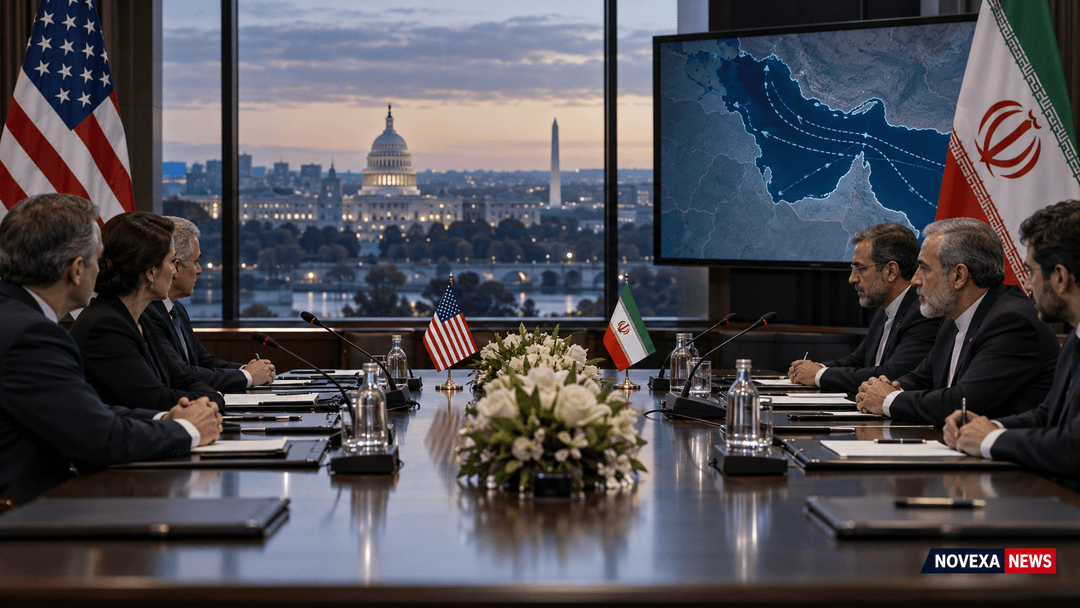
Baker's portfolio placed him near major decisions during a period of intense international activity. Reports say he was involved in policy discussions and negotiations concerning Iran. His departure will therefore draw attention not only because of his title, but because institutional knowledge can matter during active diplomatic and security files.
The transition around Vance and the NSC
Cliff Sims, who succeeded Baker as Vance's national security adviser earlier in 2026, is expected to remain in that job. Mike Needham is also continuing as a White House deputy national security adviser. Those arrangements provide some continuity while responsibilities are redistributed.
Secretary of State Marco Rubio has also served as the president's national security adviser, linking diplomatic leadership with White House coordination. That structure gives the administration a different chain of command from the more traditional model in which the State Department and National Security Council are led separately.
Personnel changes are normal in any administration, particularly in demanding national-security positions. The policy significance depends on whether a departing official represented a distinct viewpoint, managed a sensitive relationship or held personal trust that cannot be transferred quickly.
Officials praise Baker's service
Statements reported alongside the departure were strongly positive. Vance described Baker as a thoughtful adviser who served the administration with distinction. Rubio called him an important member of the national-security team, while colleagues highlighted his foreign-policy experience and role in advancing the administration's agenda.
Baker, for his part, expressed pride in the administration's work and gratitude to Trump, Vance and Rubio. The public tone gives no indication that the departure resulted from a policy dispute. The reported reason remains family considerations followed by a private-sector move.
That context matters because staff exits are often interpreted through partisan assumptions. Without evidence of a conflict, the most accurate description is a planned transition by a senior aide. Future appointments or memoirs may provide more detail, but speculation should not be presented as fact.
Why the departure still matters
Even an orderly exit can affect the pace of government. Baker's successor or colleagues will need to absorb relationships with foreign officials, agency leaders and White House staff. They will also inherit the task of reconciling competing advice before it reaches the president.
The administration faces continuing security questions across the Middle East, Europe and Asia. Continuity is particularly valuable where negotiations depend on trust built through repeated contact. A successful handover will preserve those channels and ensure that decisions are documented rather than held only in personal networks.
The Andy Baker White House departure is therefore best viewed as a personnel change with potential operational consequences, not evidence by itself of a shift in policy. The clearest indicators will be who assumes his remaining responsibilities and whether the administration changes its approach on the issues he helped manage.
This Novexa News report is based on statements and current reporting from Axios and Reuters coverage carried by Dawn World.
Source links
Comments
No approved comments yet.