Saudi Delegation Reviews Investment Openings in Pakistan
A Saudi business delegation has held talks with Pakistan's SIFC on investment opportunities spanning energy, transport, industry and communications.
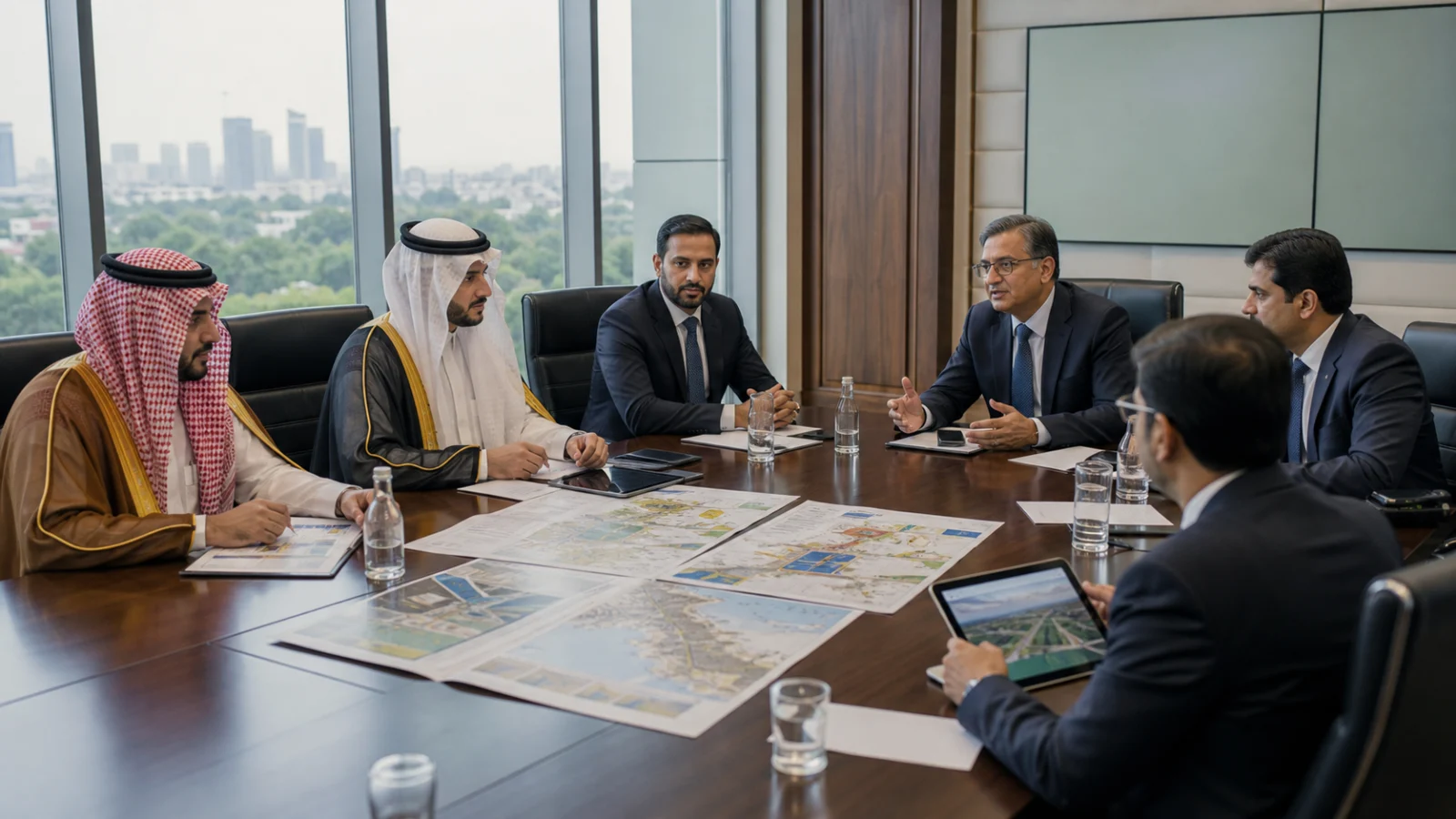
Image credit: AI-generated editorial illustration by Novexa News
A high-level Saudi business delegation has held a fresh round of talks with Pakistan's Special Investment Facilitation Council, examining opportunities in energy, transport, industry and communications as the two countries seek to turn longstanding political ties into commercially viable projects.
The delegation was led by Prince Mansour bin Mohammad Al Saud, chairman of the Saudi-Pakistan Joint Business Council. During the visit, Saudi investors met senior Pakistani officials, public institutions and private-sector representatives through engagements coordinated by the SIFC.
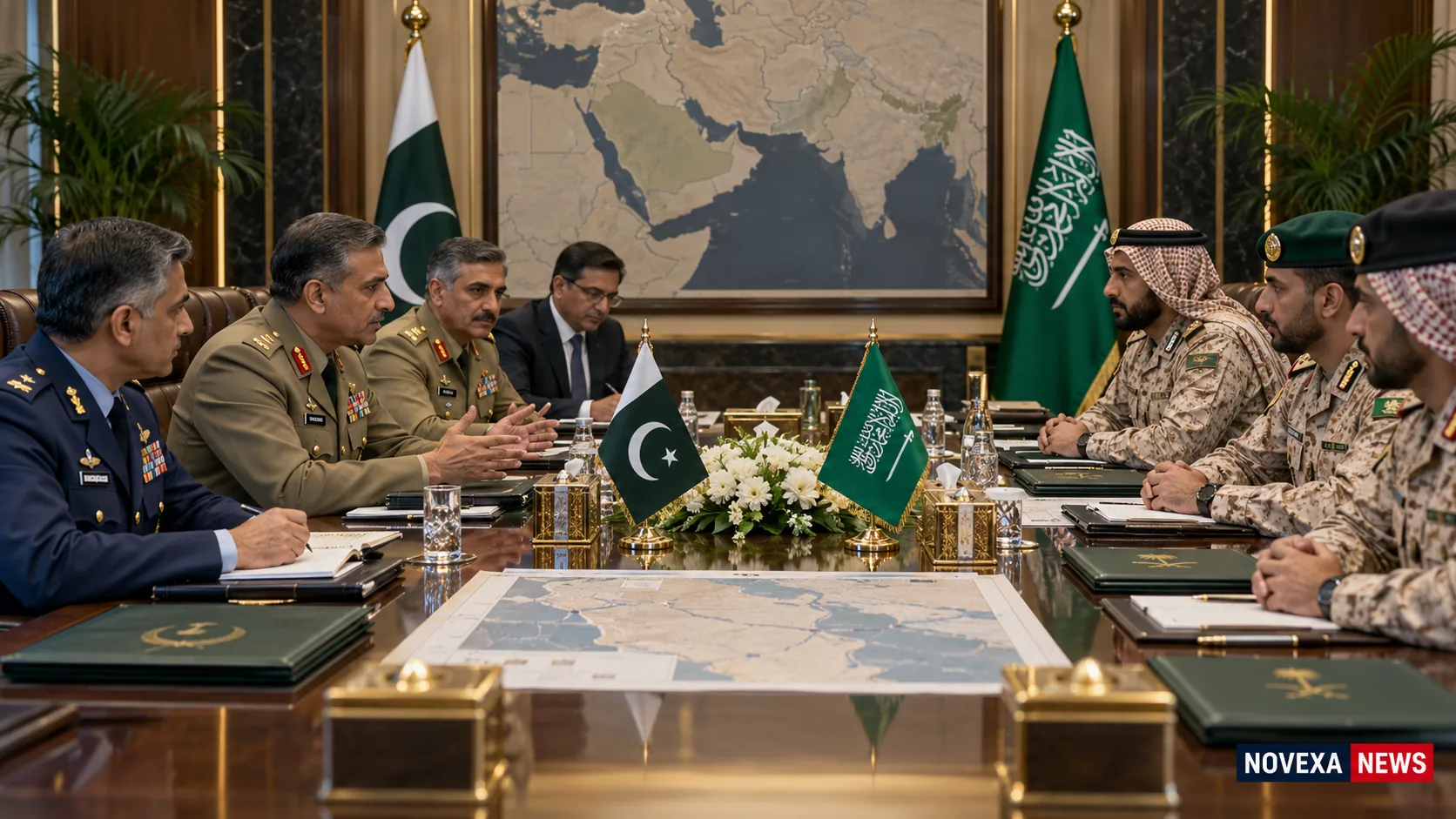
The official agenda covered power, petroleum, privatisation, industries, communications and highways. Discussions considered both government-to-government and business-to-business structures, giving the visiting companies a chance to assess projects while allowing Pakistani institutions to explain regulatory requirements, financing needs and potential partnership models.
Talks span major parts of Pakistan's economy
The range of sectors under discussion reflects Islamabad's effort to attract long-term foreign capital into areas that can expand productive capacity and improve infrastructure. Energy and petroleum projects can affect industrial costs and supply reliability, while highways and communications investment can reduce logistical barriers for businesses operating across the country.
Privatisation was also included in the talks. Pakistan has been seeking investors for selected state-owned assets and services, but any transaction would depend on valuation, due diligence, regulatory approvals and terms acceptable to both the government and investors. The delegation's meetings were exploratory, and officials did not announce a final investment value or a completed project agreement.
That distinction is important. High-level visits can open access and clarify investor interest, but they do not automatically produce financing. The next stages normally require detailed project studies, commercial negotiations, risk assessment and legally binding contracts.
Shehbaz Sharif calls for a broader economic partnership
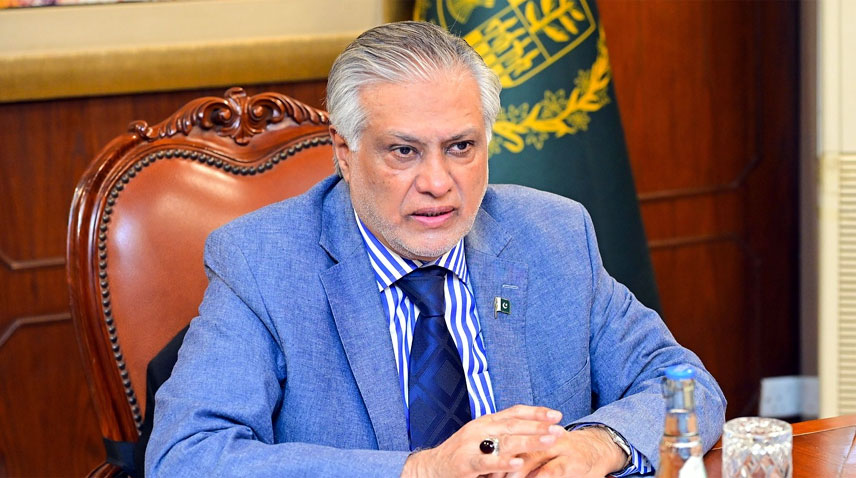
Prime Minister Shehbaz Sharif met the delegation in Islamabad and said Pakistan wanted to elevate its economic relationship with Saudi Arabia into a mutually beneficial strategic economic partnership. According to the Prime Minister's Office, the Saudi side expressed interest in agriculture, ports, highways, airport outsourcing, real estate, energy, power distribution and information technology.
Sharif said he hoped the visit would lead to agreements across several sectors. Prince Mansour, meanwhile, reaffirmed interest from the Saudi government and business community in expanding direct engagement with Pakistani companies.
The meeting built on a relationship that already includes trade, financial support and investment discussions. Pakistani and Saudi businesses signed 34 memoranda of understanding worth $2.8 billion in 2024, although the progress of individual proposals varies and announced memoranda should not be treated as completed investment until financing and implementation are confirmed.
Why the SIFC is central to the process
Pakistan created the SIFC to bring federal and provincial bodies, regulators and security institutions into a single investment-facilitation framework. Its role is to help prospective investors identify priority projects, understand approval processes and coordinate with the agencies responsible for implementation.
For Saudi companies, the structure offers a single point of engagement in a market where major projects can involve several ministries and regulators. For Pakistan, it provides a way to present a coordinated pipeline instead of asking foreign delegations to approach institutions separately.
The council's effectiveness will ultimately be judged by outcomes. Investors will look for predictable regulations, transparent procurement, reliable contractual enforcement and realistic revenue models. Pakistan will want capital that adds productive capacity, creates employment and strengthens exports rather than increasing short-term liabilities.
From financial support to investable projects
Pakistan and Saudi Arabia have traditionally maintained close diplomatic and people-to-people ties. Economic cooperation has often included deposits, deferred oil facilities and other forms of state support. Both governments have increasingly spoken about moving toward trade, joint ventures and private investment that can generate returns over a longer period.
Saudi Arabia's Vision 2030 strategy has encouraged its companies and investment institutions to diversify domestically and internationally. Pakistan offers a large consumer market, a strategic location connecting South Asia with the Gulf and Central Asia, and opportunities in infrastructure, agriculture, mining, energy and technology. It also presents commercial and policy risks that investors will assess closely.
The delegation's focus on government-to-government and business-to-business models suggests that both sides are considering more than one route. A state-backed framework can help large infrastructure projects, while direct company partnerships may be better suited to technology, industry, services and supply chains.
What will determine whether the talks deliver
The most important test will be whether the meetings produce specific projects with named investors, financing plans and implementation schedules. Clear ownership of each proposal will matter, particularly where land, tariffs, public guarantees or regulatory concessions are involved.
Pakistan will also need to show that proposed projects can survive changes in market conditions and government policy. Saudi investors, like other commercial participants, will examine currency exposure, the ability to repatriate profits, energy pricing and legal protections before committing significant funds.
The visit therefore represents progress in engagement rather than a completed investment package. It has widened the conversation across several priority sectors and connected Saudi businesses with the Pakistani institutions that would oversee future deals. The economic value will become clearer when those consultations move into signed agreements, financed projects and work on the ground.
Source links
Comments
No approved comments yet.