Wildfires and Heat Waves Threaten Air Quality
Wildfires and heat waves are making it harder for countries to clean the air, the World Meteorological Organization warned in a new bulletin released on September 7 for the International Day of Clean Air for blue skies…
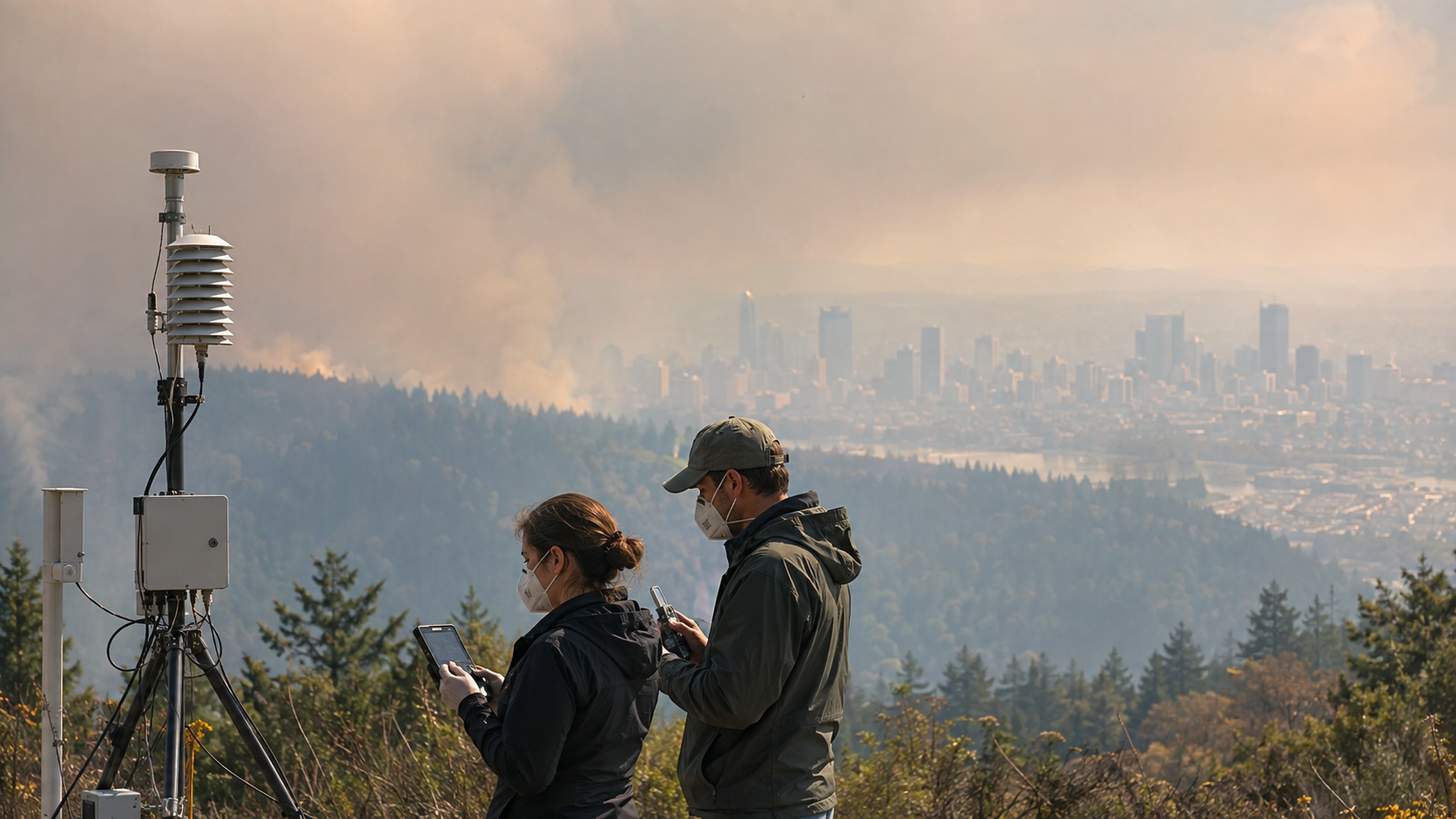
Image credit: AI-generated editorial illustration
Wildfires and heat waves are making it harder for countries to clean the air, the World Meteorological Organization warned in a new bulletin released on September 7 for the International Day of Clean Air for blue skies.
What the WMO warned
The WMO said rising pollution from intense wildfires and heatwaves risks undermining international efforts to improve air quality and protect human and ecosystem health. Its latest Air Quality and Climate Bulletin argues that air pollution and climate change cannot be handled as separate problems.
The message is blunt: hotter conditions can worsen the pollution people breathe, while polluted air can affect climate systems. That connection means progress in one area can be weakened if the other is ignored. The WMO is urging governments to build policies that deal with both problems together.
Why wildfire smoke is different
Wildfire smoke is not just a local emergency around the flames. Fine particles from fires can travel across regions, borders and even continents, exposing people far from the original burn area. The WMO highlighted particulate matter known as PM2.5, which is small enough to enter deep into the lungs and bloodstream.
The bulletin says regulations in parts of Europe and North America have reduced some industrial and transport emissions, but fire-related PM2.5 exposure has increased. That is a worrying shift because smoke can undo air-quality gains made through years of cleaner transport, power and industrial policies.
Hot spots in 2025
According to the WMO bulletin, PM2.5 concentrations in 2025 were above long-term averages in northern Canada, parts of the Russian Federation and western-central Africa because of increased fire activity. North-western Spain was also identified as a hot spot after exceptional fires in late summer 2025.
The report also noted that China continued to show below-average PM2.5 levels in 2025, reflecting declines in emissions from human activities, while India remained above average because of biomass burning and other sources of pollution. The regional picture is uneven, which is why better monitoring matters.
Heat waves and ozone
Heat waves create another air-quality problem: ground-level ozone. Unlike the protective ozone layer high in the atmosphere, ground-level ozone can harm human health, crops and ecosystems. It forms more readily during hot, stagnant weather with strong sunlight.
The WMO bulletin points to studies from the south-eastern United States, Europe and China showing that heatwave conditions can raise ozone exposure. Long-term exposure to ozone pollution is linked with increased mortality, mainly through respiratory disease, making the issue both environmental and public-health related.
Deaths and undercounted risk
One study cited by the WMO bulletin says extreme fire-smoke events have tripled globally since the 1990s and may have contributed to nearly 100,000 additional deaths per year between 2010 and 2018. The report also warns that standard risk models may underestimate deaths linked to wildfire smoke because fire-derived particles can be more toxic than conventional PM2.5 measures suggest.
That point matters for hospitals and city planners. If the risk is being undercounted, public warnings, emergency plans and clean-air shelters may not match the real danger. Communities downwind of fires need timely information even when the fire itself is hundreds of kilometres away.
Monitoring gaps
The WMO called for better observation of fine particles, ground-level ozone, black carbon and microplastics. These pollutants are widespread, but sustained monitoring is still uneven. Without good data, governments struggle to know where the air is worsening, who is most exposed and which interventions are actually working.
Black carbon is especially important because it can darken snow and ice, reducing reflectivity and speeding melting. Microplastics are also increasingly found in the atmosphere, on land and in oceans, but estimates vary widely because monitoring remains limited.
The warning is not only for countries facing active fires today. It is a signal that climate policy, fire management, city planning and health protection now have to move together. Cleaner air will be harder to achieve in a hotter world unless governments treat wildfire smoke and heat-driven pollution as central risks, not seasonal side issues.
Source links
Comments
No approved comments yet.