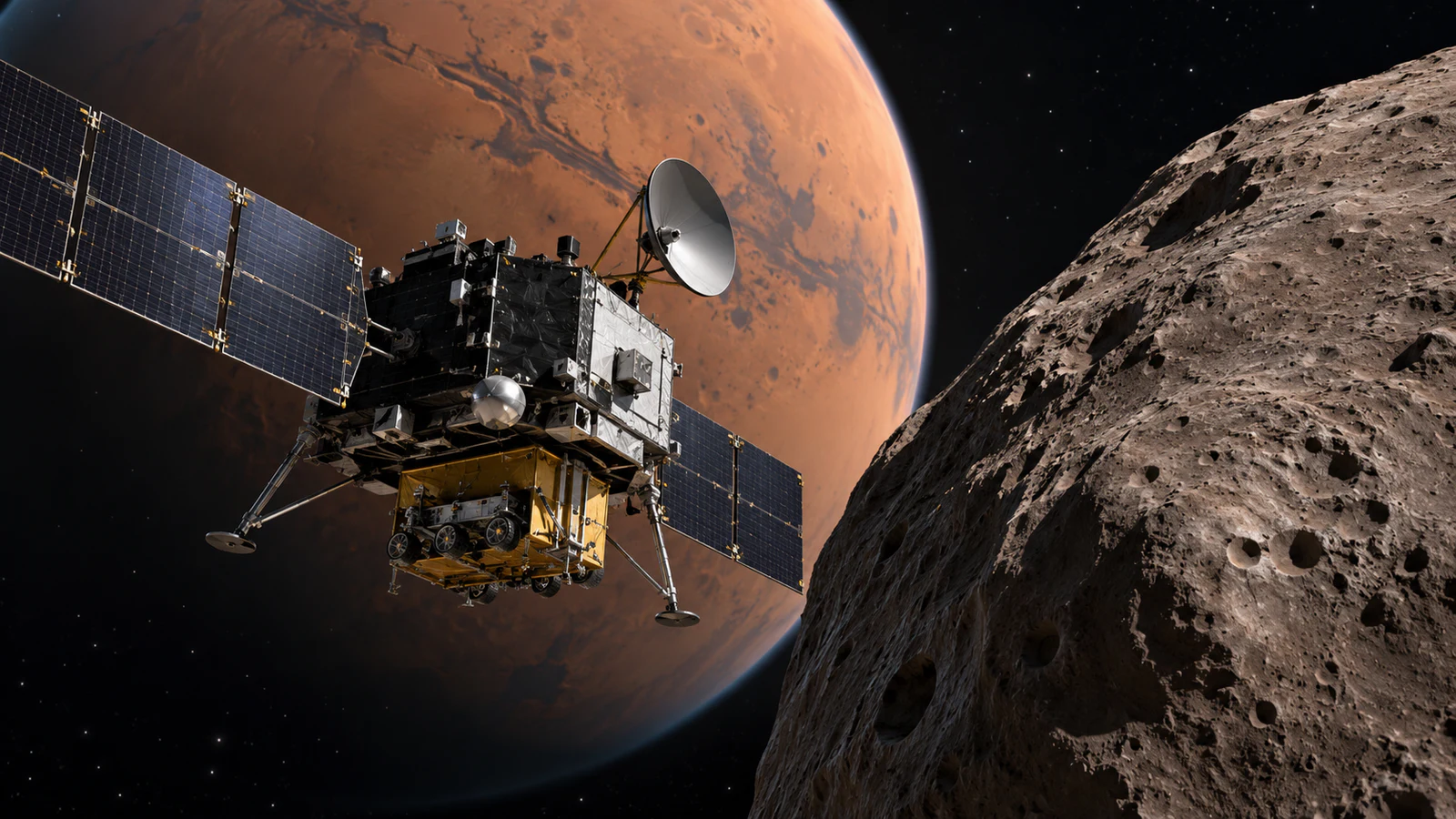
Space update: This composite photo released July 2026, shows crescent
NASA’s Psyche approaches Mars sequence has offered a clear look at how the spacecraft used the Red Planet during a key step in its journey toward a metal-rich asteroid far beyond Earth. Released by NASA on July 17…

NASA’s Psyche approaches Mars sequence has offered a clear look at how the spacecraft used the Red Planet during a key step in its journey toward a metal-rich asteroid far beyond Earth. Released by NASA on July 17, 2026, the composite image tracks Mars growing from a thin crescent into a larger visible arc as Psyche closed in on the planet for a gravity assist earlier in the year.
The flyby took place on May 15, 2026. According to NASA’s mission information, Psyche used Mars’s gravity to gain speed and slightly alter its path through space. That type of maneuver is a standard technique in deep-space exploration, allowing spacecraft to use a planet’s motion and gravitational pull as a form of navigation support rather than relying only on onboard propulsion.
Why Psyche approaches Mars in a crescent view
The composite set, built from images taken between May 2 and May 15, shows Mars from an unusual angle. Because Psyche approached from a high phase angle, sunlight illuminated only a narrow portion of the planet from the spacecraft’s viewpoint. The result was a thin crescent that gradually changed as the spacecraft moved closer.
That visual detail is more than a striking image. It also reflects the geometry of the flyby and the changing relationship between spacecraft, planet, and Sun during the approach. For mission planners and space observers alike, it offers a reminder that image sequences from planetary encounters can document both the science and the navigation behind a mission.
A practical milestone for the mission
The Mars encounter was not the end goal of the Psyche mission. NASA says the flyby also gave the team a chance to prepare for the science it will carry out at the metal-rich asteroid Psyche, which the spacecraft is expected to reach in 2029.
That makes the Mars assist a useful rehearsal as well as a trajectory change. Flybys provide teams with opportunities to test observation planning, evaluate spacecraft performance, and gather operational experience under real mission conditions. In Psyche’s case, the maneuver tied together two phases of the mission: the journey through deep space and the future study of the asteroid itself.
The mission’s target is scientifically significant because the asteroid is described as metal-rich, making it an object of interest for researchers studying planetary building blocks and the evolution of rocky bodies. While the supplied information does not add further mission results from the Mars pass, it does show that the flyby served both engineering and preparation purposes.
What comes next for Psyche
After the Mars gravity assist, Psyche continues on its route toward the asteroid Psyche. The 2029 arrival remains the next major milestone identified in the source material, and the recent flyby marks one more step in a longer interplanetary journey.
For NASA, the approach to Mars demonstrates how spacecraft missions often combine practical navigation with science-rich observation opportunities. For the Psyche mission, it also highlights the careful staging required before the spacecraft can begin its work at the asteroid it was built to study.
Comments
No approved comments yet.