Pakistan, Turkiye Review Strategic Cooperation Ahead of Key Meetings
Ishaq Dar and Turkish Ambassador Irfan Neziroglu review preparations for the Joint Commission and eighth strategic council session.
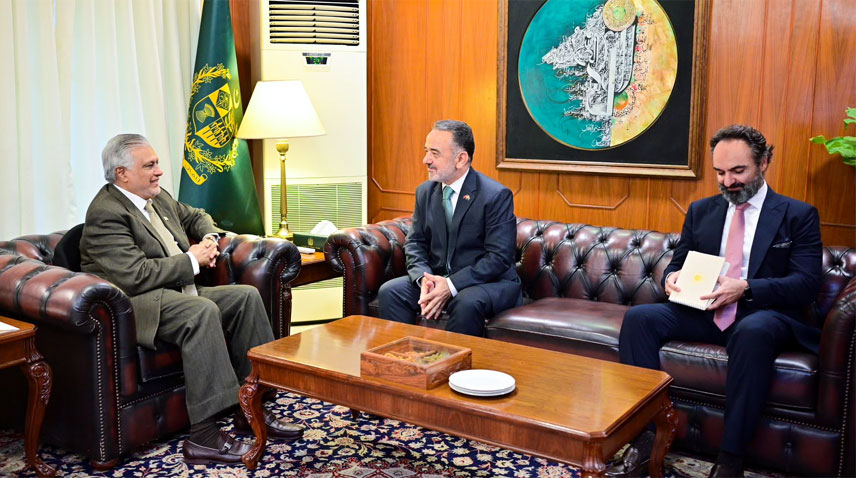
Image credit: Radio Pakistan / Government of Pakistan
ISLAMABAD, September 19, 2026: Pakistan and Turkiye have reviewed preparations for two high-level bilateral mechanisms as Deputy Prime Minister and Foreign Minister Ishaq Dar met Turkish Ambassador Irfan Neziroglu in Islamabad.
Dar reaffirmed Pakistan's commitment to deepen engagement with Turkiye in priority areas, while Neziroglu briefed him on progress under the institutional arrangements that guide cooperation between the two countries.
The meeting focused in particular on preparations for the forthcoming Joint Commission and the eighth session of the High-Level Strategic Cooperation Council. Dar called for close coordination between the relevant departments on both sides so that the meetings can advance the wider bilateral agenda.
According to Radio Pakistan, the two officials also exchanged views on the evolving regional situation. Dar said dialogue and diplomacy remained the only viable route to resolving disputes and achieving lasting peace, stability and prosperity.
Preparing the Next High-Level Agenda
The High-Level Strategic Cooperation Council is the principal political forum for directing Pakistan-Turkiye relations across multiple sectors. Its working structure is intended to turn decisions made by national leaders into programmes followed by ministries and other public institutions.
The seventh council session was held in Islamabad on February 13, 2025, during Turkish President Recep Tayyip Erdogan's visit to Pakistan. Its joint declaration described the council as the main political forum guiding bilateral relations and reorganised its sectoral working groups as permanent Joint Standing Committees.
That session also established a Joint Commission, co-chaired by the two foreign ministers, to review implementation across the standing committees. The commission serves as an umbrella for the sectoral bodies and is designed to identify delays, coordinate follow-up and prepare issues requiring political decisions.
The areas covered by the framework include trade, investment, banking, energy, defence and security, transport, communications, information technology, health, education, agriculture, culture, tourism, science and technology. Preparations for the next commission and council meetings therefore involve more than diplomatic scheduling; they require each participating department to report progress and define its next commitments.
From Political Ties to Implementation
Pakistan and Turkiye frequently describe their relationship in terms of longstanding political, cultural and public ties. The current focus, however, is on converting that relationship into measurable economic and institutional results.
At the seventh council session, both sides set an initial objective of expanding bilateral trade to $5 billion and called for stronger implementation of the Trade in Goods Agreement. They also identified opportunities in renewable energy, mining, defence production, transport links, digital trade, financial cooperation and emerging technologies.
The meeting between Dar and Neziroglu did not announce new agreements or dates for the forthcoming sessions. Instead, it served as a progress review and a direction to officials to coordinate the work required before senior decision-makers meet.
Turkiye's Foreign Ministry says the bilateral relationship was institutionalised through the High-Level Cooperation Council established in 2009 and later upgraded to the High-Level Strategic Cooperation Council. The official bilateral overview also records the seventh session during Erdogan's February 2025 visit.
Regional Diplomacy Also Discussed
The discussion of the regional situation came at a time of continuing security and diplomatic pressures across the Middle East and South Asia. The official account did not identify a particular dispute or announce a joint initiative, but Dar used the meeting to restate Pakistan's preference for dialogue and diplomatic engagement.
Pakistan and Turkiye regularly coordinate at multilateral forums and have overlapping interests in regional stability, trade routes, humanitarian issues and security cooperation. The institutional framework gives the two governments a channel for addressing those questions alongside their bilateral economic agenda.
The next practical indicators will be the dates and agendas announced for the Joint Commission and eighth High-Level Strategic Cooperation Council. Progress reports from the sectoral committees will also show how far the decisions made in February 2025 have moved from declarations to implementation.
For now, the Islamabad meeting signals that both sides are preparing the machinery for the next phase of engagement. Its importance lies less in a single new announcement than in the effort to align departments, review earlier commitments and ensure that the forthcoming high-level sessions produce decisions that can be carried through.
Source links
Comments
No approved comments yet.