Pakistan, Turkey and Saudi Arabia Sign Mutual Defense Deal
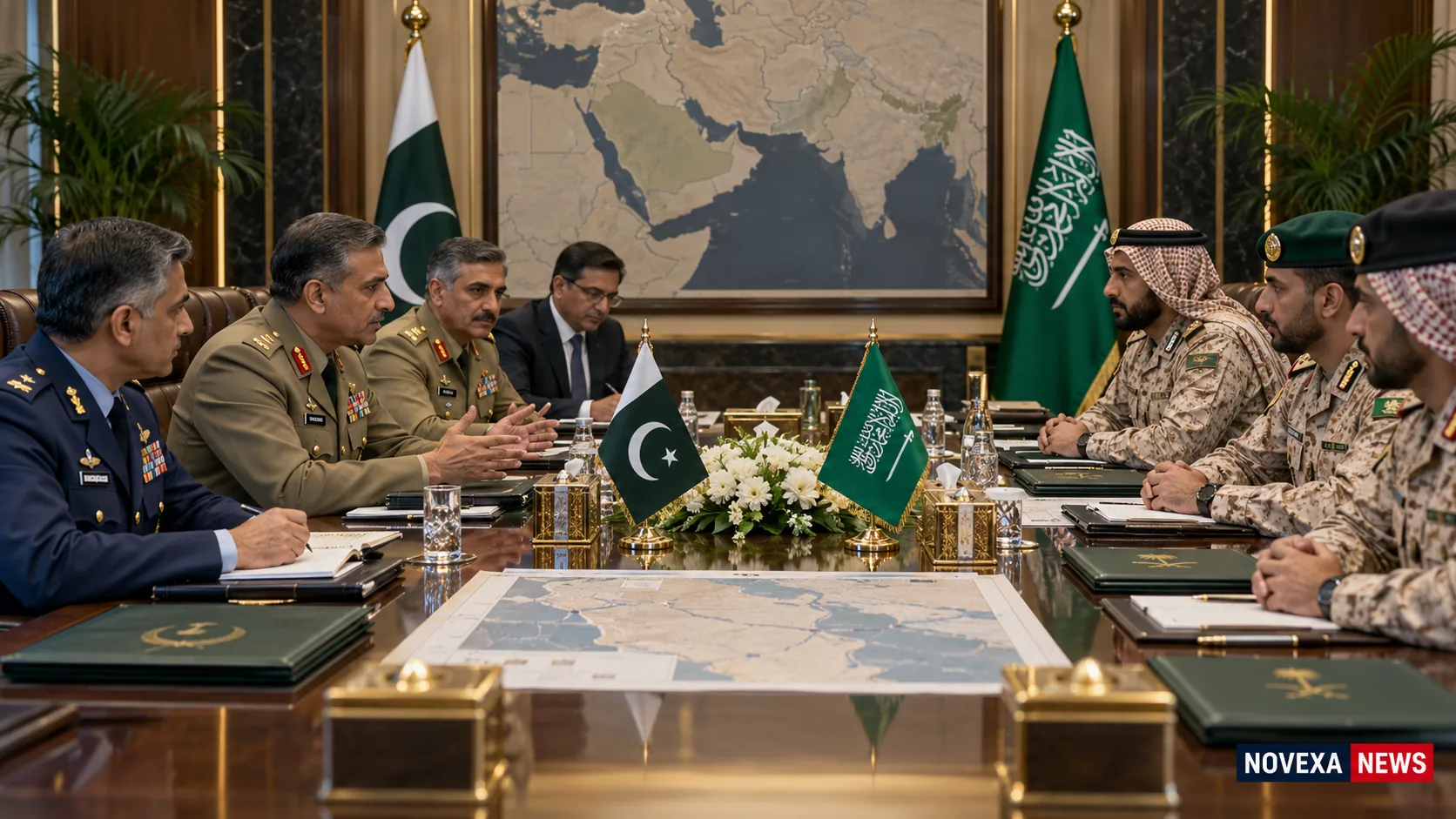
Pakistan, Turkey and Saudi Arabia have signed a mutual defense agreement as regional security concerns push the three countries toward closer coordination.
Image credit: Original Novexa News illustration
Pakistan, Turkey and Saudi Arabia have signed a mutual defense agreement that brings three long-standing security partners into a more formal framework. The deal arrives as conflict and uncertainty across the Middle East are forcing governments to reconsider how they protect airspace, shipping routes, energy infrastructure and national borders.
Officials have described the agreement as defensive rather than aimed at a particular country. That distinction matters because all three signatories maintain their own diplomatic, economic and military relationships across a region where alliances often overlap. The text and implementation plan will determine whether the pact becomes a broad political signal or a mechanism for operational military cooperation.
What the three-country agreement could cover
Pakistan, Turkey and Saudi Arabia already cooperate in training, defense production and military exchanges. A mutual defense agreement can create procedures for consultation during a crisis, intelligence sharing, joint exercises and coordination on new threats such as drones, cyberattacks and missile defense. It does not necessarily mean that every security incident will trigger an automatic military response.
The most important details are therefore the definitions. Governments and analysts will look for language explaining what qualifies as an attack, which institutions will coordinate a response and whether the arrangement covers territory, maritime assets and critical infrastructure. Without those details, sweeping claims about a new alliance would be premature.
Why the timing matters
The agreement comes during a period of elevated regional tension involving Gaza, Iran, Lebanon, Yemen and shipping through strategic waterways. Saudi Arabia has invested heavily in protecting oil facilities and diversifying its security relationships. Turkey has expanded its defense industry and regional influence. Pakistan brings a large, experienced military and a history of security cooperation with both countries.
For Islamabad, closer ties may create opportunities for training, technology transfer and defense exports. They may also require careful diplomacy. Pakistan has relationships with other states in the region and has traditionally tried to avoid being pulled directly into rival blocs. Officials will need to explain how the new commitments fit that broader policy.
Economic and strategic consequences
Security agreements can influence more than military planning. Investors and energy markets watch whether states can protect ports, pipelines and commercial routes. Reliable security cooperation can lower perceived risk, while ambiguity during a crisis can increase it. The pact may also support contracts involving aircraft, drones, communications equipment and other defense systems.
Turkey's defense sector has become a significant exporter, while Pakistan has sought wider markets for domestically produced equipment. Saudi investment could give joint projects greater scale. Any commercial gains, however, will depend on procurement decisions and technology-sharing rules rather than the announcement alone.
Questions that remain unanswered
Parliaments, policy experts and the public will want clarity on command arrangements, financial responsibilities and the approval required before forces can be deployed. They will also ask whether the deal includes nuclear guarantees, a possibility that often attracts speculation when Pakistan is involved. No such conclusion should be drawn without explicit official evidence.
Another question is how the pact interacts with existing bilateral agreements. The three countries may use it as an umbrella for cooperation that already occurs, or they may build a new permanent body. Joint statements, military exercises and budget allocations over the coming months will reveal the level of ambition.
What to watch next
The clearest signs of implementation will be named working groups, scheduled exercises, joint procurement plans and published consultation procedures. Diplomatic reactions from neighboring states will also show whether the agreement is viewed as stabilizing or as part of a sharper regional alignment.
For now, the Pakistan Turkey Saudi defense deal is best understood as a significant framework whose real power depends on execution. It formalizes an important relationship, but its effect on regional security will be measured by what the partners do when cooperation becomes difficult, costly or urgent.
Source links
Comments
No approved comments yet.