Pakistan Parliament Adopts Fresh Fuel and Spending Cuts
Pakistan's National Assembly and Senate introduce work rotations, fuel reductions and spending controls under a fresh austerity drive.
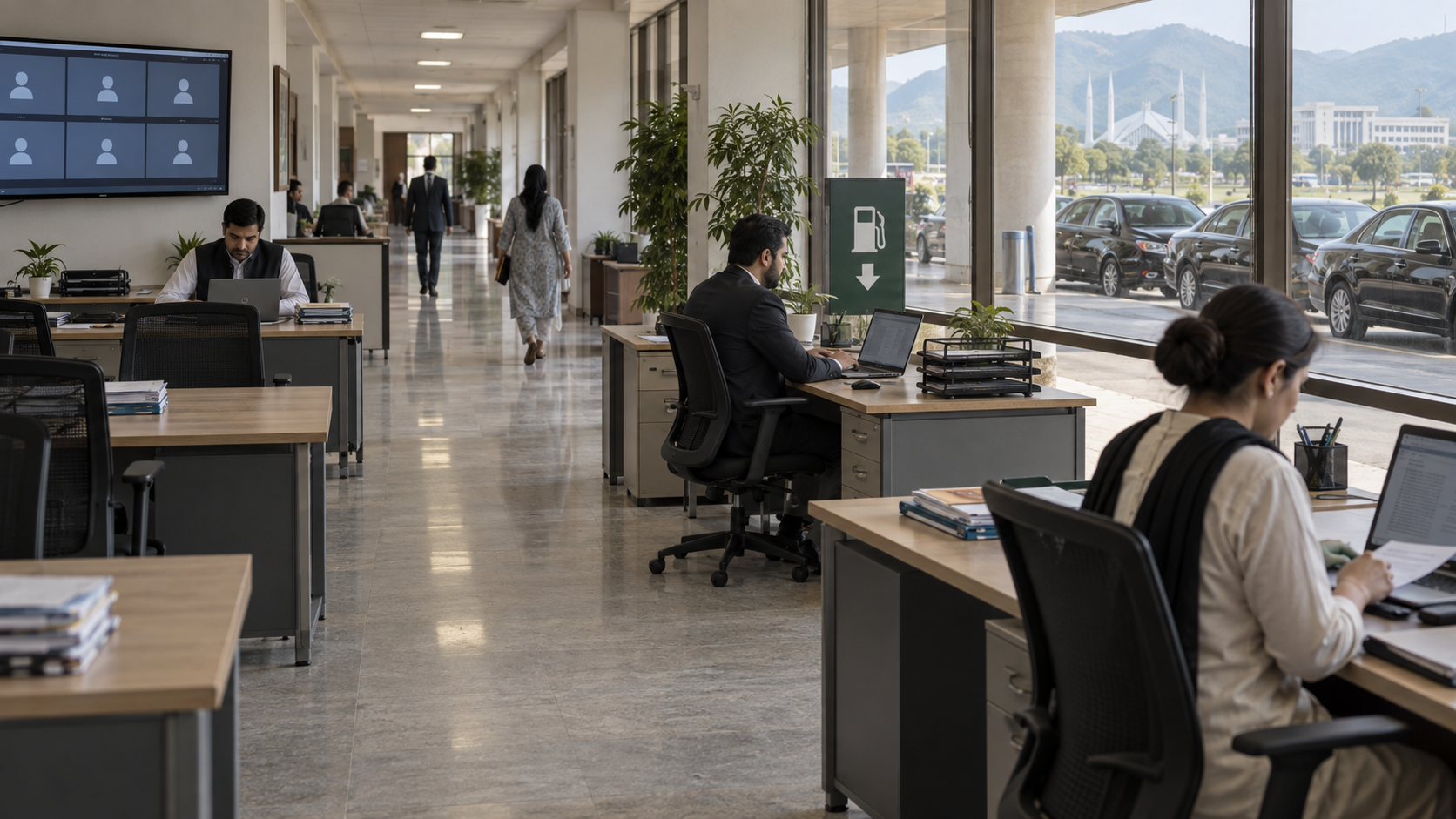
Image credit: AI-generated editorial illustration by OpenAI
Pakistan's National Assembly and Senate secretariats have introduced a new round of administrative restrictions aimed at lowering fuel consumption and non-salary expenditure as public institutions respond to pressure on the national budget and energy costs.
The measures combine reduced on-site staffing, tighter use of official vehicles, limits on procurement and greater reliance on online meetings. Both secretariats are expected to keep essential parliamentary work functioning while cutting routine operating costs.
Under the National Assembly plan, half of the secretariat's staff will attend the office while the remainder work remotely on a rotating basis. Employees working from home must remain available by telephone, email and WhatsApp and be able to report to the office within an hour when directed.
The arrangement follows a broader federal effort to conserve fuel and reduce expenditure. In March, the government announced work-from-home schedules, restrictions on official travel and limits on purchases as part of a national austerity programme. The Associated Press of Pakistan reported that the earlier package gave priority to teleconferencing and reduced physical attendance across non-essential offices.
Transport and budget controls
The latest parliamentary directions require a 50 percent reduction in fuel use for three months. Purchases of new official vehicles are suspended, and non-salary spending is to be reduced by five percent each month during the period covered by the measures.
National Assembly offices have also been told to minimise in-person meetings and use video conferencing where practical. The objective is to reduce both direct fuel consumption and related costs such as transport, utilities and administrative support.
The Senate has adopted a similar fuel reduction and vehicle-purchase freeze. Its secretariat will use Friday as a work-from-home day when the upper house is not in session, while regular office hours from Monday to Thursday will run from 9am to 4pm.
Procurement in the Senate is suspended except for information-technology requirements considered necessary to maintain operations. Foreign visits are barred for three months, and official dinners are prohibited except when the Senate is hosting foreign delegations.
These restrictions build on earlier savings initiatives. A Senate statement said the institution had already returned substantial savings to the national exchequer through controls on transport, procurement and discretionary expenditure.
Continuity of parliamentary work
Austerity in a legislature has limits. Sessions, committee hearings, constitutional business and public access to representatives still require staffing, records and security. The practical question is whether rotation and remote work can reduce costs without delaying legislation, committee scrutiny or responses to citizens.
The one-hour recall requirement is designed to preserve that flexibility. It allows managers to bring remote employees back when attendance is needed, but it also means departments must plan rosters carefully and avoid assigning critical duties to staff who cannot reach the complex quickly.
Digital meetings may lower travel costs, particularly for internal coordination, but committees handling sensitive evidence or classified briefings may still need secure physical sessions. Reliable document systems and clear attendance records will be important if the shift is to produce genuine savings without weakening accountability.
The vehicle and fuel restrictions will also require transparent exemptions. Emergency, security and protocol duties cannot always be postponed, while overly broad exemptions could erase the intended reduction. Publishing aggregate consumption and expenditure data would make it easier to judge whether the targets are being met.
A test of measurable savings
Parliament's measures carry symbolic weight because lawmakers approve public spending and question other institutions about its use. Visible restraint by the National Assembly and Senate can support the government's wider conservation message, but the result will depend on documented savings rather than announcements alone.
The three-month fuel limits provide a defined period for review. Officials can compare consumption with the same period in the previous year, account for the number of sitting days and disclose whether reduced purchases produced lasting savings or only delayed costs.
For employees and visitors, the immediate effect will be lighter on-site staffing and more remote communication. For the public finances, the larger issue is whether repeated austerity drives become durable administrative practice.
The new rules set clear operational targets: fewer journeys, fewer purchases, less discretionary spending and greater use of digital work. Their credibility will rest on consistent enforcement, narrow exceptions and public reporting after the initial three-month period ends.
Source links
Comments
No approved comments yet.