Pakistan, Egypt Reaffirm Coordination Through R4
Pakistan and Egypt have reaffirmed their commitment to closer diplomatic coordination through the Regional Four foreign ministers' framework, with both sides linking regular consultation to regional stability and…
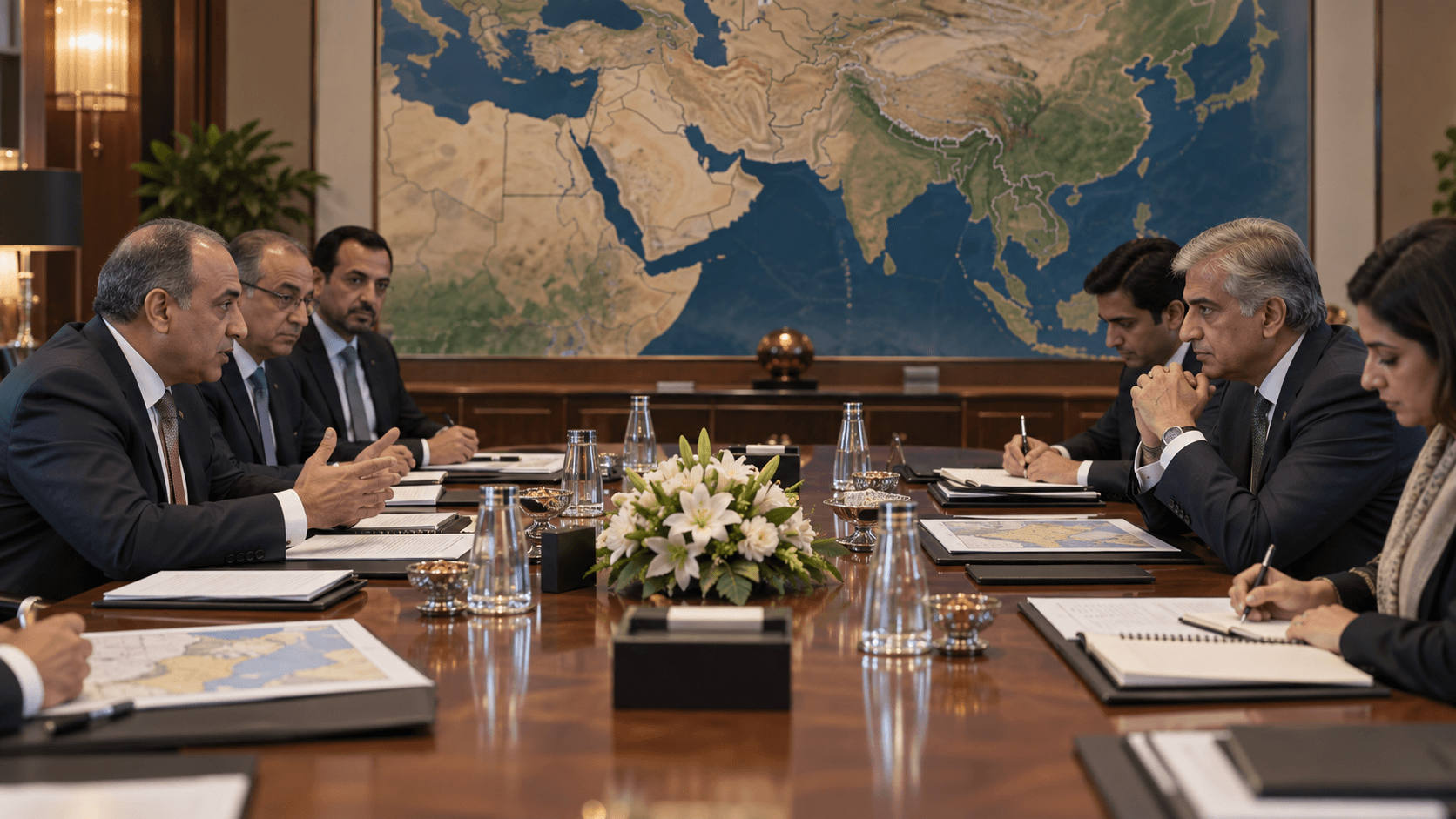
Image credit: AI-generated editorial illustration
Pakistan and Egypt have reaffirmed their commitment to closer diplomatic coordination through the Regional Four foreign ministers' framework, with both sides linking regular consultation to regional stability and stronger bilateral ties.
Dar and Abdelatty speak by phone
Deputy Prime Minister and Foreign Minister Ishaq Dar spoke with Egyptian Foreign Minister Dr Badr Abdelatty during a telephone conversation in which the two ministers reviewed Pakistan-Egypt relations and discussed regional developments.
The Foreign Office account of the call said both ministers reaffirmed the close and fraternal ties between Pakistan and Egypt. That language reflects Islamabad's effort to keep Cairo engaged as a key Arab partner at a time when Middle Eastern security, energy routes and diplomatic alignments remain under pressure.
R4 remains central
The two ministers also discussed the need for close consultations through the Regional Four, or R4, foreign ministers' forum. The format brings together Pakistan, Egypt, Saudi Arabia and Turkiye for high-level discussion on regional questions.
The R4 mechanism has gained visibility during a period of wider regional tension. It gives Islamabad a channel to coordinate simultaneously with major Arab and non-Arab Muslim countries, especially on issues where conflict, maritime security, energy stability and diplomatic mediation overlap.
UNGA meeting planned
Dar and Abdelatty agreed to meet on the sidelines of the forthcoming United Nations General Assembly session in New York. Such sidelines meetings rarely produce instant breakthroughs, but they are useful for keeping diplomatic files active and preparing the ground for more structured engagement.
For Pakistan, the UNGA setting offers a chance to discuss bilateral cooperation with Egypt while also reviewing regional concerns through the broader R4 lens. For Egypt, the engagement keeps open a direct line with Islamabad and other regional partners at a time when Cairo remains deeply involved in regional diplomacy.
Bilateral ties in focus
The call was not limited to the R4 mechanism. Both ministers reviewed the overall course of Pakistan-Egypt relations, including political and diplomatic cooperation. The two countries have historically maintained friendly relations, but the challenge has often been turning goodwill into deeper trade, security and institutional cooperation.
Regular foreign-minister contact can help keep that agenda moving. It also allows both sides to identify areas where cooperation can be practical rather than only ceremonial, including education, trade, regional consultation and multilateral diplomacy.
Background to the framework
The R4 format has held several consultations this year. A meeting in Cairo in June brought together the foreign ministers of Pakistan, Egypt, Saudi Arabia and Turkiye, where the four sides discussed regional developments and stressed dialogue, diplomacy and regional ownership of shared challenges.
That earlier meeting also linked the grouping to efforts at de-escalation and sustained negotiation in the region. The latest Pakistan-Egypt call therefore fits into a broader pattern rather than standing alone as a protocol exchange.
Why it matters
Regional diplomacy is becoming more crowded and more urgent. Conflicts and standoffs across the Middle East can affect energy markets, trade corridors, migration, humanitarian conditions and political stability far beyond the immediate conflict zones. No single country can manage those pressures alone.
That is why R4 coordination matters for Pakistan's foreign policy. It gives Islamabad a forum to remain involved in regional discussions without relying only on ad hoc bilateral calls. It also helps Pakistan maintain contact with Egypt, Saudi Arabia and Turkiye at the same table.
The latest Dar-Abdelatty exchange signals continuity rather than a dramatic shift. Still, continuity has value in diplomacy. When crises move quickly, established channels can make it easier for governments to compare positions, reduce misunderstanding and search for political space before tensions harden further.
The planned New York meeting will be the next place to judge whether the phone call turns into a more detailed diplomatic agenda. If the ministers use the UNGA sidelines to define follow-up work for R4, the format could become more than a consultation label and develop into a regular channel for regional coordination.
Source links
Comments
No approved comments yet.