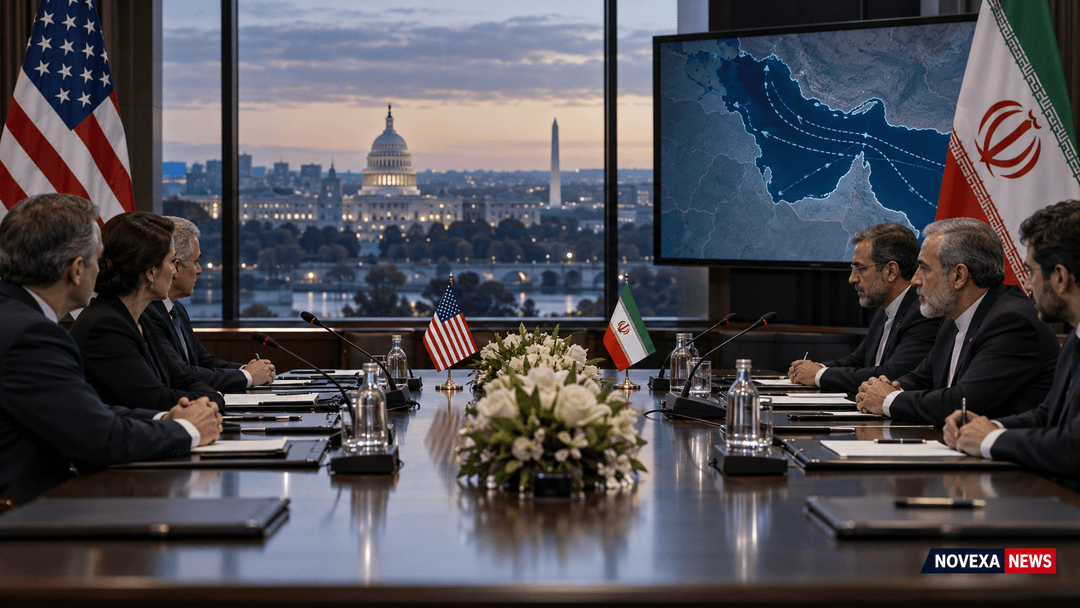
Oil Prices Climb as U.S.-Iran Peace Hopes Weaken
Oil prices moved higher as U.S.-Iran diplomacy stalled and reduced traffic through the Strait of Hormuz renewed concern about global energy supplies.

Image credit: Image from Pixabay
Oil prices climbed to their highest levels in almost three weeks as hopes for a durable agreement between the United States and Iran weakened and traders focused again on the risk of disrupted energy supplies.
During Tuesday trading, Brent crude moved close to $91 a barrel while U.S. West Texas Intermediate traded near $85. The rise followed another period of sharp market swings driven by changing expectations about diplomacy, military escalation and the movement of tankers through the Strait of Hormuz.
The latest increase is more than a daily change in commodity prices. It reflects uncertainty about one of the world's most important energy corridors and the possibility that higher crude costs could spread into transport, electricity, inflation and national import bills.
Peace talks lose momentum
Efforts to turn an interim arrangement into a lasting settlement have struggled to maintain momentum. A 60-day window for negotiations expired without a comprehensive peace deal, while U.S. President Donald Trump indicated that Washington was not planning new talks with Iran at that stage.
The lack of a clear diplomatic timetable has made energy markets more sensitive to official statements and security incidents. A credible return to negotiations could reduce part of the geopolitical premium built into oil prices. Renewed strikes or a further restriction on shipping could have the opposite effect.
That does not mean prices will move in only one direction. Oil markets also respond to global demand, commercial inventories, production decisions and releases from strategic reserves. However, the U.S.-Iran confrontation has made access to Gulf exports an unusually powerful short-term influence.
Strait of Hormuz remains the central supply risk
The Strait of Hormuz connects the Persian Gulf with the Gulf of Oman and the Arabian Sea. Data published by the U.S. Energy Information Administration shows why disruption there matters globally. In the first half of 2025, total oil flows through the strait averaged 20.9 million barrels a day, equal to about 20 percent of global petroleum-liquids consumption and one quarter of maritime oil trade.
Traffic has not returned to normal during the current crisis. The Associated Press, citing Kpler shipping data, reported that confirmed vessel crossings fell 19.5 percent last week to 95, with only three recorded on Sunday. Some cargoes are still moving, but reduced and unpredictable transit keeps freight, scheduling and insurance risks elevated.
Alternative routes provide only a partial cushion. The EIA estimates that major pipelines in Saudi Arabia and the United Arab Emirates could together bypass Hormuz with about 4.7 million barrels a day of capacity. Those routes are strategically important, but they cannot replace all of the oil and petroleum products that ordinarily travel through the strait.
Saudi Aramco has resumed some loadings from terminals inside the waterway, while traders and shipping companies have explored other arrangements to move cargoes. Such measures can ease immediate pressure, but each additional transfer, delay or route change can raise costs and operational complexity.
Red Sea tensions add a second layer of uncertainty
The supply picture is also being complicated by attacks linked to Yemen's Houthi movement. The group has claimed strikes against Saudi-connected vessels and energy infrastructure, saying it is enforcing a blockade against Saudi shipping. Saudi Arabia has disputed the Houthis' justification for the campaign.
The distinction matters: these are claims and actions by the Houthi movement, not by Yemen as a whole. The internationally recognized Yemeni government opposes the group, and the conflict has created competing authorities within the country.
In July, the Houthis said they attacked Saudi oil tankers in the Red Sea. More recent regional reporting has described further claimed attacks on a Saudi oil facility. These developments increase concern about the Bab al-Mandab route at a time when Gulf producers are already relying more heavily on alternatives to Hormuz.
What global markets are watching next
Investors are monitoring whether Washington and Tehran return to serious negotiations, whether Oman and other mediators can preserve a shipping arrangement, and whether tanker traffic begins to recover consistently. Markets will also watch for confirmed attacks on vessels or energy infrastructure rather than reacting only to unverified claims.
If diplomacy produces a workable mechanism for safe passage, part of the supply-risk premium could ease. If the confrontation expands or shipping falls further, the pressure could intensify. The range of possible outcomes explains why crude prices have moved sharply in both directions during the conflict.
Higher oil prices can also affect financial markets by adding to inflation expectations. Businesses face more expensive freight and production inputs, while households may eventually pay more for fuel and goods transported over long distances. Central banks may find their inflation decisions more difficult if energy costs remain elevated.
Why the increase matters for Pakistan
Pakistan is especially exposed because it relies heavily on imported energy and must pay for those imports in foreign currency. A sustained rise in international crude prices can increase the national import bill, add pressure to foreign-exchange resources and raise the cost of transport and electricity.
The effect is not always immediate or equal to the full movement in crude. Domestic taxes, exchange rates, refining costs, government pricing decisions and existing inventories all influence what consumers ultimately pay. Even so, a prolonged increase would make inflation management and fiscal planning more difficult.
For businesses, fuel costs can pass through supply chains into agriculture, manufacturing, logistics and retail prices. For households, the impact may appear in travel expenses, electricity charges and the cost of essential goods.
The latest rise in crude therefore serves as a reminder that Middle East diplomacy has consequences far beyond the negotiating table. Until shipping becomes more predictable and the United States and Iran establish a durable political framework, oil markets are likely to remain highly responsive to every verified development around Hormuz and the wider regional conflict.
Source links
Comments
No approved comments yet.