Israeli Strikes Kill Four in Southern Lebanon
Lebanese authorities say Israeli strikes killed four people and injured 20 in the Nabatieh area, placing renewed pressure on a US-backed de-escalation framework.
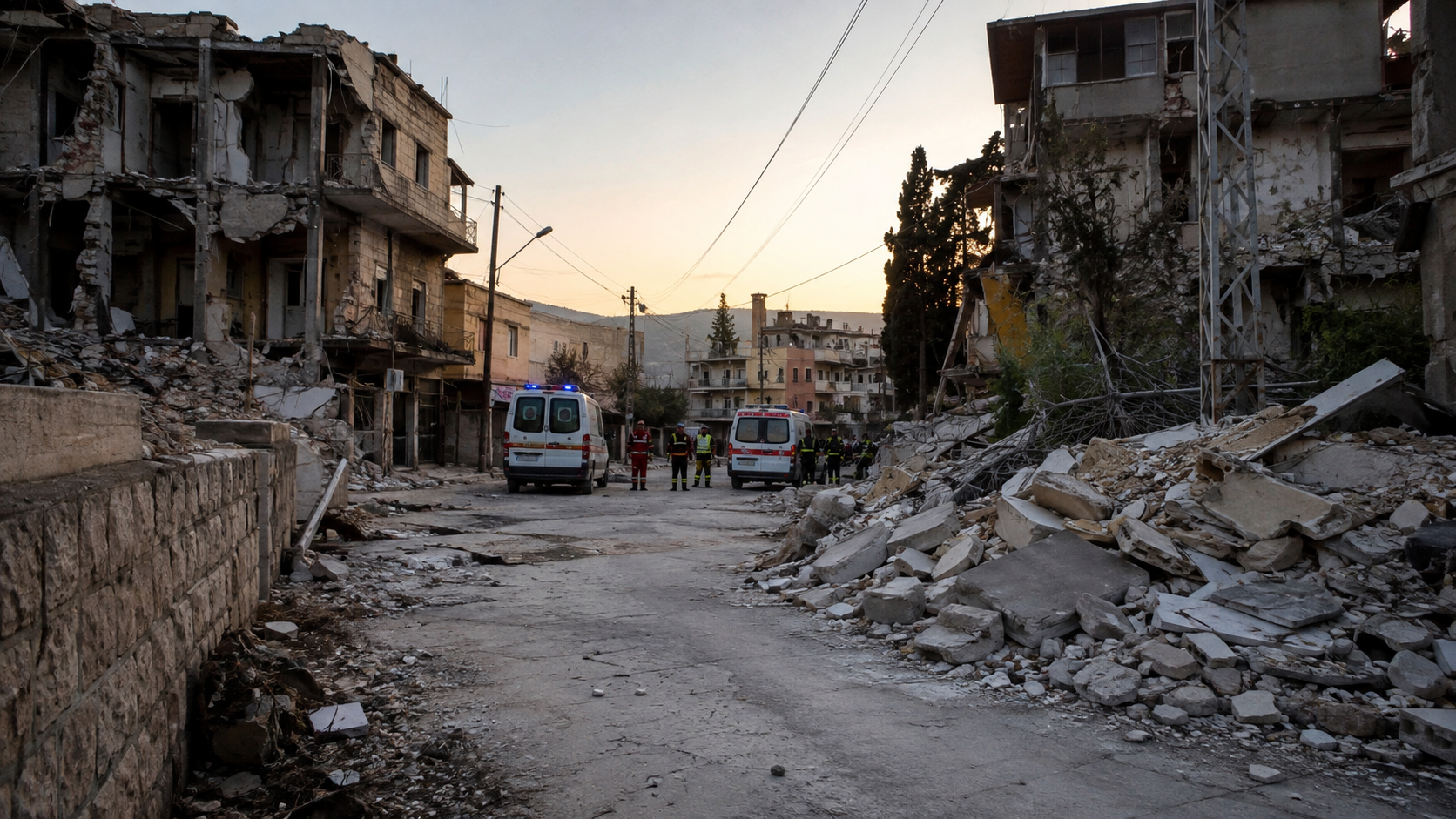
Image credit: AI-generated editorial illustration by Novexa News
At least four individuals lost their lives and 20 more sustained injuries from a series of Israeli airstrikes carried out in southern Lebanon on Sunday, according to local authorities, marking the latest escalation that threatens the stability of a U. S.
-supported pact aimed at decreasing hostilities in the area. The attacks reportedly hit multiple locations in the Nabatieh district, encompassing Nabatieh al-Fawqa, Al-Rahibat, Arab Salim, and Kfar Remman.
Lebanon’s Health Ministry stated that the strikes resulted in civilian casualties, including women and children, with several of the injured requiring hospitalization for treatment. As per Lebanon’s National News Agency, two women were killed and six others injured when an Israeli strike impacted a residence in Arab Salim.
Among the casualties were two girls. The agency also mentioned that another house in the region was destroyed during the assault.
What officials reported
In Kfar Remman, Israeli aircraft allegedly targeted the home of Ali Moallem, a former mayor of the town, while multiple women suffered injuries in this attack. Additional casualties were reported in Nabatieh al-Fawqa and Al-Rahibat, heightening concerns over the ongoing repercussions of military operations on civilian populations in southern Lebanon.
The Israeli military asserted that the strikes were a reaction to what it characterized as the launch of two Hezbollah drones aimed at Israeli soldiers operating in southern Lebanon. Israel has consistently argued that its military actions are meant to thwart Hezbollah attacks and address perceived security threats along its northern border.
This recent escalation occurs despite a U. S.
-backed framework agreement established on June 26, intended to create conditions for de-escalating tensions and facilitating an Israeli pullout from Lebanese territory. The arrangement reportedly outlines a gradual withdrawal of Israeli forces alongside an enhanced presence of the Lebanese Army in southern areas.
Nevertheless, ongoing military actions have cast doubt on the agreement’s implementation and viability. Continuous exchanges of gunfire between Israel and Hezbollah have hindered diplomatic attempts to foster a sustained period of tranquility and restore stability along the border.
A fragile security arrangement
The reported strikes matter beyond the immediate casualty toll because southern Lebanon's security arrangements depend on restraint by multiple actors. Repeated attacks can disrupt returns to damaged communities and complicate the work of Lebanese institutions and international monitors.
Claims about the intended targets and the drone incident came from the Israeli military, while casualty information came from Lebanese authorities and state media. Those accounts describe different parts of the episode and should not be read as independent confirmation of every operational detail.
What happens next
The renewed violence imposes additional strain on Lebanon’s authorities, especially as communities in southern Lebanon grapple with displacement, infrastructural damage, and humanitarian challenges arising from the conflict. The United Nations and global stakeholders have repeatedly highlighted the necessity of safeguarding civilians and maintaining diplomatic avenues to avert further escalation.
Any prolonged decline in the security situation could jeopardize efforts to enforce the U. S.
-supported framework and raise the likelihood of renewed extensive hostilities. The recent strikes highlight the hazardous nature of the situation in southern Lebanon, where the lack of security arrangement still leaves civilians at risk.
Ongoing diplomatic engagement, adherence to current agreements, and effective application of security measures will remain essential to avert further escalation and foster long-term stability.
Frequently asked questions
Where did the strikes occur?
Reports identified locations in and around the Nabatieh district of southern Lebanon.
What casualty figure was reported?
Lebanon's Health Ministry reported four deaths and 20 injuries.
What did Israel say prompted the strikes?
The Israeli military said it was responding after two Hezbollah drones were launched toward Israeli soldiers.
Source links
Comments
No approved comments yet.