NDMA Issues Flood Alert as Heavy Rains Loom
The National Disaster Management Authority has issued a flood alert for several parts of Pakistan, warning that heavy rain over the next two days could raise river levels, trigger flash flooding and create urban…
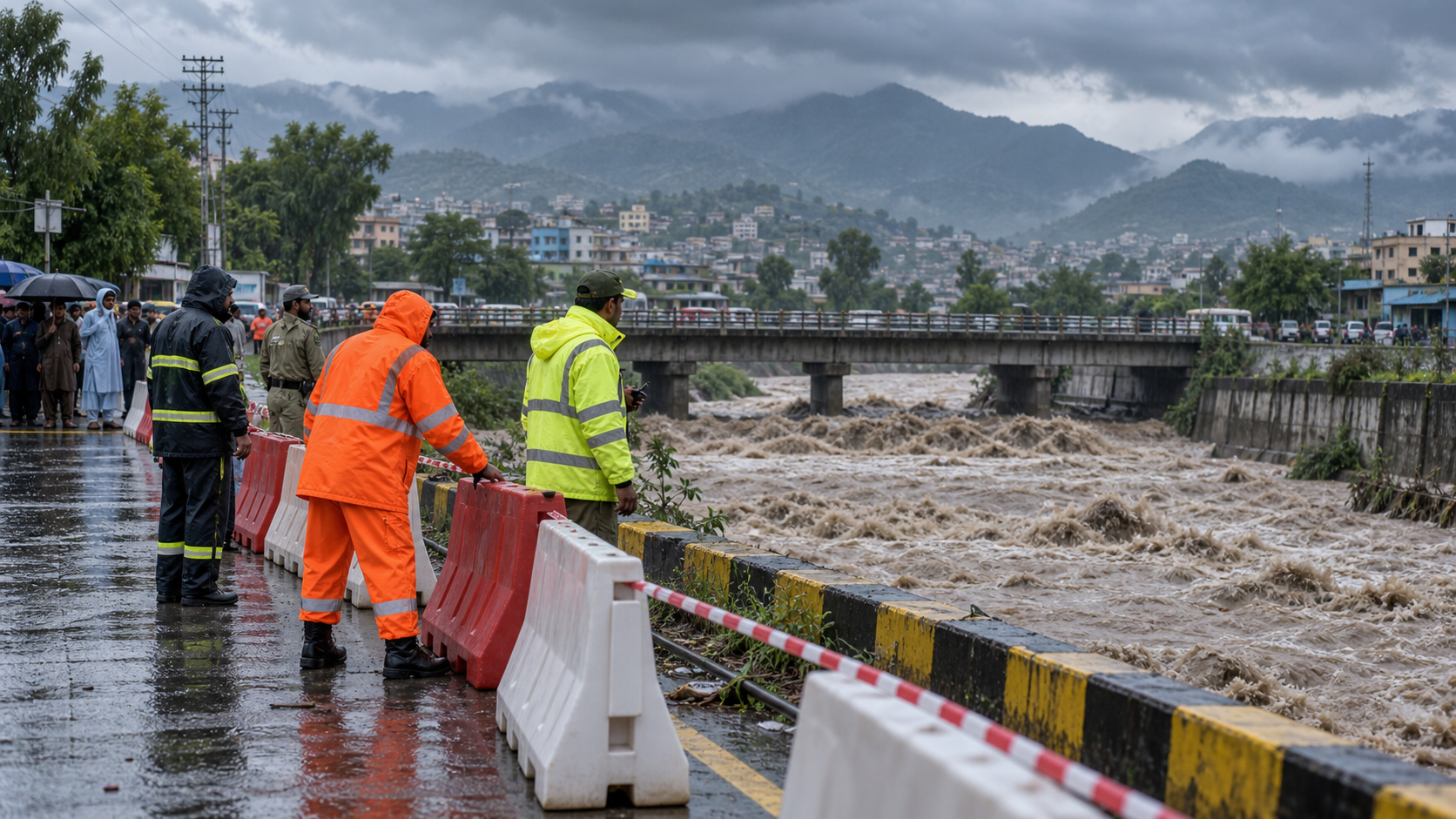
Image credit: AI-generated editorial image / Novexa News
The National Disaster Management Authority has issued a flood alert for several parts of Pakistan, warning that heavy rain over the next two days could raise river levels, trigger flash flooding and create urban flooding in vulnerable districts.
Why NDMA issued the alert
The National Emergencies Operation Centre said forecast rainfall in upper catchment areas could sharply increase water levels in rivers, streams and local nullahs. The warning covers both mountainous areas, where runoff can move quickly, and low-lying urban zones, where drainage systems can become overwhelmed.
NDMA urged citizens and local administrations to remain alert during the high-risk period. The advisory is meant to give communities time to avoid dangerous crossings, reduce unnecessary movement and follow official weather and disaster-management updates.
Areas under flash-flood risk
In Gilgit-Baltistan, the alert identifies Gilgit, Diamer, Ghizer, Hunza and Skardu as areas where heavy rainfall could create hazardous conditions. Residents and tourists have been advised to stay away from rivers, nullahs and fast-moving water channels, especially during heavy spells.
In Khyber Pakhtunkhwa, flood risk has been flagged for districts including Upper Dir, Swat, Bajaur, Malakand, Kurram, Kohistan, Mohmand and Orakzai. Mountainous terrain can make these areas vulnerable because rainwater can gather quickly and move through valleys with little warning.
Urban flooding concerns
Punjab also faces the possibility of urban flooding. NDMA highlighted Rawalpindi, Gujranwala, Sargodha, Jhang, Toba Tek Singh and Sheikhupura as areas where heavy rain could cause water accumulation on roads and in low-lying neighbourhoods.
Urban flooding often develops when intense rain falls faster than drainage systems can handle. Even if major rivers remain within limits, roads, underpasses and local drains can become dangerous for motorists and pedestrians. That is why authorities are warning people not to underestimate localised flooding.
Balochistan districts also warned
The advisory also includes parts of Balochistan, including Zhob, Sherani and Musakhel. In these areas, heavy rainfall can affect streams, roads and settlements where drainage and emergency access may be limited.
For local administrations, the challenge is to monitor water levels, keep response teams ready and warn communities before conditions worsen. NDMA has asked relevant authorities to remain vigilant and take timely steps in vulnerable areas to reduce risks to life, property and infrastructure.
Public safety advice
NDMA has specifically advised people not to cross flooded roads, bridges or water channels. Fast-flowing water can be far stronger than it appears, and vehicles can be swept away even in relatively shallow floodwater.
Citizens have also been told to follow official instructions, avoid unnecessary travel near flood-prone areas and monitor weather updates through trusted channels. Tourists in northern areas should be especially cautious near rivers, mountain streams and landslide-prone routes during heavy rainfall.
Emergency information and response
Citizens can use the Pak NDMA Disaster Alert application for timely weather updates, emergency notifications and disaster alerts. NDMA also pointed people toward emergency helpline 911 for urgent assistance.
The latest alert is part of a wider preparedness effort ahead of forecast heavy rainfall. The coming days will test coordination between disaster-management authorities, local administrations, rescue teams and the public. For residents in vulnerable areas, the most important steps are simple: stay informed, avoid risky crossings and respond quickly if local officials issue evacuation or movement warnings.
Source links
Comments
No approved comments yet.