NASA ESCAPADE mission captures Earth and Moon in new view
NASA ESCAPADE mission captures Earth and Moon in dual-light portraits On July 3, 2026, one of NASA’s Mars-bound ESCAPADE spacecraft turned its cameras back toward home and recorded a striking view of Earth and the Moon…
NASA ESCAPADE mission captures Earth and Moon in dual-light portraits
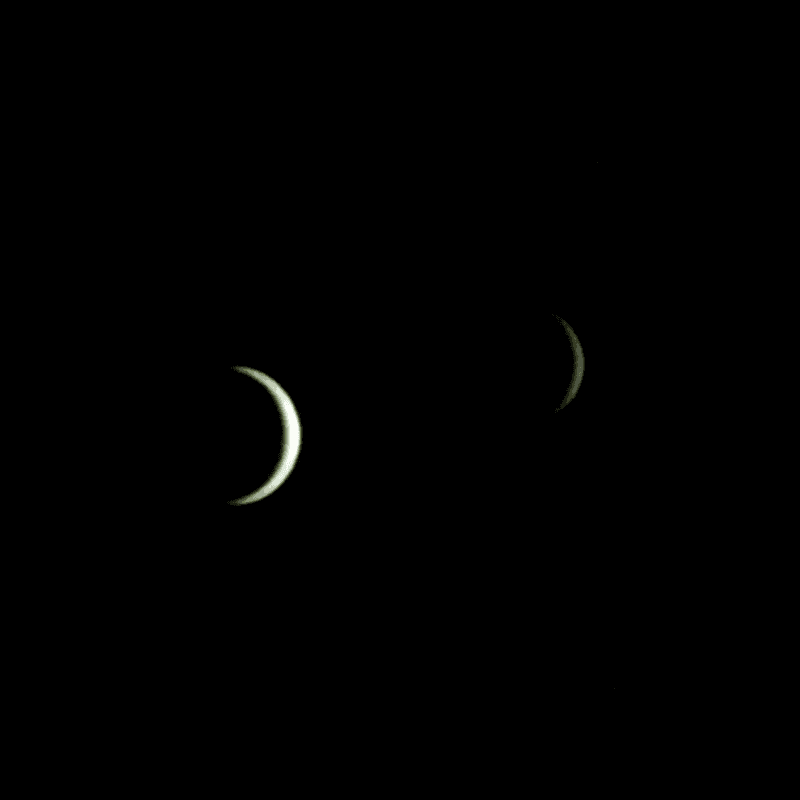
On July 3, 2026, one of NASA’s Mars-bound ESCAPADE spacecraft turned its cameras back toward home and recorded a striking view of Earth and the Moon. The images, released by NASA Breaking News, show the two bodies in both visible light and thermal infrared, offering a comparison between reflected sunlight and emitted heat.
The observation was made while the spacecraft was still far from both objects. According to NASA, ESCAPADE was 363,250 miles, or 584,600 kilometers, from Earth and 115,600 miles, or 186,100 kilometers, from the Moon when the pictures were taken. That distance helps explain why the Moon appears relatively large in the frame, even though both worlds are far away by human standards.
What NASA ESCAPADE saw
In visible light, Earth and the Moon appear as crescents because the Sun was only partly illuminating them at the time of the observation. NASA said that roughly 8 percent of each face was sunlit. The result is a familiar kind of space image, showing the geometry of sunlight across the two bodies.
The thermal infrared image tells a different story. Instead of depending on sunlight, it records energy emitted by the objects themselves. In that view, Earth’s shadowed side still appears active because the planet’s atmosphere and surface give off heat. NASA described the infrared glow from the dark side of Earth as falling between minus 10 and minus 44 degrees Fahrenheit, or 250 to 280 kelvins.
The Moon, by contrast, has no oceans or atmosphere to hold warmth in the same way. In the infrared image, its far side remains much colder, at around minus 280 degrees Fahrenheit, or 100 kelvins. The comparison highlights a basic difference between the two worlds and shows how infrared observations can reveal details that visible-light images do not.
Why the images matter
The photos were taken with the mission’s Visible and Infrared Observation System cameras, which NASA said were provided by Northern Arizona University in Flagstaff. That makes the images more than a keepsake from the trip to Mars. They also serve as a demonstration of the spacecraft’s imaging capability and of how the mission will gather data on its way to its primary destination.
ESCAPADE stands for Escape and Plasma Acceleration and Dynamics Explorers. NASA describes it as a Mars-destined mission, and the Earth-Moon pictures are a reminder that the spacecraft is already carrying out observations before reaching its target. For missions like this, early imaging can help confirm instrument performance and show how the spacecraft is operating in space.
The release also underscores the different ways planets and moons can appear depending on the type of light used. Visible images show reflected sunlight, while thermal infrared observations show heat. Together, the two views provide a richer picture of the same scene.
NASA Breaking News noted that the article was updated on July 30, 2026, to correct an error in the caption. Beyond that correction, the source does not indicate any change to the underlying observation or the mission’s status.
For now, the images stand as a clear example of how NASA’s ESCAPADE spacecraft is contributing to its own journey, not just by traveling toward Mars, but by documenting the Earth-Moon system from deep space along the way.
Comments
No approved comments yet.


