Space update: This composite image, released July 2026, shows region
NASA says scientists used IXPE to directly measure the magnetic fields of pulsar PSR J1101−6101 in the Lighthouse Nebula for the first time
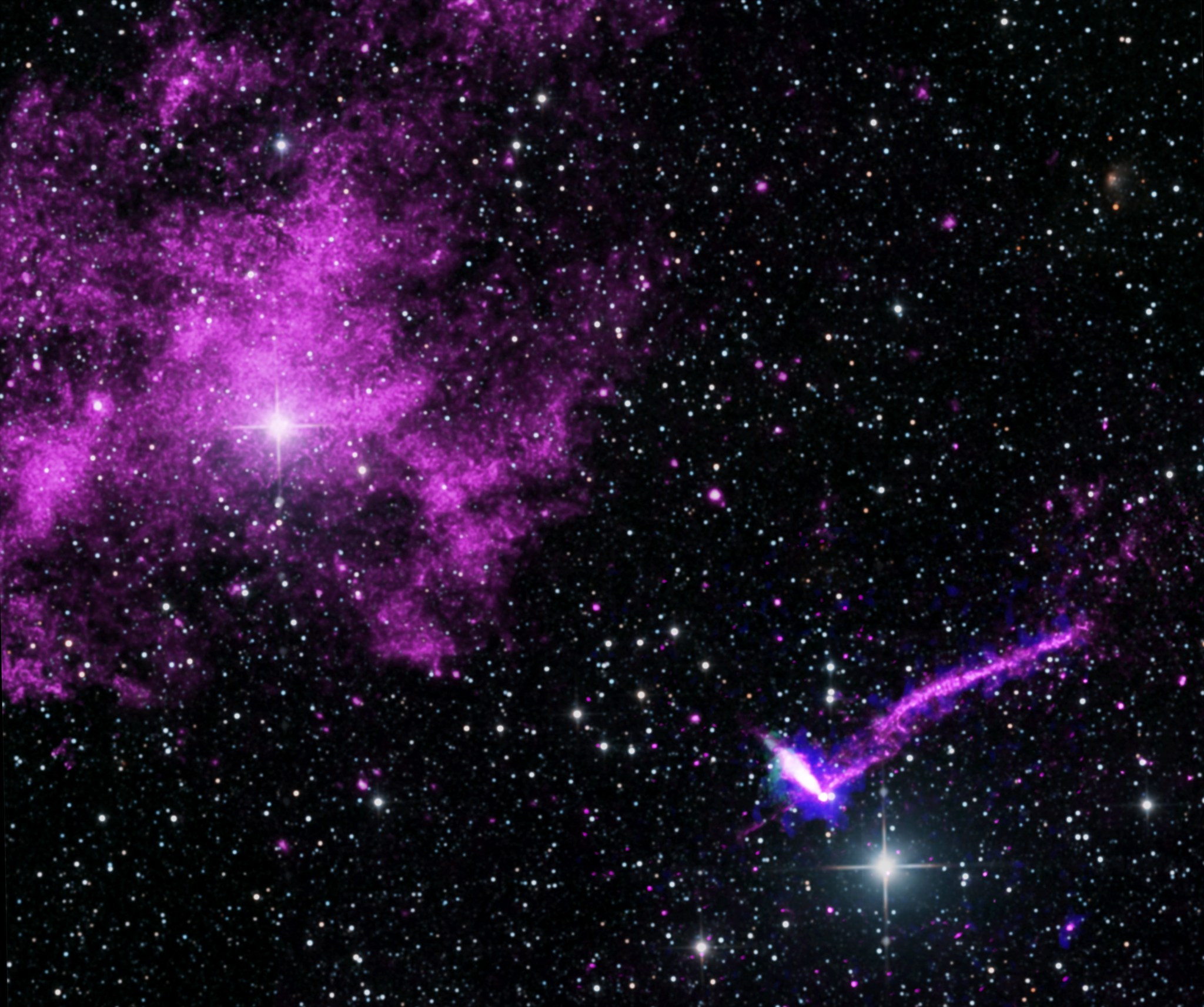
NASA Chandra and IXPE Study Pulsar in Lighthouse Nebula Reveals Direct Magnetic Field Measurement
The latest NASA Chandra and IXPE study pulsar in lighthouse nebula adds a new data point to the study of one of the universe’s most extreme objects: a rapidly spinning neutron star with a powerful magnetic field. According to NASA Breaking News, scientists used the Imaging X-ray Polarimetry Explorer, or IXPE, to directly measure the magnetic fields of PSR J1101−6101 for the first time.
The pulsar sits within what is often called the Lighthouse Nebula, a name that reflects the striking, beam-like appearance associated with the region. NASA describes a pulsar as a neutron star with a strong magnetic field that rotates incredibly quickly. That combination makes pulsars valuable laboratories for studying high-energy physics under conditions that cannot be replicated on Earth.
What the Chandra and IXPE data show
The new composite image combines several kinds of observations to help astronomers examine the region around the pulsar. NASA says X-ray data from the Chandra X-ray Observatory appears in purple, while X-rays from IXPE appear in blue. Radio emission collected by the Australia Compact Telescope Array is shown in green. The image also includes optical data from 2MASS, which adds another layer of context to the scene.
Together, those datasets provide a multiwavelength view of the nebula and the compact object at its center. In practical terms, the combination lets researchers compare how the area looks across different parts of the electromagnetic spectrum rather than relying on a single type of observation.
The most important scientific result highlighted in the source is the direct magnetic field measurement from IXPE. NASA says this was done for the first time on PSR J1101−6101, making the observation a notable step for X-ray polarimetry and for pulsar research more broadly.
Why this matters for pulsar research
Magnetic fields are central to how pulsars behave, but they are not easy to measure directly. That is why the IXPE result stands out in NASA’s account. A direct measurement can help researchers test and refine their understanding of how energetic particles move, how radiation is produced, and how the surrounding nebula is shaped by the pulsar.
The source says the findings offer new insight into the structure of some of the most extreme objects in the cosmos. That broader significance is important because pulsars remain key targets for astrophysics: they concentrate enormous mass into a small object, spin rapidly, and emit intense radiation that can be studied with space observatories and ground-based facilities.
A coordinated look across the spectrum
This result also shows the value of combining observatories with different strengths. Chandra is designed for high-resolution X-ray observations, while IXPE is focused on X-ray polarimetry, which can reveal information about the geometry and direction of X-ray emission. Radio observations from the Australia Compact Telescope Array add another perspective on the same region.
NASA’s release indicates that the paper describing the results was published in the Astrophysical Journal on July 9, 2026. That timing places the image and the research announcement together, underscoring that the visual presentation is tied directly to the new scientific result.
For now, the key takeaway is that NASA’s Chandra and IXPE study of the pulsar in the Lighthouse Nebula has produced a first-of-its-kind magnetic field measurement for PSR J1101−6101. In a field where direct measurements are often difficult, that makes the observation a meaningful addition to the ongoing effort to understand pulsars and the environments around them.
Comments
No approved comments yet.