Naqvi Warns PTI March Organisers After Islamabad High Court Ruling
Interior Minister Mohsin Naqvi warns PTI march organisers as the Islamabad High Court limits road occupations and use of state resources.
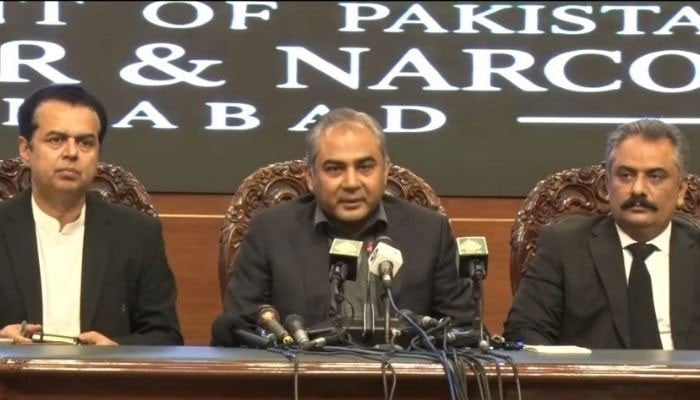
Image credit: Geo News / video screengrab
ISLAMABAD, September 19, 2026: Interior Minister Mohsin Naqvi has warned that the federal government will prevent attempts to enter and shut down Islamabad, citing a detailed High Court judgment issued ahead of Pakistan Tehreek-e-Insaf's planned September 27 march.
Naqvi said organisers would be held responsible for any loss of life or disorder and that contempt proceedings could follow if the court's directions were violated. He said law-enforcement preparations had been coordinated with provincial authorities.
The minister's comments followed a 37-page judgment in which the Islamabad High Court addressed the constitutional balance between peaceful assembly and the rights of residents to movement, healthcare, education, work and business.
The court did not say political parties have no right to protest. It held that the right to peaceful assembly cannot lawfully be exercised by occupying roads, highways, interchanges, toll plazas, buildings or similar public places in a way that obstructs other citizens' fundamental rights.
Court Sets Limits on Public Resources
The judgment was issued by a three-member bench headed by Chief Justice Sardar Muhammad Sarfraz Dogar and including Justice Muhammad Asif and Justice Muhammad Azam Khan. It arose from a petition challenging the proposed PTI march toward Islamabad.
According to Dawn's account of the detailed ruling, provincial governments and chief ministers were directed to ensure that public funds, government officials, vehicles, machinery and equipment are not used directly or indirectly to facilitate a march or procession toward the capital.
The court also directed that public servants must not be compelled, pressured or induced to participate. Chief secretaries, provincial police chiefs, the federal interior secretary, Islamabad's chief commissioner and its inspector general were told to issue instructions preventing officials from complying with orders to facilitate such activity.
The judgment said any action that violates the fundamental rights of people in Islamabad would amount to a constitutional violation. It added that a public office holder responsible for such an infringement would also be deemed to have violated the oath of office.
At the same time, the court recognised that political parties and citizens are entitled to peaceful protest subject to the Constitution and law. The ruling therefore places its emphasis on the manner and location of an assembly, the use of state resources and the protection of competing rights.
Naqvi Says Capital Will Not Be Closed
At his press conference, Naqvi urged political parties to conduct peaceful activity in their own cities and provinces rather than disrupt Islamabad. He distinguished ordinary political protest from groups arriving with weapons or attempting to use force.
The interior minister said he personally opposed the routine placement of shipping containers but that law-enforcement agencies used them when operationally necessary. He also said provincial governments had been informed of the federal position and that the Interior Ministry's responsibility was to prevent disorder in the capital.
Geo News reported that Naqvi linked the warning to the country's wider security situation and urged the Khyber Pakhtunkhwa government to concentrate resources on counterterrorism. His remarks followed a deadly attack at the Kohat Police Lines mosque, which intensified the government's argument that security personnel were already under pressure.
PTI and the wider opposition, meanwhile, have described the September 27 mobilisation as peaceful, constitutional and democratic. The Tehreek Tahaffuz-e-Aain Pakistan alliance said it would coordinate political, media and public outreach and seek support from other parties.
March Remains on the Calendar
The new confrontation is the latest development in a campaign that has already gone through weeks of internal planning. Novexa previously reported on uncertainty surrounding PTI's march strategy, including questions about routes, turnout and the political objective once supporters reach the capital.
The High Court judgment now establishes a clearer legal framework for the authorities and organisers. It gives the government grounds to prevent obstruction and misuse of public resources, while preserving the underlying right to peaceful political expression within legal limits.
The practical outcome will depend on whether PTI and its allies agree on a venue and route that comply with Islamabad's assembly law and administrative requirements. It will also depend on whether federal and provincial authorities enforce the judgment proportionately and continue to allow lawful political activity.
With September 27 approaching, both sides are presenting their positions in constitutional terms: the opposition is invoking peaceful assembly and political dissent, while the government is emphasising movement, safety and uninterrupted access to public services. The court's ruling makes clear that neither set of rights can be considered in isolation.
Source links
Comments
No approved comments yet.