Japan Flooding Leaves Five Dead and Thousands Stranded
Exceptional rain in eastern Japan has killed at least five people, cut power and stranded thousands at Narita airport and rail stations.
Image credit: Original Novexa News graphic
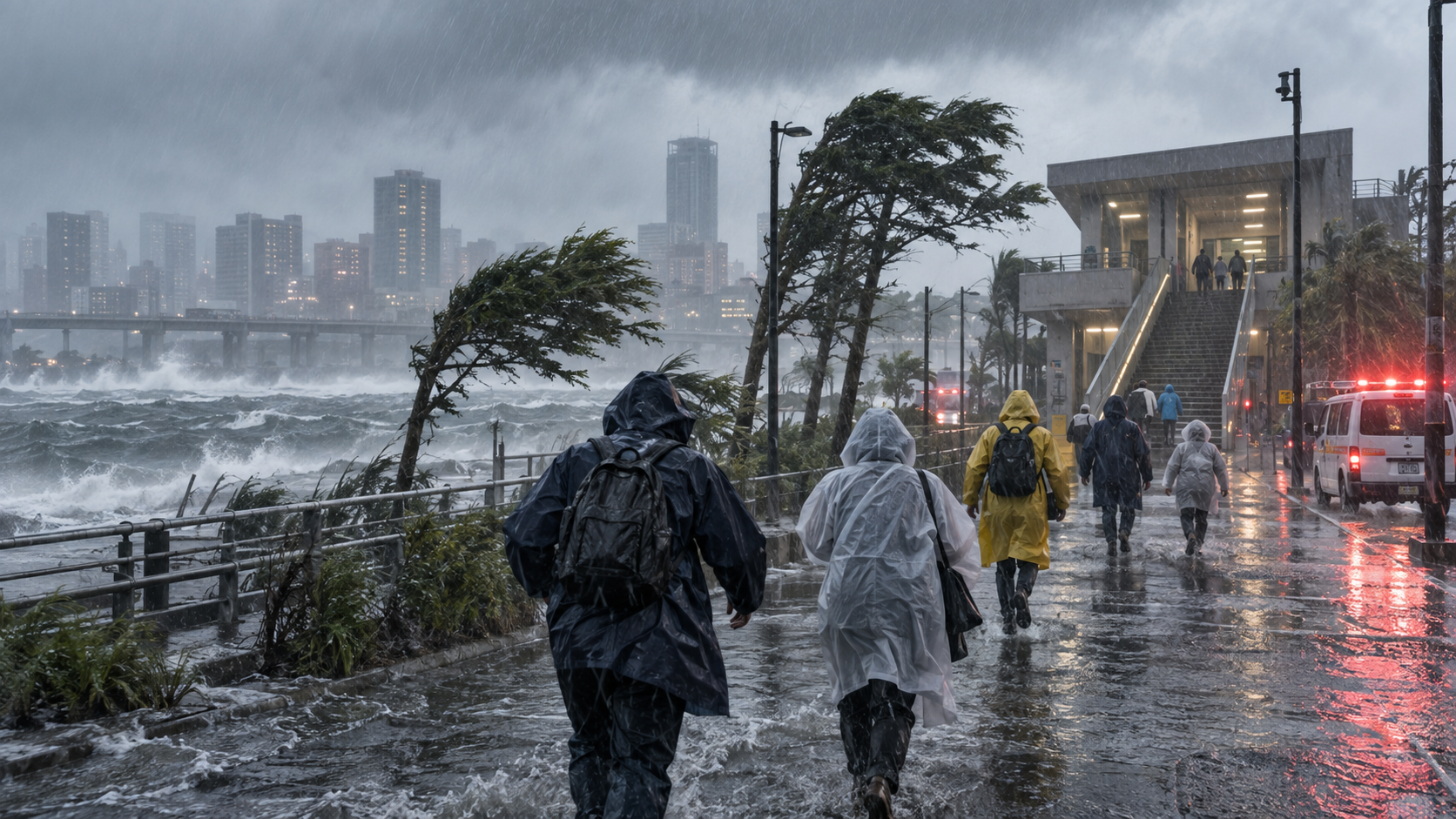
At least five people have died after exceptional rainfall flooded roads and homes in eastern Japan, disrupted trains and left thousands of travellers unable to leave Narita International Airport. Emergency warnings in Chiba prefecture were later lowered, but landslide, flood and power-outage risks continued as authorities assessed the damage.
Japan's weather agency issued its highest level of heavy-rain warning for Chiba for the first time before reducing it to level four. More than 26,000 households lost electricity at one stage. Initial surveys found over 80 homes flooded and close to 90 properties affected by water below floor level, with the full extent likely to take longer to document.
Travel disruption spreads across the region
About 6,000 people spent the night at Narita airport after road and rail connections were interrupted. Airport staff distributed sleeping bags, food and water. Train cancellations continued into Friday afternoon, leaving additional passengers waiting at Chiba station and temporary shelters.
Narita is one of Japan's main international gateways, so disruption there affects domestic journeys, connecting flights and cargo schedules. Airlines can move aircraft once runways are safe, but passengers still cannot leave efficiently if surrounding rail lines and roads are flooded or closed for inspection.
Travellers should check directly with airlines and railway operators before starting a journey. Conditions can differ sharply between nearby routes, and a service shown as operating may still face crowding or further suspension. Local evacuation instructions take priority over travel plans.
Fatal incidents under investigation
Reported victims included a man found on a flooded road and a 66-year-old woman discovered in a submerged car. Public broadcaster NHK indicated the death toll could be higher, but the confirmed count in the initial report was at least five. Authorities will need to reconcile cases reported by local police, fire departments and hospitals.
Floodwater can hide damaged pavement, open drains and strong currents. Vehicles may lose traction or electrical function in water that appears shallow. Japanese emergency guidance generally urges people not to enter inundated roads and to move early when evacuation notices are issued, especially in areas near rivers or steep slopes.
Landslides remain a danger after rain slows
The threat does not end when the heaviest rain passes. Saturated soil can fail hours later, while rivers may continue rising as water drains from upstream. Inspection teams must also check embankments, bridges, rail beds and utility equipment before normal service resumes.
Restoring power involves similar caution. Crews may need to isolate flooded substations and damaged lines before reconnecting neighborhoods. Residents returning to affected buildings should avoid exposed wiring and follow local fire and electricity-company advice.
Climate context without overstatement
A warmer atmosphere can hold more moisture, increasing the potential intensity of heavy-rain events. Scientific assessments have linked human-driven climate change to rising risks from extreme precipitation in many regions. However, attributing the precise strength of one storm requires a dedicated analysis of weather records, ocean conditions and climate-model results.
That distinction matters. It is accurate to place the Japan heavy rain flooding within a broader pattern of growing extreme-weather risk, but it would be premature to claim climate change alone caused this specific event. Urban development, drainage, topography and the storm's track also shape local impacts.
Recovery priorities
The immediate tasks are finding anyone still unaccounted for, supporting displaced residents, restoring transport and electricity, and documenting unsafe buildings. Longer-term review will examine warning delivery, drainage capacity and whether transport hubs had enough supplies for large numbers of stranded passengers.
The fatalities show that even a country with advanced forecasting and disaster systems remains vulnerable when rainfall exceeds local design assumptions. This Novexa News report independently summarizes verified details from Dawn's coverage. Casualty numbers may change as Japanese agencies complete their assessments, and readers should follow official local warnings for safety decisions.
Source links
Comments
No approved comments yet.