Typhoon Dujuan Hits Eastern Japan as 1.9 Million Face Evacuation Orders
Typhoon Dujuan brings extreme rain and dangerous winds to eastern Japan as evacuation orders cover about 1.9 million people in six prefectures.
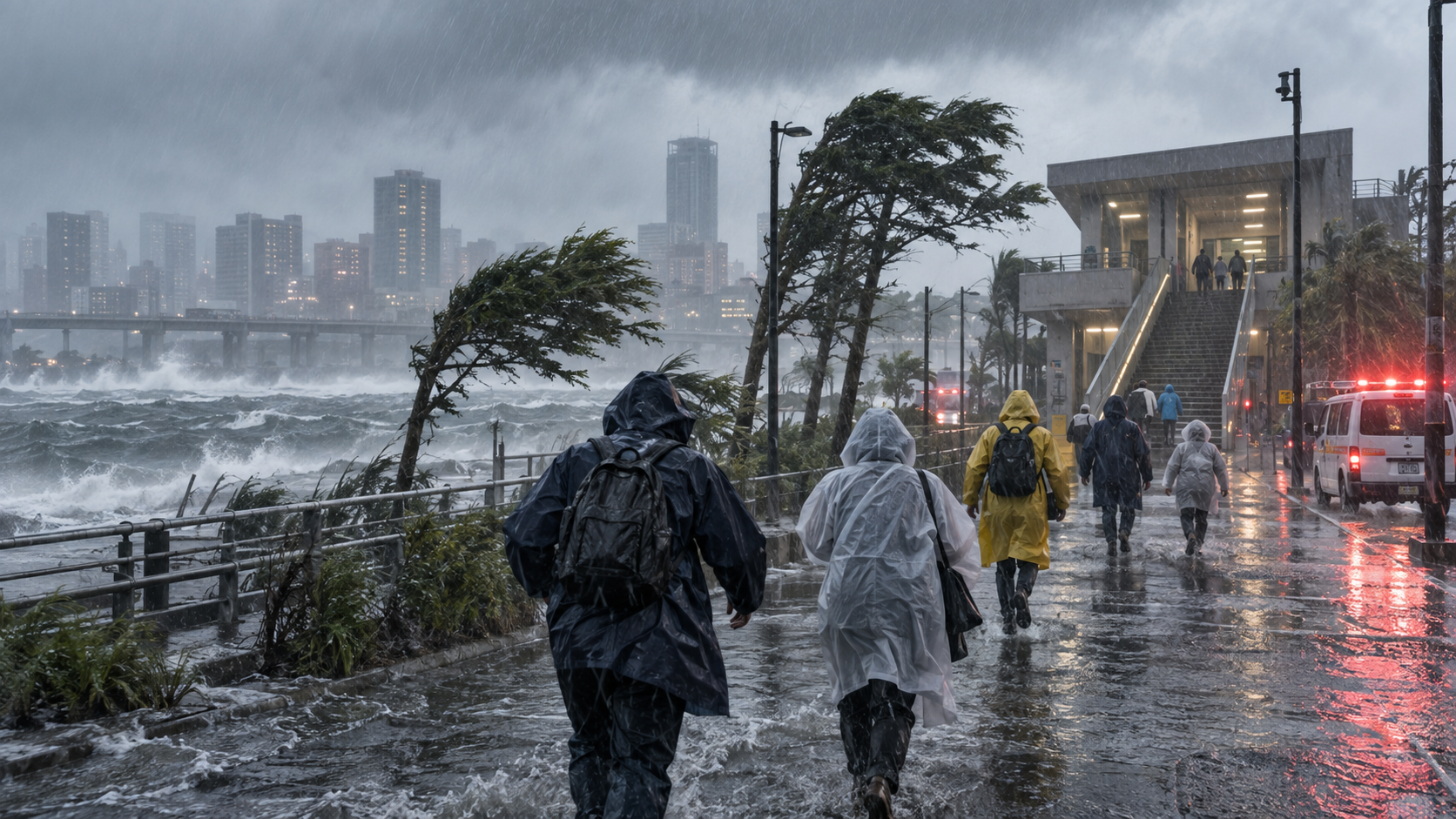
Image credit: AI-generated editorial illustration by OpenAI
Japan has expanded emergency measures as Typhoon Dujuan brought torrential rain, powerful winds and serious flooding and landslide risks to the Izu Islands and the wider Kanto region, with about 1.9 million people placed under evacuation orders across six prefectures.
The storm disrupted the Tokyo region during the Silver Week holiday period, cancelling flights and suspending rail services as authorities urged residents to leave vulnerable areas before conditions worsened.
Japan's Meteorological Agency issued its highest-level special landslide warning for parts of the northern Izu Islands. An official JMA notice warned of an exceptional threat after extreme rainfall saturated the ground.
Evacuation orders covered communities in Ibaraki, Chiba, Tokyo, Kanagawa, Shizuoka and Saitama. In Japan's warning system, an evacuation order does not mean every resident is forcibly removed, but it directs people in affected areas to seek safety, especially older residents, families with children and people living near slopes, rivers or low ground.
Exceptional rainfall
More than 672 millimetres of rain was recorded over 24 hours on Izu Oshima, while the Sakahata area of Kimitsu in Chiba Prefecture received about 324 millimetres, according to figures reported by The Japan Times.
Rain at that intensity can overwhelm urban drainage, raise rivers quickly and destabilise steep slopes. The threat can remain after the centre of a typhoon moves away because water continues to drain through saturated soil and into river systems.
Dujuan produced sustained winds of roughly 130 kilometres per hour, with stronger gusts reported around the storm. Coastal communities also faced high waves and dangerous sea conditions. Authorities advised residents not to approach shorelines, riverbanks, underpasses or underground spaces where water can rise with little warning.
Emergency teams responded to landslides and flooded homes. In Kanagawa Prefecture, authorities investigated a report that a woman may have been trapped after earth struck a residential property. Homes in parts of Chiba were also damaged by floodwater and debris. Casualty information remained subject to updates from local authorities.
Flights, trains and power affected
Hundreds of domestic flights were cancelled by Japan Airlines and All Nippon Airways as wind and rain affected airports across eastern Japan. Rail operators suspended services on several lines in Chiba, Ibaraki and western Tokyo, leaving holiday travellers to change plans.
Power outages affected tens of thousands of households. Restoration work can be delayed during a typhoon because crews must wait until winds fall to safe levels before repairing damaged lines or removing fallen trees.
The Tokyo Game Show cancelled its Monday programme, while Prime Minister Sanae Takaichi delayed a planned departure for the United Nations General Assembly in New York. Those disruptions illustrated how the storm affected both ordinary travel and major national events.
Residents were encouraged to rely on municipal alerts and JMA updates rather than waiting for visible flooding. Evacuation can become dangerous once roads are submerged or winds make movement difficult. Local shelters generally prioritise people from the highest-risk zones, while residents in strong buildings may be advised to move to upper floors when outside travel is no longer safe.
Storm moving northeast
Dujuan was expected to continue moving northeast, but its rain bands extended well beyond the storm's centre. That meant areas outside the projected track could still experience intense downpours and damaging gusts.
Japan has extensive disaster-warning systems and strict building standards, yet typhoons repeatedly expose the vulnerability of mountainous communities and densely built coastal cities. Short, intense rainfall can produce local conditions that broad regional forecasts do not fully capture.
Officials therefore urged people to monitor neighbourhood-level information, keep phones charged and prepare medication, water and essential documents. Residents in homes near slopes were advised to sleep away from the uphill side of buildings if evacuation was impossible.
The scale of the orders, covering nearly 1.9 million people, reflects the geographic reach of the risk rather than a confirmed number of evacuees. The central message from authorities was preventive: move early where local officials advise it, avoid unnecessary travel and remain alert even after the strongest winds pass.
Further assessments will determine the full extent of damage. Until rainfall eases and inspections are completed, landslides, flooding and transport disruption remain the principal dangers across the affected parts of eastern Japan.
Source links
Comments
No approved comments yet.