Houthi Attacks Injure 13 Civilians in Saudi Arabia
Thirteen civilians were injured in Saudi Arabia after a fresh series of missile and drone attacks attributed to Yemen's Houthi movement, Saudi authorities said, as the kingdom moved to strengthen alerts and protection…
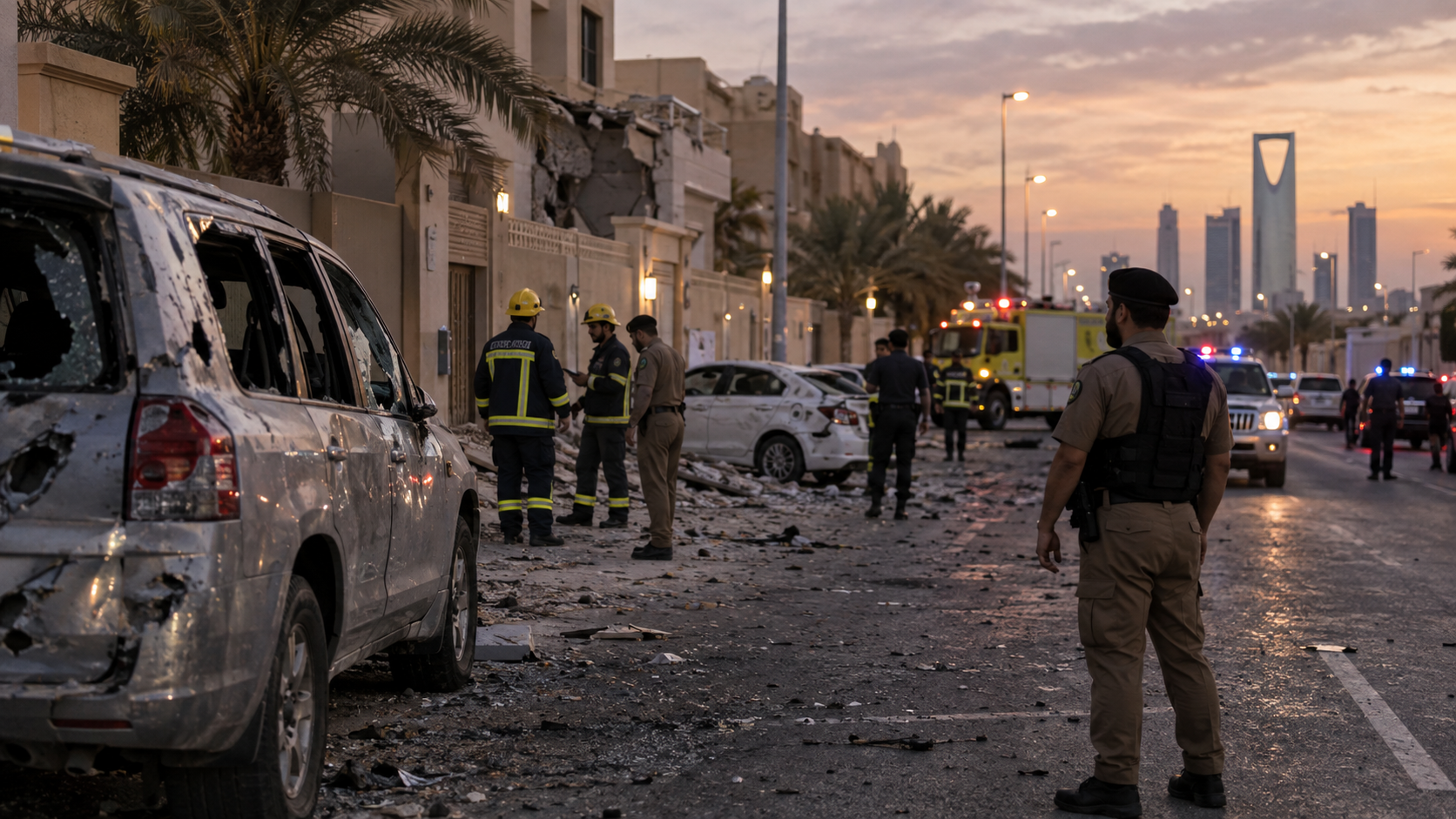
Image credit: AI-generated editorial image / Novexa News
Thirteen civilians were injured in Saudi Arabia after a fresh series of missile and drone attacks attributed to Yemen's Houthi movement, Saudi authorities said, as the kingdom moved to strengthen alerts and protection measures across several cities.
What Saudi authorities reported
Major General Turki Al-Malki, spokesperson for the Coalition to Restore Legitimacy in Yemen, said the attacks targeted civilian areas in Khamis Mushait, Abha and Taif using ballistic missiles and drones. Saudi officials said the injuries were minor to moderate, while seven houses and two vehicles were damaged.
The attacks prompted early-warning alerts in several areas, including Abha, Jeddah, Jazan, Taif, Yanbu, Makkah and AlUla. Saudi Civil Defense and security agencies remained on alert as authorities monitored the possibility of additional launches and worked to protect civilian communities.
Coalition vows a firm response
Al-Malki condemned the attacks and accused the Houthi movement of deliberately targeting civilian areas and non-military infrastructure. The coalition said its forces would respond responsibly and firmly, with the stated goal of protecting Saudi sovereignty, civilian objects and residents.
That wording reflects Riyadh's attempt to balance deterrence with control. Saudi officials want to show that attacks on cities will not go unanswered, but they also face the wider risk that a stronger military response could intensify regional instability.
Why this escalation matters
The latest incident follows another wave of Houthi attacks that reportedly injured dozens of people in Saudi towns and cities. Repeated incidents have increased concern about the spillover effects of Yemen's conflict and the vulnerability of civilian areas far from the front lines inside Yemen.
For Saudi Arabia, the threat is not limited to military sites. Drones and missiles aimed at cities, airports, infrastructure and residential districts place civilians at risk and force authorities to maintain a high level of air-defense readiness across a large territory.
Energy infrastructure remains a concern
Saudi Arabia has also faced threats to strategic energy infrastructure. The kingdom recently paused operations on the East-West Pipeline after reported drone attacks in the Riyadh and Madinah regions. The pipeline matters because it gives Saudi Arabia an alternative route for moving crude oil toward the Red Sea, reducing dependence on maritime routes exposed to regional tensions.
Attacks on energy infrastructure carry consequences beyond Saudi borders. They can affect oil-market sentiment, shipping risk and the confidence of countries that rely on steady Gulf energy supplies. That is why each new attack is watched closely by governments and traders outside the region.
Regional reaction
The attacks have drawn condemnation and expressions of solidarity from Gulf and Muslim organizations. Those responses underline a broader regional concern: repeated strikes on civilian areas and critical infrastructure could deepen an already fragile security environment.
The situation also intersects with wider tensions involving Yemen, Saudi Arabia, Iran and maritime routes around the Red Sea and Gulf. Drone and missile activity has become one of the most destabilizing features of the conflict because it can quickly shift pressure from the battlefield to civilian and economic targets.
What to watch next
The immediate focus will be Saudi air-defense readiness, civilian protection and the coalition's chosen response. Riyadh has made clear that the protection of its territory and population remains a central priority, while the Houthis' cross-border capability continues to shape the conflict's regional impact.
The latest attacks reinforce the danger that Yemen's war can continue to spill across borders. Even when injuries are described as minor or moderate, repeated attacks on residential areas keep civilians under pressure and make diplomatic de-escalation harder to achieve.
Comments
No approved comments yet.