Govt, JI Form Panels on Petroleum Levy Relief
The government and Jamaat-i-Islami have agreed to form committees to review the petroleum levy and recommend public relief measures.
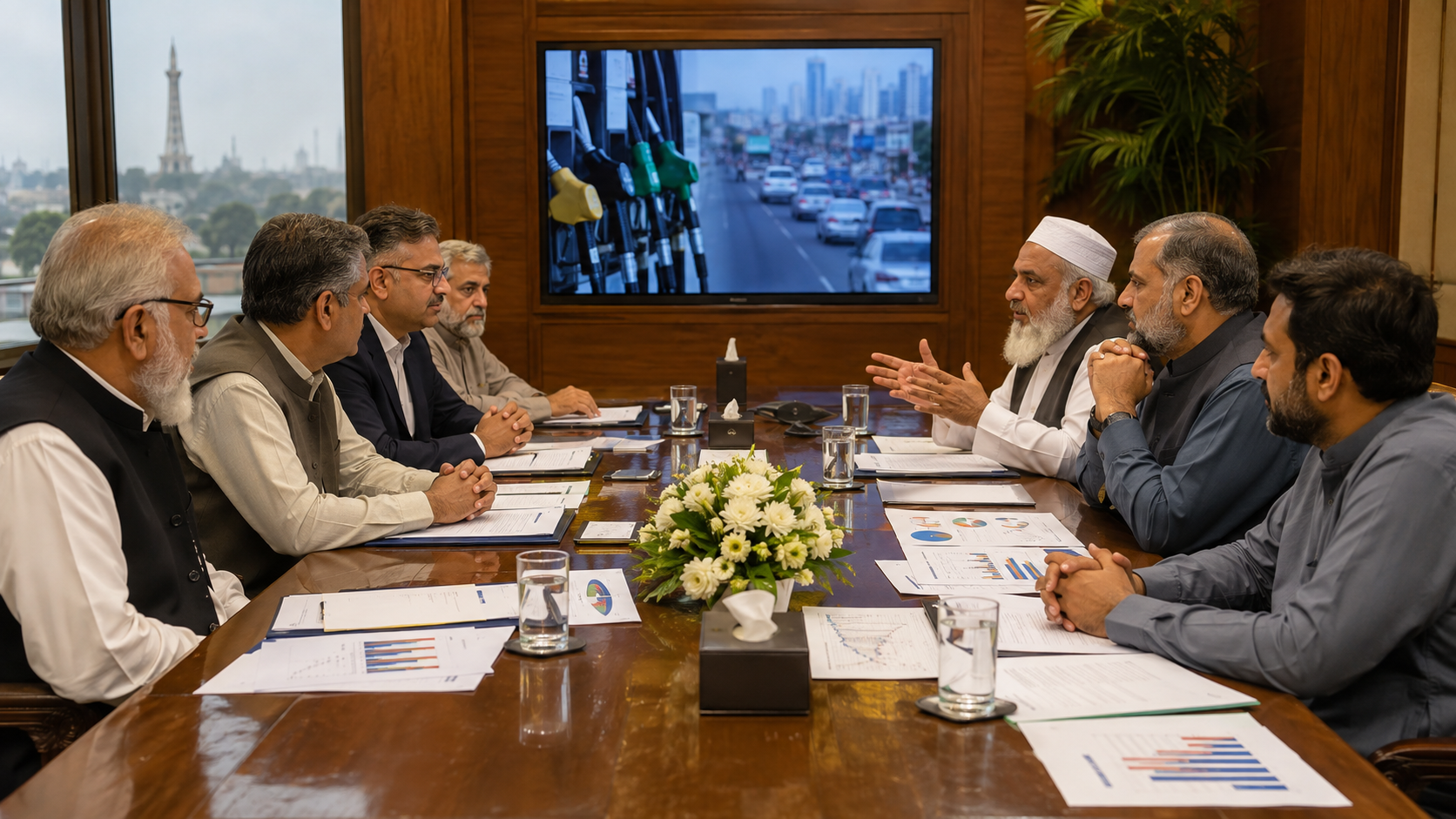
Image credit: AI-generated image / Novexa News
The federal government and Jamaat-i-Islami have agreed to form committees to examine Pakistan's petroleum levy and recommend practical ways to reduce pressure on consumers, following talks in Lahore as the party continued its protest campaign over fuel prices and inflation.
The understanding was announced after a meeting between government representatives and JI leaders. Planning Minister Ahsan Iqbal, Prime Minister's Adviser Rana Sanaullah and JI Emir Hafiz Naeemur Rehman jointly spoke to the media after the discussions, presenting the committee process as a possible route toward negotiated relief.
What the two sides agreed
Ahsan Iqbal said the government would form an expert committee and had asked Jamaat-i-Islami to nominate its own team. The two sides are expected to review the petroleum levy, study the fiscal limits facing the government and work out proposals that could reduce the burden on ordinary consumers.
Iqbal said the government was ready to consider workable recommendations from the committees. His comments signaled that Islamabad does not want the talks to remain symbolic, though any reduction in fuel-related taxes would still have to be weighed against budget and revenue pressures.
Why the petroleum levy is under pressure
Fuel prices have become one of the most visible pressure points for households and small businesses. The government currently collects around Rs114 per litre in taxes and duties on petrol and about Rs100 per litre on diesel, according to figures cited during the talks.
For consumers, those charges are felt not only at petrol pumps but also in transport fares, food costs and the price of daily goods. That is why the petroleum levy has become a political issue as well as an economic one.
JI says protests will continue
Hafiz Naeemur Rehman said Jamaat-i-Islami had discussed the petroleum levy in detail with the government team but would continue its sit-ins during the negotiation process. He said the party's demonstrations had entered their 19th day and were taking place at more than 20 locations across the country.
The JI chief argued that the protest campaign was focused on public hardship rather than personal or party gain. He said the tax burden on petroleum products falls heavily on low-income citizens, including motorbike users and workers whose earnings may not place them in the formal income-tax net.
The committees and their timeline
Jamaat-i-Islami has named a committee led by Liaquat Baloch. The party's team includes Naveed Ali Baig, Ziauddin Ansari, Nasrullah Randhawa and Firasat Shah. The government side is expected to hold formal discussions with the JI committee on proposals for relief.
Rana Sanaullah said the committees should be able to reach a workable solution within two weeks. He also said the government would take the recommendations seriously, a point meant to reassure the protesting party that the process is not only a delay tactic.
Government faces a balancing act
The main difficulty for the government is that petroleum levies are tied to revenue needs at a time when Pakistan is trying to keep its public finances stable. Cutting fuel taxes may provide quick relief, but it can also create a gap that has to be covered from elsewhere.
At the same time, political pressure is rising because households are already dealing with electricity bills, transport costs and food inflation. Any durable solution would need to show how relief can be delivered without creating another fiscal problem.
Fuel policy remains under review
The talks came as the Petroleum Division separately reviewed fuel-pricing reforms through a petroleum pricing committee. That committee has been examining ways to make fuel pricing more transparent and predictable while protecting consumers from sharp price shocks.
That wider policy process matters because fuel taxation and pricing are connected. A levy decision made only under protest pressure may not last unless it fits into a broader pricing framework that the government, markets and consumers can understand.
For now, the government-JI agreement gives both sides a formal table to continue negotiations. The key test will come over the next two weeks: whether the committees produce a relief formula that is financially realistic, politically acceptable and meaningful enough for citizens facing high everyday costs.
Source links
Comments
No approved comments yet.