Erdogan Signals Possible Expansion of Turkiye-Saudi-Pakistan Defence Pact
Erdogan says Egypt could be considered for a wider Turkiye-Saudi-Pakistan defence pact, raising the stakes for regional security coordination.

Image credit: Zulfugar Karimov / Unsplash
Turkish President Recep Tayyip Erdogan has indicated that Egypt could become the next country considered for inclusion in the defence partnership linking Turkiye, Saudi Arabia and Pakistan, a signal that the new security arrangement may not remain limited to its founding members.
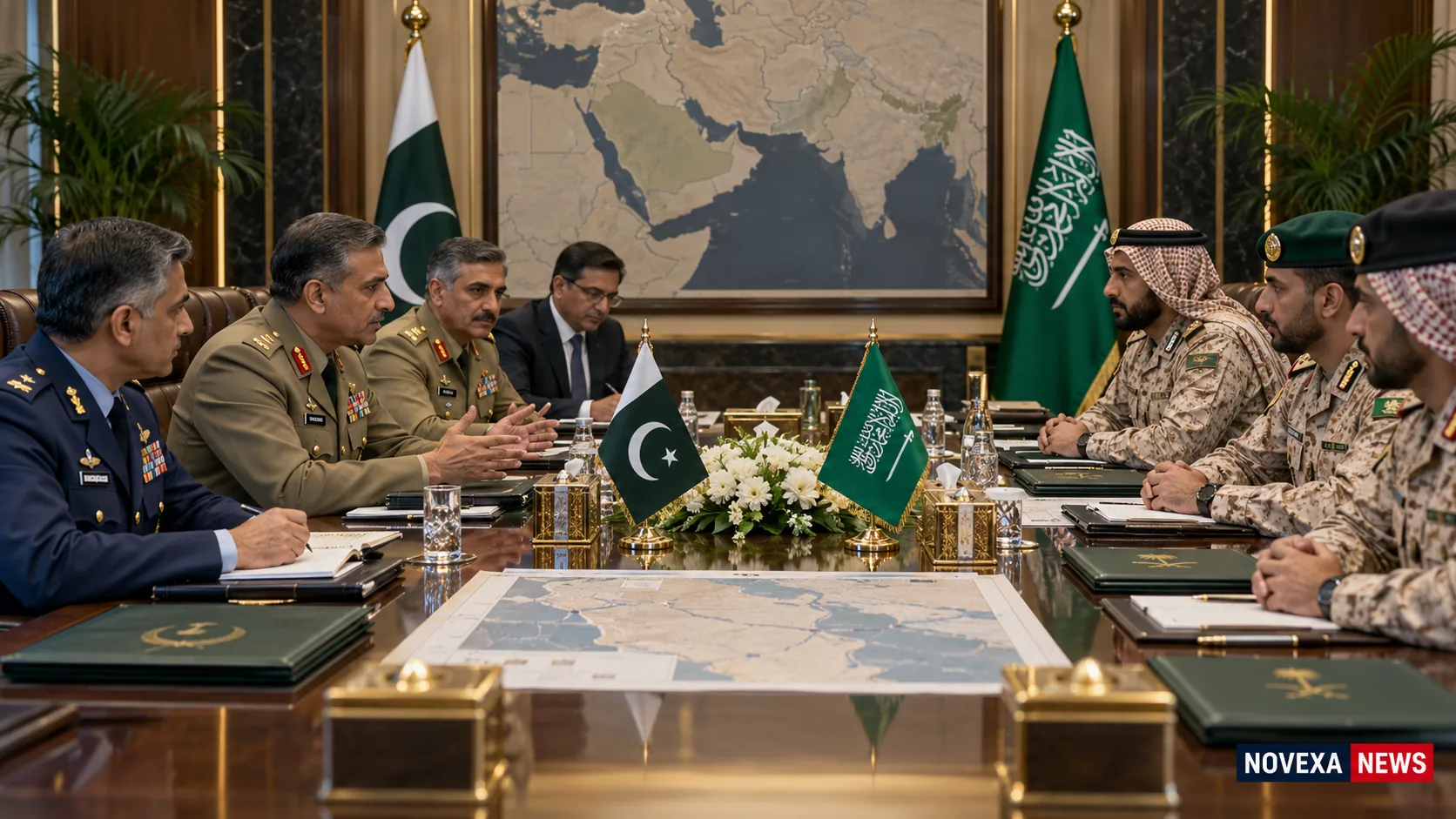
Speaking in remarks reported by Al Jazeera, Erdogan said Cairo's possible inclusion was among the options being discussed as the alliance looks at its future shape. The Makkah Joint Defence Agreement, signed by Erdogan, Saudi Crown Prince Mohammed bin Salman and Pakistan Prime Minister Shehbaz Sharif, commits the three countries to a coordinated response if any member faces an armed attack.
The agreement has drawn comparisons with NATO's collective-defence principle because of its promise that aggression against one member would trigger wider consultation and support. Pakistani officials, however, have stressed that the pact should not be presented as a regional version of NATO and is not aimed at any specific state.
If Egypt eventually joins, the arrangement would bring together four major regional powers with significant military, diplomatic and strategic influence. Turkiye brings a large NATO-standard military and an expanding defence industry. Pakistan adds conventional military depth and nuclear deterrence. Saudi Arabia gives the pact financial weight, Gulf influence and energy-market centrality. Egypt would add the Arab world's largest standing army and control of the Suez Canal, one of global trade's most important routes.
That potential expansion is why Erdogan's comments matter beyond ordinary diplomatic language. A four-country platform could create a stronger channel for intelligence sharing, defence planning, military training and crisis coordination across the Middle East, South Asia and the wider Muslim world. It could also give regional governments a way to coordinate security policy without depending entirely on Western-led structures.
The timing is important. Erdogan's remarks come during a period of intense regional instability, including continued conflict in Gaza, fragile conditions in Lebanon and Syria, fighting in Sudan and repeated concern over maritime routes near the Strait of Hormuz. He described the reopening and stability of Hormuz as a priority, warning that disruption of the energy corridor damages both regional and global interests.
The Turkish president also highlighted Ankara's support for Qatar's mediation efforts and discussed Turkiye's position on Syria, Sudan, Libya and Gaza. He repeated that Turkiye would keep providing political and humanitarian support to Palestinians and urged stronger international action to end the war in Gaza.
Beyond regional security, Erdogan addressed Turkiye's strained relationship with the European Union and Ankara's effort to regain access to the US-led F-35 fighter programme. Those comments fit into a broader Turkish strategy: maintaining NATO ties while building more independent defence options and deepening partnerships with influential Muslim-majority states.
For Pakistan, the pact strengthens a long-running defence relationship with Saudi Arabia while giving Islamabad a larger role in regional diplomacy. For Riyadh, it adds another layer to a security policy that has increasingly tried to diversify beyond traditional reliance on the United States. For Ankara, it reinforces Erdogan's ambition to make Turkiye a central security actor in the Muslim world.
Still, the possible expansion will face real tests. The countries involved do not always share identical threat perceptions. Pakistan's strategic focus is shaped heavily by India and its western border. Saudi Arabia has long viewed Iran-linked threats and energy security as central. Turkiye balances Syria, the eastern Mediterranean, NATO obligations and its own domestic defence priorities. Egypt, if it joins, would bring its own concerns over Gaza, Libya, the Red Sea and the Suez Canal.
That means the pact's importance may depend less on dramatic military promises and more on practical coordination. Joint exercises, defence technology cooperation, intelligence channels, maritime-security planning and crisis diplomacy could prove more realistic than automatic military intervention. The agreement's value will be measured by whether it can build trust before the next crisis arrives.
For now, Erdogan's signal has placed the Makkah pact back at the centre of regional security debate. If Egypt is brought in, the partnership could become a more visible platform for strategic coordination at a time when the Middle East is undergoing major geopolitical change. If expansion slows, the pact may still matter as a symbol of how regional powers are trying to design their own security arrangements in a less predictable global order.
Source links
Comments
No approved comments yet.