Chris Williams wraps up first ISS mission after eight months in orbit
NASA astronaut Chris Williams is set to return to Earth after an eight-month first stay on the International Space Station, where he helped with research, repairs and spacewalks.
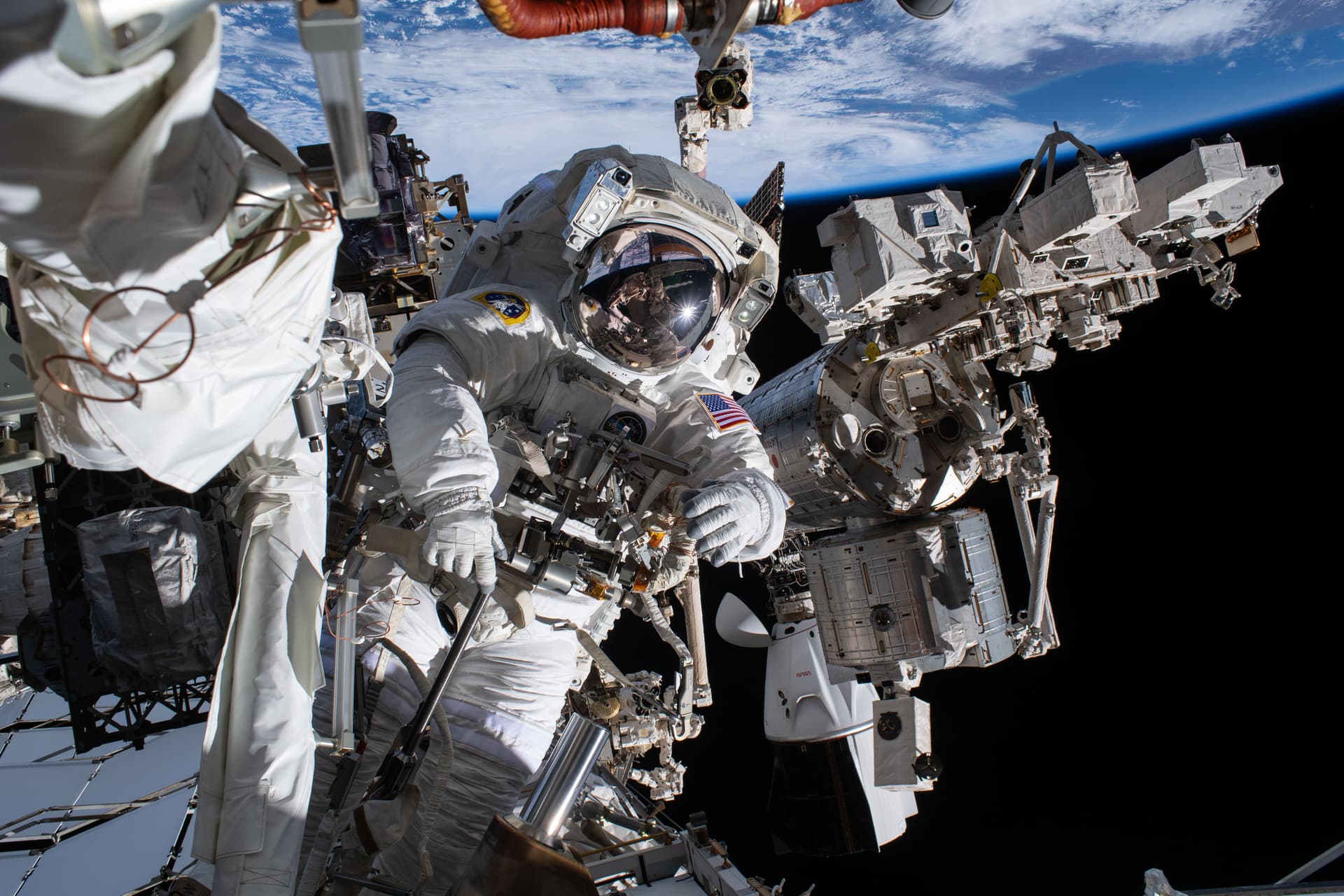
NASA astronaut Chris Williams is preparing to come home after completing his first mission aboard the International Space Station, an eight-month stay that mixed scientific research with hands-on maintenance work high above Earth. According to NASA, Williams took part in studies aimed at supporting new cancer treatments and helped advance the production of materials that could improve computers and other electronics. The agency also says he carried out two spacewalks during the mission, a reminder that life aboard the station is not limited to experiments inside the modules. For NASA, missions like this one are part of a broader effort to use the station as a long-running testbed for research that cannot be done the same way on Earth. Microgravity can change how materials behave, how fluids move and how biological processes develop, giving scientists a different way to study questions with possible practical use back on the ground. The reference to cancer-treatment research is especially notable because space-based studies often help researchers observe cell behavior and biological effects under conditions that are impossible to recreate in a normal laboratory. NASA did not provide further specifics in the source report about the exact experiments Williams supported, so it is best understood as part of a wider station research portfolio rather than a single confirmed breakthrough. His work on materials production also points to one of the station’s most established roles: helping scientists explore how advanced substances form in orbit. That kind of research has long been tied to future applications in computing, electronics and manufacturing, although the exact benefits of any one experiment can take time to prove and may not be immediate. The two spacewalks are another major marker of the mission. Spacewalks remain some of the most physically demanding and operationally important tasks astronauts perform, often used for equipment installation, repairs and station upkeep. NASA’s summary did not spell out the specific objectives of Williams’s outings, but their inclusion suggests he was involved in both science and station operations during the flight. Williams’s return will close out his first trip to space, a milestone that carries added significance for any astronaut. First missions are often a proving ground, combining training, adaptation to life in orbit and the responsibilities of working in a complex international laboratory more than 250 miles above Earth. The station itself continues to serve as a key platform for NASA and its partners even as the agency looks ahead to the next era of human spaceflight. Research aboard the ISS feeds into future plans for longer missions, including deep-space travel, where astronauts will need better ways to protect health, manage materials and maintain critical systems over extended periods. NASA has not provided in the source report an exact landing time or splashdown location, only that Williams is preparing to return. That means the main takeaway for now is straightforward: after eight months in orbit, his first ISS mission is coming to a close, with science results and operational experience likely to follow long after he is back on Earth.
Source: NASA Breaking News - https://www.nasa.gov/missions/station/iss-research/nasa-astronaut-chris-williams-closes-out-space-station-mission/
Comments
No approved comments yet.


