United Russia Wins Record 355 Seats in State Duma Election
United Russia is projected to win a record 355 State Duma seats, preserving a constitutional majority after a tightly controlled wartime election.
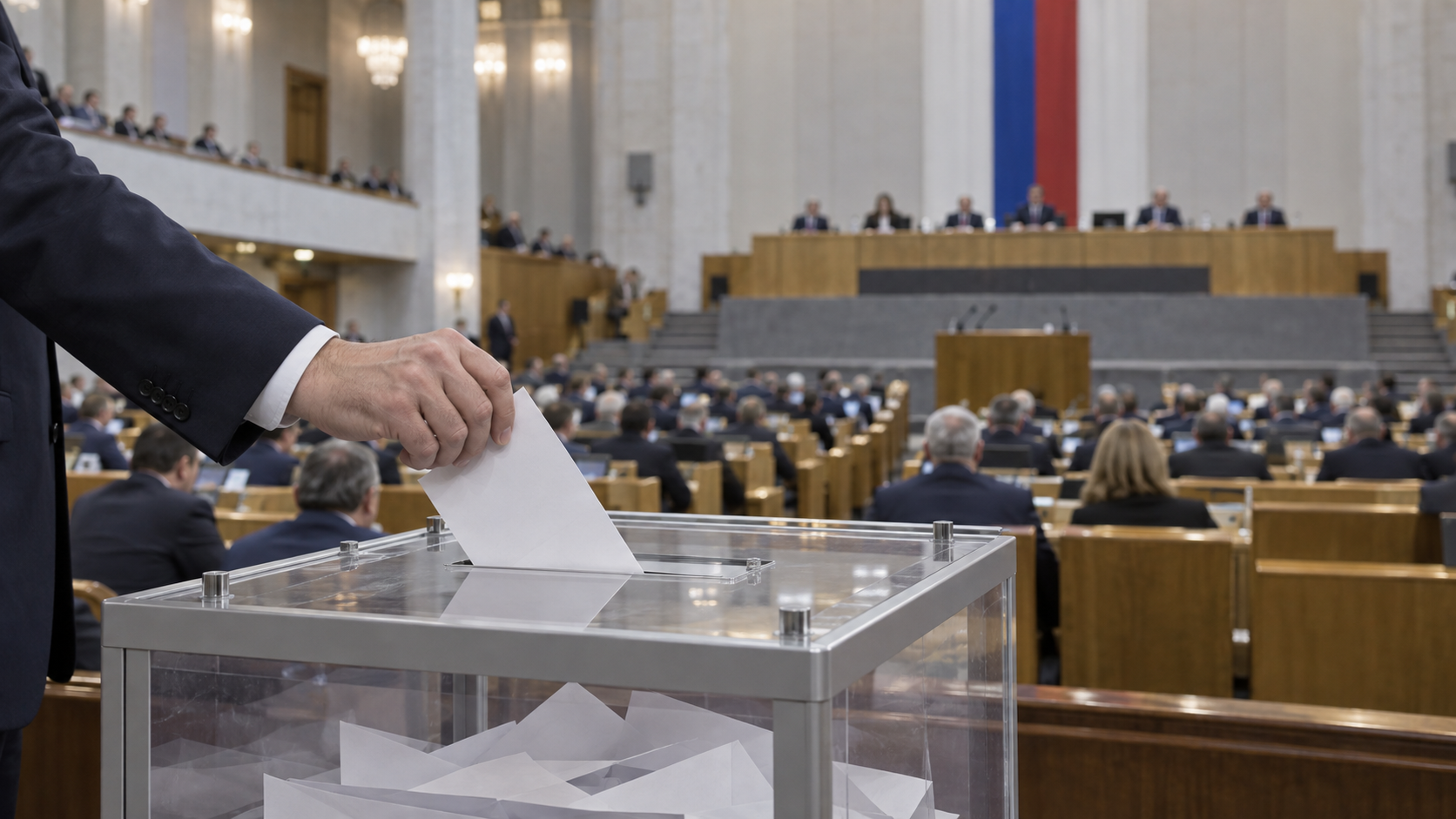
Image credit: AI-generated editorial illustration by OpenAI
Russia's ruling United Russia party is set to hold a record 355 of the 450 seats in the State Duma after a parliamentary election conducted under tight political controls and during the continuing war in Ukraine, according to preliminary results from the Central Election Commission.
With more than 95 per cent of ballots counted, the party received about 57.8 per cent of the national party-list vote. The projected result gives United Russia well above the 301 seats required for a constitutional majority and exceeds its previous record of 343 seats in 2016.
The Associated Press described the three-day vote as tightly orchestrated and largely devoid of genuine opposition to President Vladimir Putin. It was Russia's first parliamentary election since the full-scale invasion of Ukraine began in February 2022.
The result combines seats allocated through national party lists with victories in single-member constituencies. That system can translate a strong nationwide lead into a much larger share of parliamentary seats when the same party also dominates local races.
Constitutional majority retained
The projected 355-seat bloc would allow United Russia to pass ordinary legislation without support from other parties and retain the numbers needed for constitutional amendments. The Duma has generally supported legislation backed by the Kremlin, including measures related to the war, security, media and political activity.
Preliminary results placed the Communist Party second with around 13.8 per cent of the party-list vote and approximately 40 seats. The Liberal Democratic Party received close to 9 per cent and was projected to hold 25 seats, while New People won about 8 per cent and 20 seats. A Just Russia also remained represented.
Election officials reported turnout of approximately 59.3 per cent among roughly 111 million eligible voters. The voting period ran from September 18 through September 20, with ballots cast in person and through systems permitted by Russian authorities.
Central Election Commission chief Ella Pamfilova announced the seat projection as counting continued. Reuters Connect reported the same 355-seat figure and the party's 57.8 per cent share based on preliminary commission data.
Criticism of the electoral environment
Opposition figures and Western governments questioned whether the election offered meaningful political competition. AP reported that most genuine opposition candidates were excluded and that Yabloko, the only registered party openly opposing the war, was prevented from competing on the national party-list ballot.
Russia has imposed extensive restrictions on independent media, civil society organisations and critics of the war. Authorities say those actions protect national security and enforce Russian law. Critics argue they have removed the conditions needed for voters to hear competing views or organise viable alternatives.
France's Foreign Ministry said the vote did not meet the conditions of a free election, citing repression of civil society and political opponents, restrictions on expression and the exclusion of independent media.
Voting also took place in Crimea and in four Ukrainian regions claimed and partly occupied by Russia. Ukraine and many other governments reject those votes as illegal because the territories are internationally recognised as part of Ukraine. Moscow says the regions joined Russia after referendums, but those ballots were held under occupation and are not recognised by the United Nations General Assembly.
A wartime political test
Putin presented the election as a measure of national unity while the war continued. Kremlin spokesman Dmitry Peskov said the results demonstrated consolidation around the president and his policies.
The final day of voting coincided with a major Ukrainian drone attack on Moscow, according to Russian authorities. Election officials said security measures allowed polling to continue. Independent verification of every reported security incident was not immediately available.
Regional contests held alongside the Duma election also produced overwhelming victories for Kremlin-aligned candidates. In Chechnya, Ramzan Kadyrov was reported to have won a fifth term with more than 99 per cent of the vote, another result likely to face scrutiny over the political environment in the region.
The strengthened United Russia majority will give the Kremlin a dependable legislative base for the next Duma term. It also narrows the formal space for parliamentary resistance to wartime policy, budgets and domestic restrictions.
The official result establishes the composition of Russia's legislature under its electoral system. It does not resolve the wider dispute about whether voters had access to genuine alternatives, free media and an open campaign. Both realities will shape how the outcome is interpreted inside Russia and abroad.
Source links
Comments
No approved comments yet.