Peru's Fujimori Moves to Deepen Ties With the United States
President Keiko Fujimori's government plans closer US ties, regional security cooperation and a diplomatic reset with Latin American neighbours.
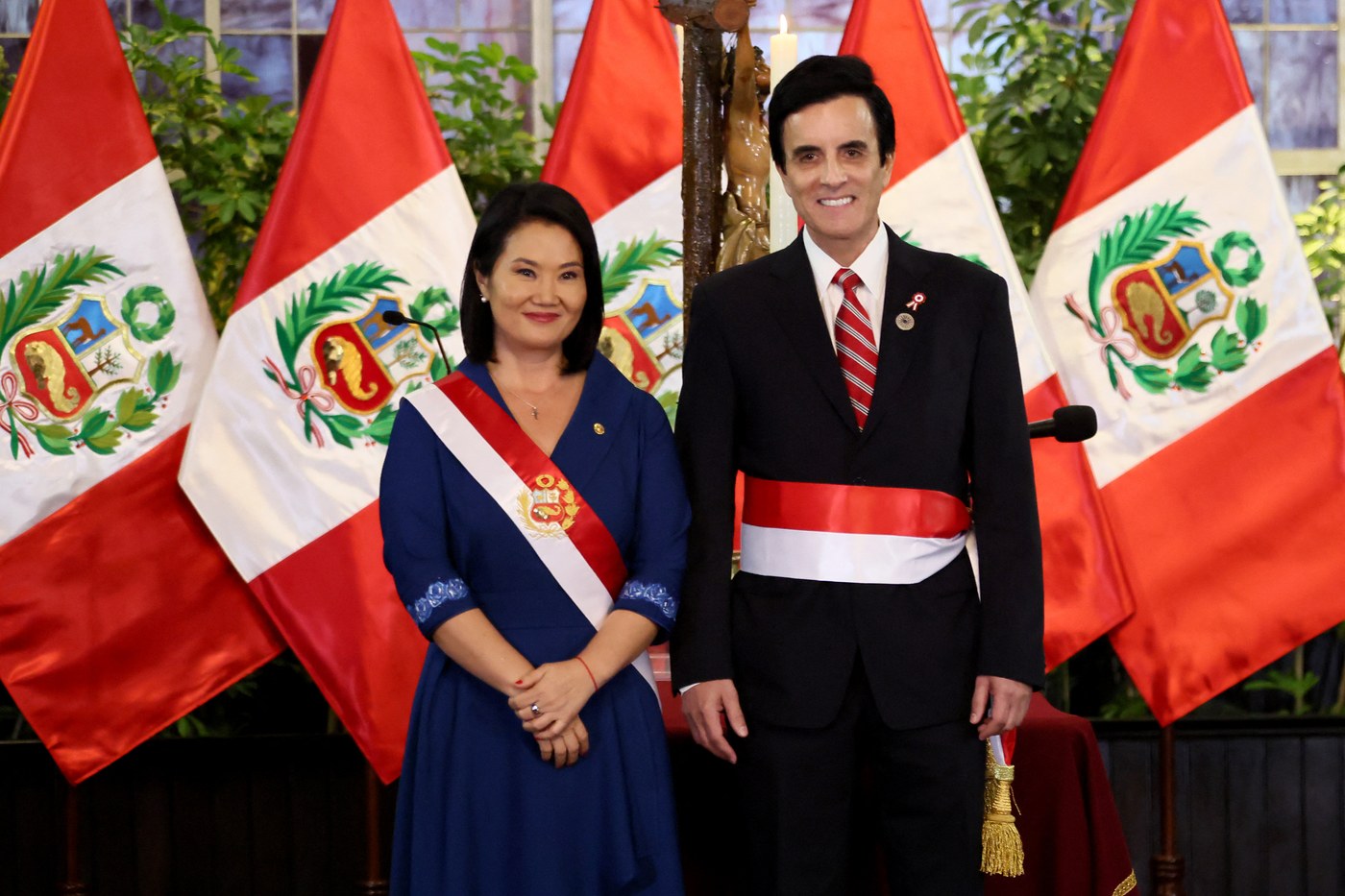
Image credit: AFP, via Epoch Times
LIMA, July 31, 2026: Peru's new government plans to strengthen relations with the United States, join a Washington-backed regional security coalition and reset strained ties with several Latin American neighbours, Foreign Minister Carlos Espa has said.
Espa described the United States as a strategic partner for the administration of President Keiko Fujimori, who was sworn in on July 28 after a narrowly won election. He said the government would give significant attention to cooperation with President Donald Trump's administration.
The announcement points to a more explicitly pro-Washington foreign policy at a time when Peru is also an important economic partner for China. The country is a major copper producer, and its trade and infrastructure links make it part of the broader competition for influence in Latin America.
Peru plans to join regional security coalition
Espa said Peru was moving ahead with plans to join the Americas Counter Cartel Coalition, also known as the Shield of the Americas. The Trump administration has promoted the grouping as a way for participating governments to coordinate action against drug cartels and other transnational criminal organisations.
Public anxiety about violent crime was a central issue in Peru's election. Fujimori campaigned on a tougher security policy, and participation in the coalition would give her government an early way to demonstrate closer operational alignment with Washington.
The scope of Peru's role remains to be defined. Membership could involve intelligence sharing, law-enforcement coordination, border-security assistance or other forms of cooperation. The government had not announced a detailed implementation plan or specific military commitments when Espa made his remarks.
That distinction will matter as the administration turns its campaign promises into policy. Regional security initiatives can improve coordination against criminal networks, but they also raise questions about oversight, sovereignty and the balance between enforcement and human rights.
A foreign minister with Washington experience
Espa joined Fujimori's conservative cabinet after spending years as communications director at the US Embassy in Lima. His background has reinforced expectations that the new government will maintain close contact with American officials.
US Deputy Secretary of State Christopher Landau attended Fujimori's inauguration, providing an early signal of Washington's interest in the relationship. The administration of Donald Trump has sought stronger links with right-leaning governments in Latin America while treating organised crime and China's regional influence as national-security concerns.
Peru occupies an important position in that strategy. Beyond its mineral resources, it has become a major destination for Chinese investment and trade. A closer partnership with the United States does not automatically mean Lima will retreat from its commercial relationship with Beijing, but it could affect decisions involving infrastructure, security technology and strategic industries.
Fujimori's government will therefore have to manage both relationships. China is a vital market and investor, while the United States remains a longstanding diplomatic, security and economic partner.
Regional diplomatic reset
The government is also seeking to repair relations closer to home. Espa said Peru would work to restore diplomatic ties with Mexico and Colombia and take initial steps towards rebuilding relations with Venezuela.
Those objectives show that a stronger US partnership is only one part of the new foreign-policy agenda. Improving relations with neighbouring and regional governments could reduce Peru's diplomatic isolation and make cooperation easier on migration, trade, border security and organised crime.
The process may be politically delicate because the governments involved do not share Fujimori's ideology. Practical engagement will require Lima to separate bilateral interests from the partisan disputes that contributed to earlier tensions.
Fujimori inherits a fragile political system
Fujimori defeated left-wing rival Roberto Sanchez by fewer than 50,000 votes in the June runoff, according to Al Jazeera and Reuters. The narrow result left the new president with a divided electorate and limited room for political error.
She is Peru's ninth president in a decade, a measure of the instability that has repeatedly brought resignations, impeachments and interim governments. Her administration must address crime and economic uncertainty while building enough support to avoid the institutional breakdowns that ended several recent presidencies.
Fujimori also carries the complex legacy of her father, former President Alberto Fujimori. Supporters associate his government with order and economic reform, while critics point to authoritarian rule, corruption and human-rights abuses. Keiko Fujimori has presented his record as evidence that she can restore stability, but opponents remain wary of concentrating power in the name of security.
The closer relationship with Washington will be judged on results. Joining the Shield of the Americas may strengthen security cooperation, but the administration will also need to show how the partnership benefits Peru's economy, protects democratic institutions and complements rather than disrupts the country's other international relationships.
Espa's announcement establishes the direction: deeper US ties, a harder line against transnational crime and an attempt to reopen channels with regional neighbours. The next test is whether those priorities produce concrete agreements without narrowing Peru's diplomatic options.
Source links
Comments
No approved comments yet.