KP Chief Minister Afridi Calls for Review of Foreign and Security Policy
KP Chief Minister Sohail Afridi calls for a review of Pakistan's foreign and security policy after the deadly Kohat Police Lines attack.
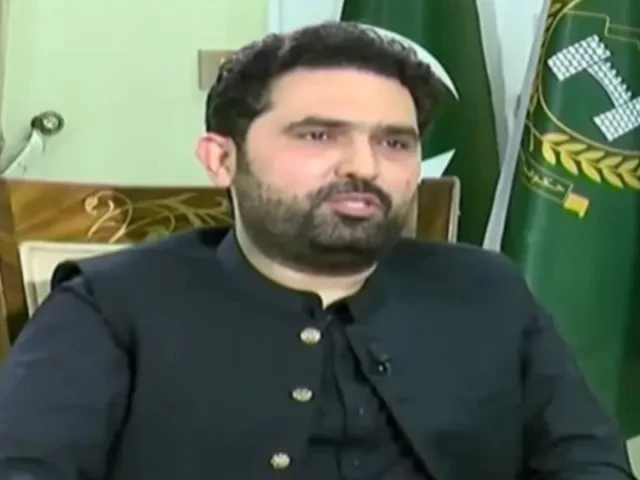
Image credit: Express Tribune / Geo News screengrab
Khyber Pakhtunkhwa Chief Minister Mohammad Sohail Afridi has called for a reassessment of Pakistan's foreign and security policy, arguing that a long-running approach has failed to prevent militant violence or bring lasting stability to the northwestern province.
Afridi made the remarks in Kohat after visiting officials and personnel involved in the response to the deadly assault on the city's old Police Lines. The attack led to a prolonged security operation in which authorities said all eight assailants were killed. Police officers and civilians also lost their lives, with reports placing the combined death toll above 20 as casualty figures were updated.
According to Dawn's report on the visit, the chief minister described the operation as lasting nearly 20 hours and praised the police, Counter Terrorism Department, Special Branch, Rescue 1122, medical teams, district administration and local residents for their response.
The chief minister's visit followed Novexa's earlier report on the Kohat Police Lines attack, which detailed the initial toll and the conclusion of the operation. Afridi had also previously condemned the assault and called for unity after the violence.
Call for a policy reassessment
Afridi said the country had followed what he called a failed policy for roughly 22 years. He linked the deteriorating security environment to decisions made beyond the provincial government's authority and urged federal policymakers to review both foreign policy and the broader strategy used to confront militancy.
The chief minister also referred to the heavy human cost Pakistan has borne during more than two decades of conflict. His remarks placed the Kohat attack within a wider debate over whether military, diplomatic, border-management and economic policies are working together effectively.
Former interior minister Aftab Ahmad Khan Sherpao has separately called for a coordinated national strategy to deal with the security challenge. That appeal reflects a concern shared across parts of Pakistan's political spectrum: provincial police forces are often left handling the immediate consequences of militancy while major border and foreign-policy decisions remain federal responsibilities.
Afridi's criticism was also political. He accused the federal government of concentrating on action against Pakistan Tehreek-e-Insaf rather than giving sufficient attention to worsening security. The federal government has not accepted that characterization and has repeatedly said counterterrorism requires cooperation among federal and provincial institutions.
Border closure and economic losses
The chief minister connected security policy with the economic effect of restrictions at the Afghanistan border. He said prolonged closures had disrupted trade and daily life in the merged tribal districts, while costing the provincial government more than Rs8 billion during the previous financial year.
Cross-border trade is a major source of income for transporters, traders and families in districts near Afghanistan. Closures can affect customs revenue, food and commodity supply chains, and the movement of people with family or commercial ties on both sides. At the same time, federal authorities have argued that tighter controls are necessary to prevent militant movement and smuggling.
Afridi's comments underline the difficult balance facing policymakers. Measures intended to improve security can impose immediate costs on border communities, but weak enforcement can create openings for armed groups. A durable policy would have to address both risks rather than treating economic access and public safety as unrelated issues.
Support for police and victims' families
During the Kohat visit, Afridi said the provincial government would provide financial assistance to affected families who were not covered by the formal Shuhada Package. He also promised practical measures to strengthen local policing and emergency care.
Those commitments included providing CT and MRI scanning equipment to the District Headquarters Hospital in Kohat, improving the police hospital and establishing a dedicated police station for the Special Branch. Afridi also said staffing shortages in the police force would be addressed.
The Express Tribune reported that Afridi pointed to additional funding for the police outside the province's Annual Development Programme. The effectiveness of that spending will depend on recruitment, training, intelligence coordination and whether equipment and facilities remain operational after they are delivered.
The policy debate prompted by the Kohat attack is therefore broader than a single operation. It concerns the resources available to front-line police, the division of responsibility between Islamabad and Peshawar, relations with Afghanistan and the protection of communities that continue to absorb the consequences of militant violence.
Afridi's demand for a review now puts pressure on provincial and federal leaders to move from competing explanations toward a coordinated response. For Kohat's victims and security personnel, the central test will be whether the promised assistance and institutional improvements arrive quickly, and whether a revised strategy can reduce the likelihood of another attack.
Source links
Comments
No approved comments yet.