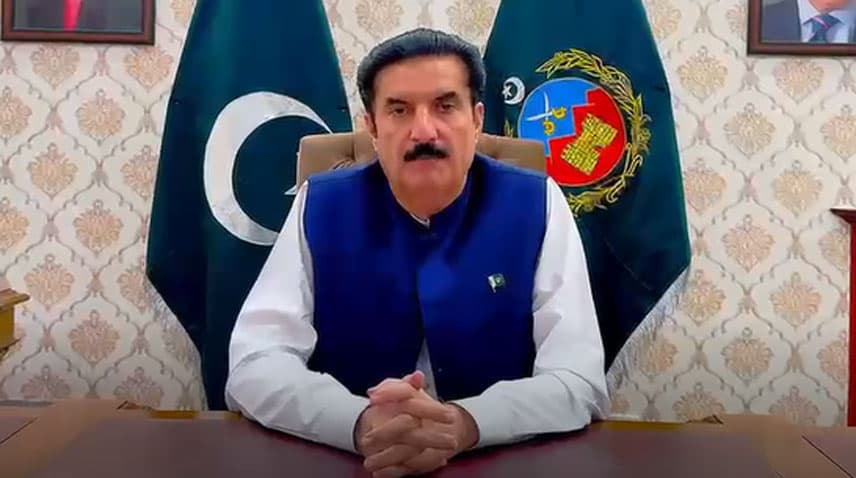
Shehbaz Says Pakistan Still Has Far to Go on Welfare
Prime Minister Shehbaz Sharif has said Pakistan remains far from becoming the social welfare state envisioned at its founding.

Image credit: Photo by Kashif Shah on Pexels
Prime Minister Shehbaz Sharif has said Pakistan remains far from becoming a social welfare state, placing renewed attention on the distance between constitutional aspirations and the public services people experience in daily life.
Speaking at an event in Islamabad, the prime minister linked social welfare to the purpose behind Pakistan's creation. The statement is notable because it acknowledges that economic growth figures alone do not measure whether citizens have reliable access to education, health care, income protection and equal opportunity.
What a welfare state requires
A welfare state is more than a collection of temporary relief schemes. It depends on institutions that protect people against risks such as unemployment, illness, disability, old age and extreme poverty. The strongest systems also provide broad access to schools, clinics and basic services rather than limiting support to emergencies.
Pakistan operates several social protection programmes and subsidies, but access and quality vary sharply by province, income and location. Families often pay significant costs directly for health care and education. Informal workers may have little pension or unemployment protection, even though they form a large part of the labor force.
The prime minister's assessment therefore raises a practical question: which guarantees should every citizen receive, and how will the state finance them consistently?
Revenue is central to the debate
Social protection cannot be expanded sustainably without reliable public revenue. Pakistan has repeatedly struggled with a narrow tax base, uneven enforcement and exemptions that reduce the resources available for services.
Borrowing can cover urgent needs, but debt payments also compete with development spending. A welfare strategy must connect tax reform with clear service commitments so citizens can see how public money improves schools, hospitals and safety nets.
Fairness matters as much as the total amount collected. Heavy dependence on indirect taxes can place a larger proportional burden on lower-income households. Stronger taxation of income, property and underreported economic activity can make financing more progressive if enforcement is transparent and consistent.
Provinces deliver many essential services
Education, health and several welfare responsibilities involve provincial and local institutions. A national promise therefore needs coordination across levels of government, shared data standards and funding that accounts for differences in population and need.
Remote districts face particular challenges. A programme may exist on paper while a community lacks teachers, medicines, transport or reliable identification systems. Measuring enrollment or the number of facilities is not enough; governments must also track attendance, treatment outcomes and whether benefits reach eligible households.
Digital payment and identity systems can reduce leakage, but they should include safeguards for people without smartphones, bank accounts or easy access to registration offices. Technology should widen access rather than create a new barrier.
From relief to economic resilience
Cash assistance can protect a family during a crisis, yet long-term welfare policy also requires jobs, skills and affordable essentials. Nutrition, early childhood development and girls' education have effects that continue across generations.
Public policy should distinguish between immediate relief and investments that reduce future vulnerability. Both are necessary. A household facing a food shock cannot wait for economic reforms, while repeated emergency payments cannot substitute for decent work and functioning services.
How progress should be judged
The government can make the welfare-state commitment more credible by publishing measurable targets. Useful indicators include school completion, maternal mortality, health coverage, pension access, child nutrition and the share of households pushed into poverty by medical expenses.
Independent audits and parliamentary scrutiny are important because social programmes involve large budgets and sensitive personal data. Beneficiaries also need a simple complaints process when payments are delayed or records are wrong.
Acknowledgment must lead to a timetable
Shehbaz Sharif's statement recognizes a gap that many families already understand. The next step is to translate that acknowledgment into priorities, costs and deadlines. Without those details, the idea of a welfare state remains a recurring political promise.
Pakistan's fiscal constraints are real, but they make careful choices more important, not less. Protecting core health, education and social programmes while improving revenue collection would show that welfare is being treated as a governing framework rather than a ceremonial phrase.
Reporting was checked against Dawn's account of the prime minister's remarks and public material on Pakistan's social protection and fiscal challenges.
Source links
Comments
No approved comments yet.